
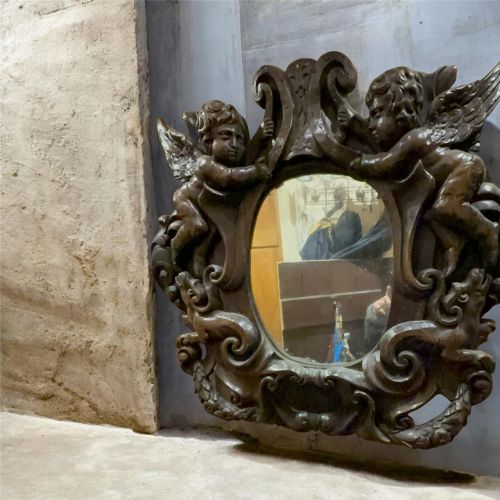


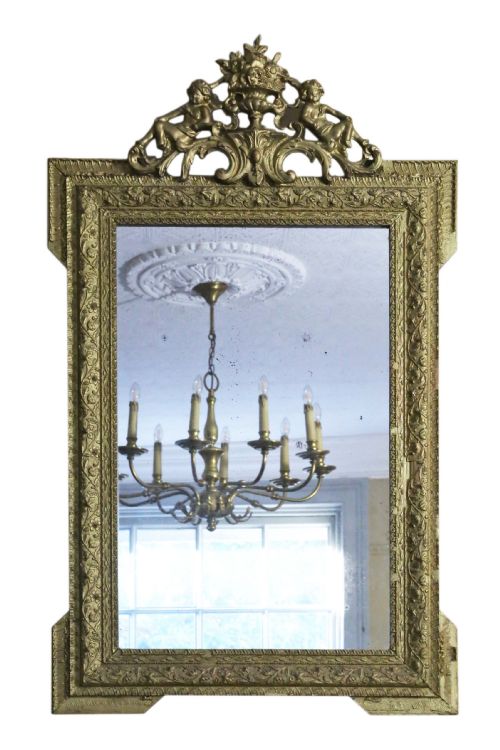


Putti Carved Mirror
A putti carved mirror brings sculpted cherubic figures and gilt or timber framing straight from the eighteenth and nineteenth centuries into your home.
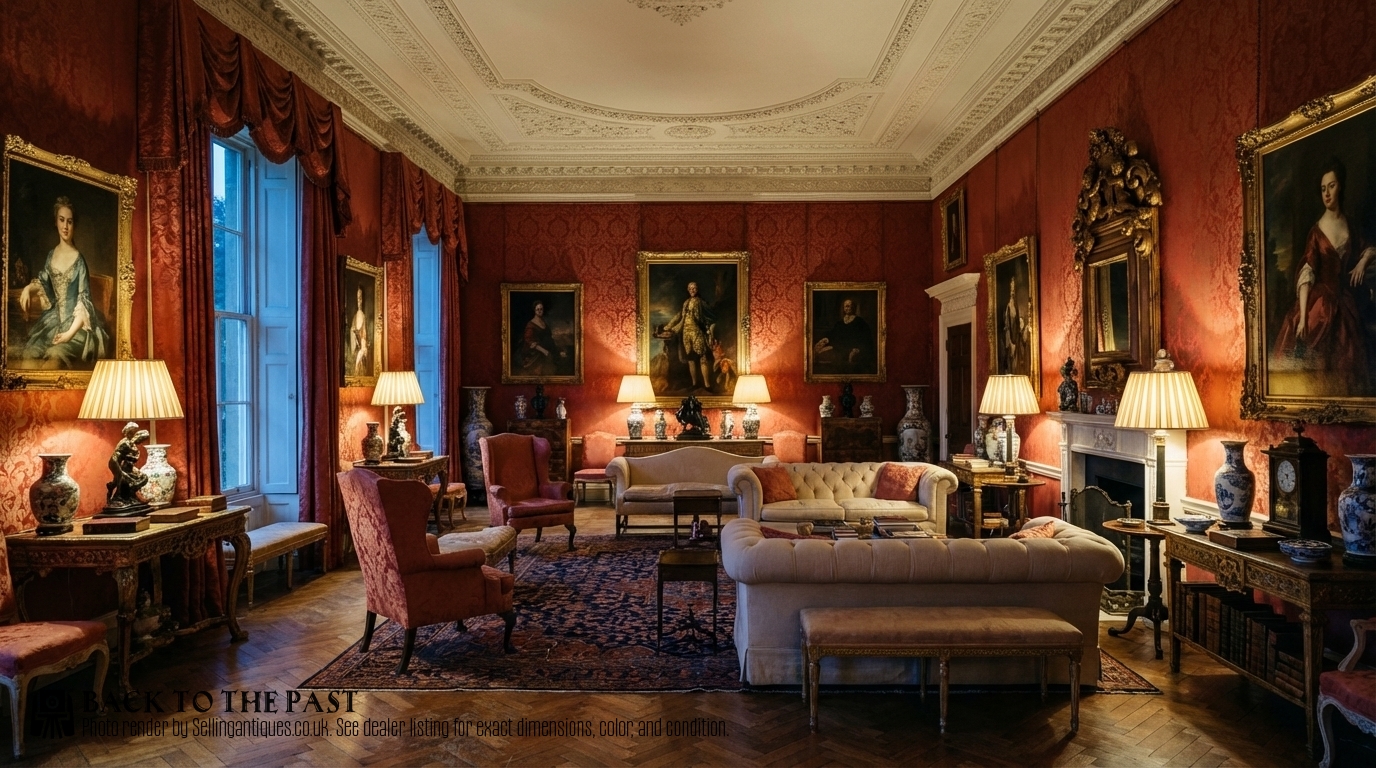
Putti Carved Mirror
The version you are most likely to meet on this page is a nineteenth-century wall mirror or overmantel mirror decorated with carved cherubs or putti cresting. They appear in French Chateau, Italianate, and Victorian aesthetics, often finished in gold leaf or parcel gilt.
Forms vary from grand overmantels to smaller oval wall mirrors and bracket mirrors. The framing materials alternate between solid carved wood and gesso over timber, reflecting the workshop traditions of their respective periods.
How they were made
Makers shaped the frames primarily from timber such as oak, walnut, and softer woods, carving the intricate putti figures and floral motifs directly into the material. In many instances, artisans applied a layer of gesso over the wood base to build up relief details before gilding.
Finishing techniques relied heavily on gold leaf application or parcel gilding to create reflective, luminous surfaces. Mirror glass was then fitted into the rebate, secured by traditional backboards appropriate to the period of manufacture.
The selection includes regional interpretations such as French Chateau, Italianate Rococo Revival, and Victorian overmantels.
What varies in quality
The depth and animation of the wood or gesso carving distinguish finer examples from simpler production. Skilled hands rendered the anatomical details of the putti and the acanthus scrolls with clear definition and high relief.
The integrity of the original gilding and the preservation of the antique mirror glass also dictate the character of the piece. Retaining the original gold leaf and untouched timber surfaces marks the upper end of the surviving range.
The Putti Carved Mirror Glossary
- Putti
- Plumed or winged infant figures, often resembling cherubs, carved in relief onto the frame cresting or sides. They derive from classical art and feature prominently in Baroque and Renaissance revival designs.
- Giltwood
- Timber that has been coated with fine gold leaf or gold paint. This finish creates a bright, reflective surface characteristic of many formal wall and overmantel mirrors.
- Gesso
- A plaster-like mixture applied to wood frames to create a smooth surface for gilding or to build up sculpted decorative details. Artisans could carve and mould gesso before applying gold leaf.
- Overmantel mirror
- A large mirror designed to hang specifically above a fireplace mantelpiece. These pieces often incorporate elaborate pediments and putti cresting to command the wall space.
- Parcel gilt
- A finishing technique where only specific portions of a carved frame are highlighted with gold leaf while the underlying wood or painted surface remains visible.
Putti Carved Mirror: Frequently Asked Questions
What is a putti carved mirror?
A putti carved mirror is a wall or overmantel glass framed by timber or gesso featuring sculpted infant cherub figures. These pieces date primarily from the eighteenth and nineteenth centuries.
Craftsmen utilised styles ranging from Baroque and Rococo Revival to Renaissance Revival, producing decorative focal points for principal rooms.
Where should I hang an overmantel mirror?
Overmantel mirrors were traditionally designed to sit directly above a fireplace mantelpiece. Their large scale allows them to anchor a room and reflect light across the space.
They also function effectively on primary chimney breasts in dining rooms or entrance halls where their carved cresting can be fully appreciated.
How do I care for antique giltwood?
Antique giltwood requires gentle maintenance to preserve the delicate gold leaf surface. Dusting should be done lightly with a dry, soft cloth without applying cleaning liquids.
Keep these mirrors away from direct sunlight and damp environments to protect the underlying gesso and wood frame from movement.
How can I tell the period of a mirror?
Dating relies on examining the construction methods, backboards, glass characteristics, and framing materials. Eighteenth-century pieces often show hand-carved timber construction and older glass plates.
Nineteenth-century examples frequently employ gesso over softer woods, reflecting revival styles like the Renaissance or Rococo movements popular during the Victorian era.