

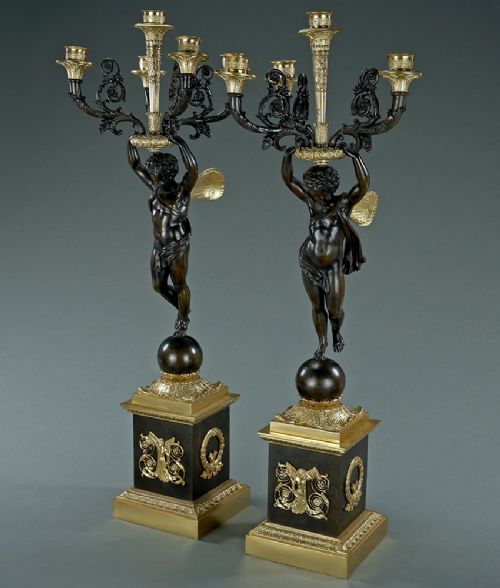
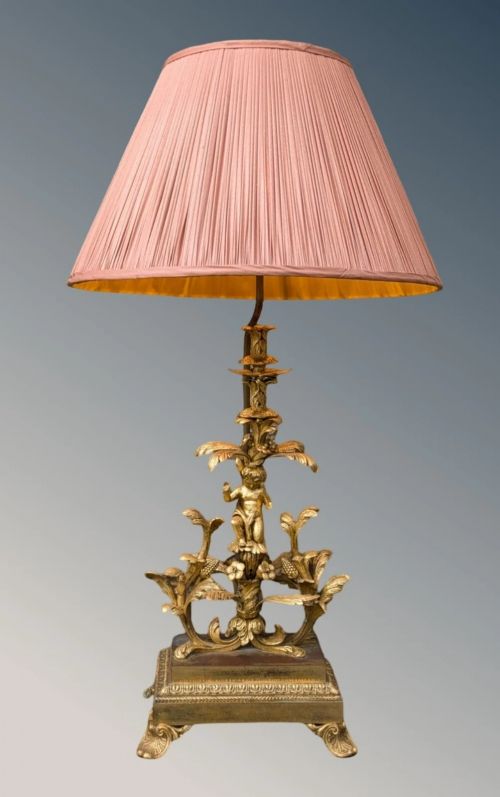
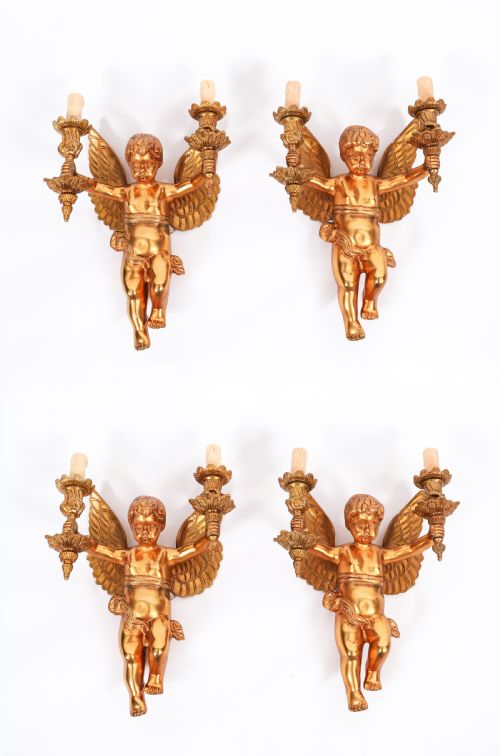


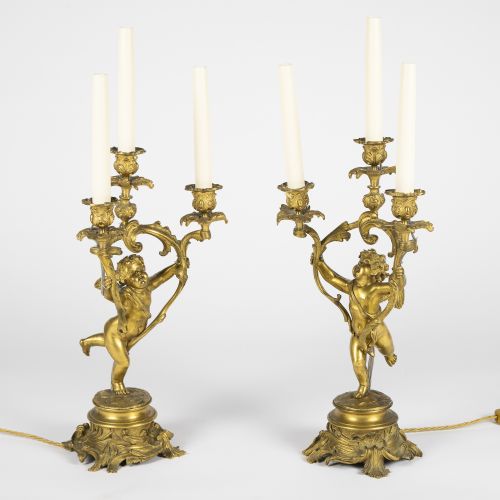
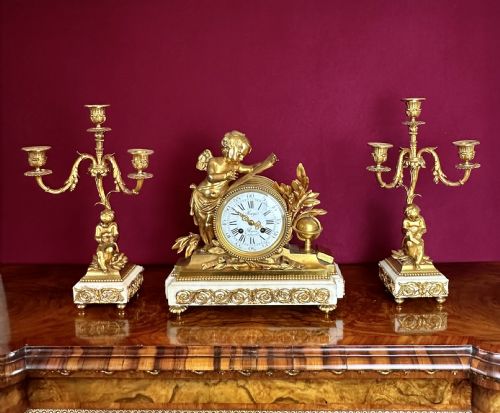

Cherub Putti Candelabra
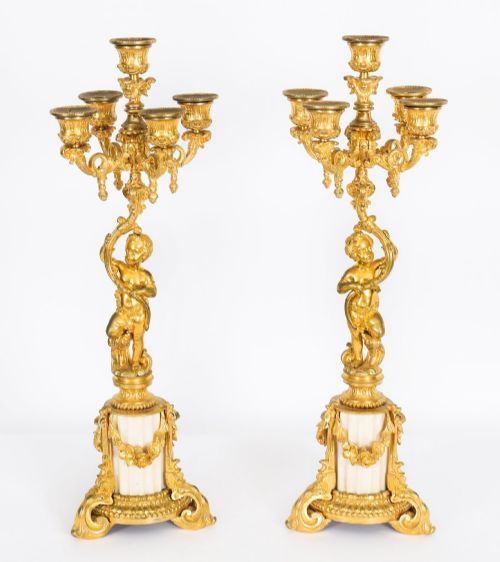
Cherub putti candelabra bring figurative bronze and marble lighting into a room, combining classical figures with functional candle arms.
Cherub Putti Candelabra
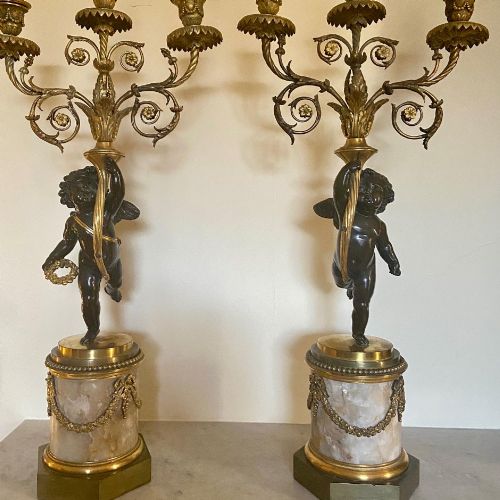
When searching for cherub putti candelabra, buyers encounter sculptural lighting pieces originating predominantly from the nineteenth century, including Victorian and various French revival periods. These items combine cast metal figures of winged children with branch configurations for candles, frequently mounted on stone or marble bases.
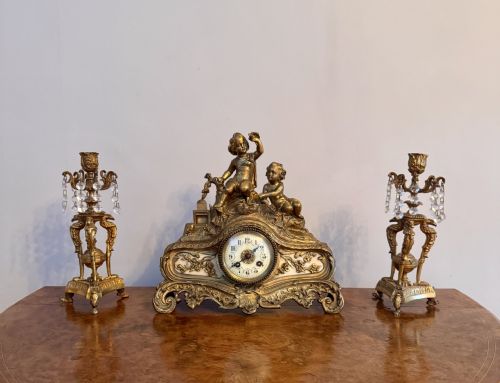
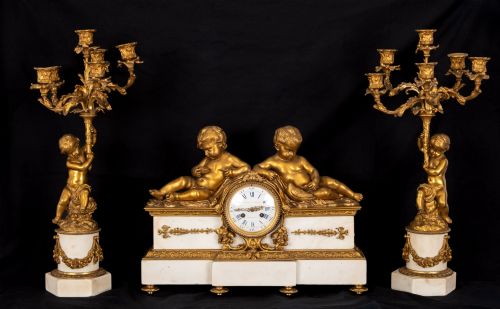
The most common formats on this page are matched pairs designed for mantelpieces or side tables, styled in the manner of Louis XVI or French Rococo revivals. Alongside standard candelabra, related items appear such as clock garnitures, wall sconces, and table lamps incorporating the same cherubic motifs.
Materials and construction methods
The primary structural metal is bronze, cast either as gilt bronze, ormolu, or patinated bronze, alongside variations in brass, gilt metal, and bronzed spelter. These metal components are frequently paired with solid bases of white marble, red marble, or porphyry, anchoring the figural weight.
Cherub Putti Candelabra Retail Price Guide 2026
Typical asking prices for cherub putti candelabra among the pieces listed under this phrase on Sellingantiques today, from the lower quarter to the upper quarter. They describe what is for sale here now, not the wider market.
Listings feature items from the eighteenth century up to nineteen-thirty, with the nineteenth century heavily represented.
Distinctions in craftsmanship and design
Quality separates through the crispness of the bronze chasing and the depth of the original gilding, where superior examples retain sharp definition in the hair and musculature of the putti. Inferior castings often exhibit softer details and simpler surface treatments.
The choice of subsidiary materials also dictates the grade of the piece, with dense natural marble or fluorspar bases representing finer production standards than lighter composite substitutes.
Francois Redmond·Claude Clodion·Meissen
The Cherub Putti Candelabra Glossary
- Ormolu
- Gilt bronze produced by applying a gold amalgam to a bronze base and heating it to drive off the mercury. This technique creates a durable, warm golden surface characteristic of fine French decorative arts.
- Putti
- Plural of putto, representing plump, winged male infants derived from classical mythology. They appear frequently in Renaissance and revival decorative arts.
- Clock garniture
- A set comprising a mantelpiece clock accompanied by matching side pieces such as candelabra, urns, or vases. These matched groups were designed to display symmetrically as a unified decorative scheme.
- Torchère
- A stand or tall candelabrum designed to hold a light source. In this context, the term applies to figural lamps supporting candle branches.
Cherub Putti Candelabra: Frequently Asked Questions
How were cherub putti candelabra used?
These pieces functioned primarily as domestic lighting on dining tables, sideboards, and mantelpieces during evening hours.
Beyond illumination, matched pairs served as decorative focal points, often arranged alongside matching clocks as part of a garniture set.
How do I identify Louis XVI style?
Louis XVI style pieces display neoclassical restraint, featuring symmetrical arrangements, straight lines, and classical motifs like urns and acanthus leaves.
In these candelabra, the style manifests through disciplined geometry combined with naturalistic putti figures.
Are these pieces made of solid bronze?
Many examples utilise solid cast bronze or gilt bronze for the figural and structural elements, often combined with heavy stone bases.
Alternative metals such as brass, gilt metal, or bronzed spelter also appear across nineteenth-century production.
Can these candelabra be converted to electricity?
While many retain their original configuration for candles, some examples are adapted into table lamps or wired for modern illumination.
Buyers often assess whether wiring can be achieved without altering the historic bronze or marble structure.