
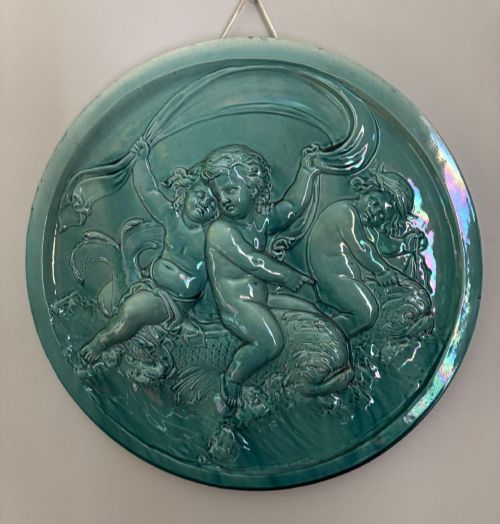
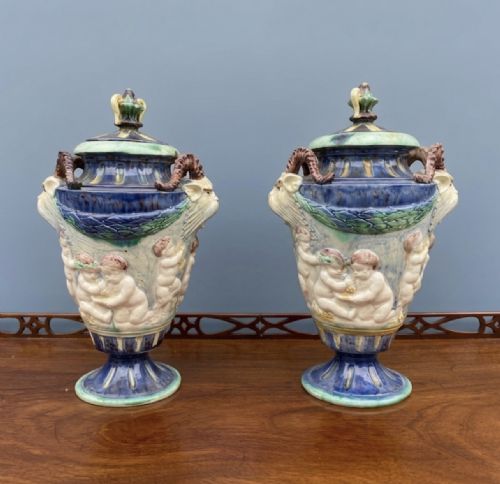


Cherub Ceramic Relief
Cherub ceramic relief pieces bring playful figures and classical modelling to domestic walls and surfaces.
Cherub Ceramic Relief
When you search for cherub ceramic relief, you encounter sculptural depictions of winged figures and putti raised from a flat or curved ground. These objects appear across wall plaques, decorative urns, cabinet plates, and jugs spanning the eighteenth century through to the Edwardian period.
You are most likely to meet Victorian and Arts and Crafts examples on this page, including tin-glazed and lead-glazed earthenwares alongside fine porcelain plaques. Forms range from devotional subjects to classical revivals modelled after makers such as Clodion.
Makers utilised various ceramic bodies to give these reliefs definition, setting figures against contrasting coloured grounds in blue, turquoise, or neutral tones. The resulting pieces function primarily as decorative art for display in domestic interiors.
How these pieces were made
Potters and modellers constructed these reliefs using earthenware or porcelain bodies, frequently applying lead glaze or tin glaze to seal the surface and impart a glossy finish. Some works incorporate gold leaf accents to highlight framing elements or drapery.
Moulding and pate-sur-pate techniques allowed artisans to build up the raised cherub figures in layers of slip before firing. Wooden mounts sometimes accompany the ceramic plaques for secure wall hanging.
Cherubs appear wrestling with dogs and goats in several Arts and Crafts interpretations.
What varies in quality
The definition and undercut of the modelling dictate the visual impact of the relief, separating crisp artisan output from softer, worn mouldings. Finer pieces display distinct anatomical details in the cherubs and clean separation between the figures and the background glaze.
The sophistication of the glaze and colour application also determines the grade of the work, with even tin and lead glazes or subtle pate-sur-pate layering indicating higher studio skill.
Clement Messier·Reginald Robert Tomlinson·Bernhard Bloch·Mintons
The Cherub Ceramic Relief Glossary
- Pate-sur-pate
- A ceramic technique where successive layers of liquid clay are painted onto a contrasting body to build up a low relief design before firing.
- Majolica
- A type of earthenware decorated with coloured glazes over an opaque tin-glazed background, producing vibrant hues.
- Relief
- Sculptural work where the figures project from a flat background rather than existing in the round.
- Earthenware
- Porous pottery fired at lower temperatures, commonly used for historical wall plaques and decorative jugs.
- Tin glaze
- An opaque white glaze containing tin oxide, providing a smooth surface for painting or relief work.
Cherub Ceramic Relief: Frequently Asked Questions
How do I hang a ceramic plaque?
Most antique plaques feature integrated wire loops, wooden backings, or fitted rims designed to support their weight safely against a wall. Ensure you use appropriate fixings suited to the weight of the ceramic body.
Avoid hanging pieces in areas subject to dampness or vibration, which can compromise older earthenware or wooden framing elements over time.
What is the difference between earthenware and porcelain?
Earthenware is a porous, opaque pottery fired at lower temperatures, whereas porcelain is a dense, vitrified ceramic that often exhibits translucency when held to the light. Both materials accommodate raised relief work differently.
Earthenware pieces frequently utilise lead or tin glazes for colour, while porcelain items often showcase refined pate-sur-pate layering.
Can I date these pieces by their glaze?
Tin-glazed and lead-glazed earthenwares often point towards nineteenth-century production or earlier, while specialised slip techniques like pate-sur-pate became prominent during the Victorian and Edwardian eras. Glaze opacity and colour palette provide strong clues regarding the period.
Examining the reverse of the plaque or jug often reveals maker marks or body textures that confirm the manufacturing era.