


Cherub Bronze Urn
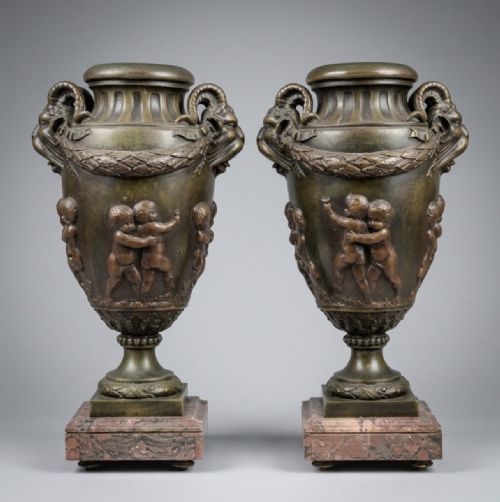
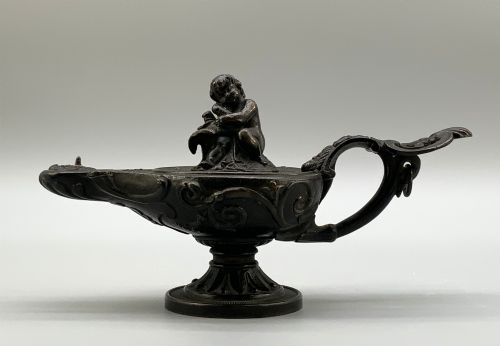
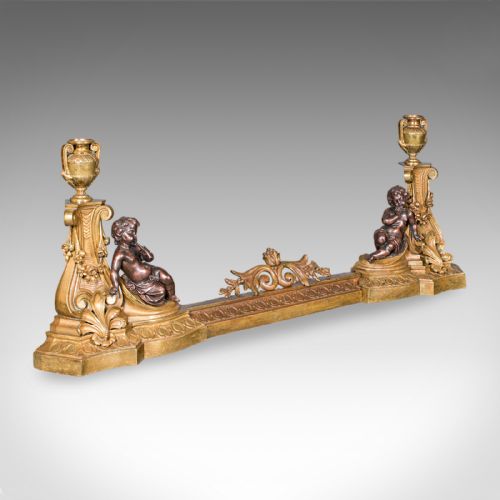
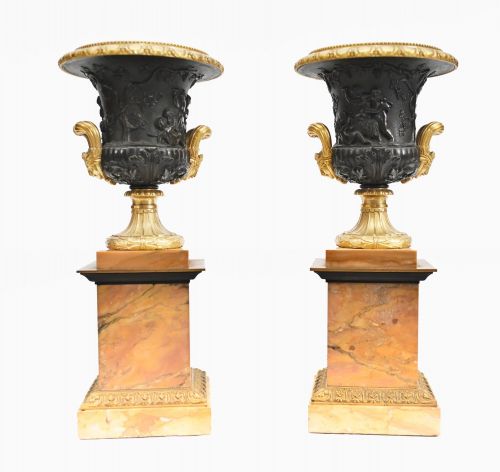
These bronze urns decorated with cherubs bring classical form and figurative charm into nineteenth-century interiors.
Cherub Bronze Urn
A cherub bronze urn combines cast metal vessel bodies with winged figural motifs, drawing from nineteenth-century revivals of classical and rococo design. Buyers seeking a cherub bronze urn will encounter nineteenth-century French and Italian pieces taking the form of mantel ornaments, lidded vases, and table lamps.
The evidence shows these decorative vessels appearing across Victorian and continental workshops during the 1870s, 1880s, and 1890s. Many adopt the campana shape or sit upon marble and onyx bases alongside complementary garnitures.
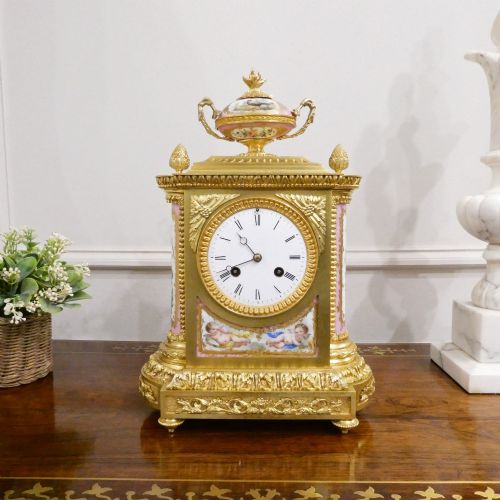
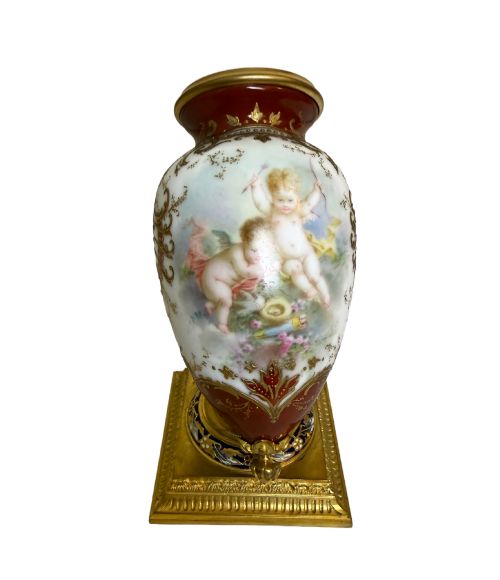
Makers often integrated porcelain bodies from Sevres or Majolica alongside cast bronze mounts, creating composite decorative objects that served as both centrepieces and functional timepieces or lighting.
Materials and construction methods
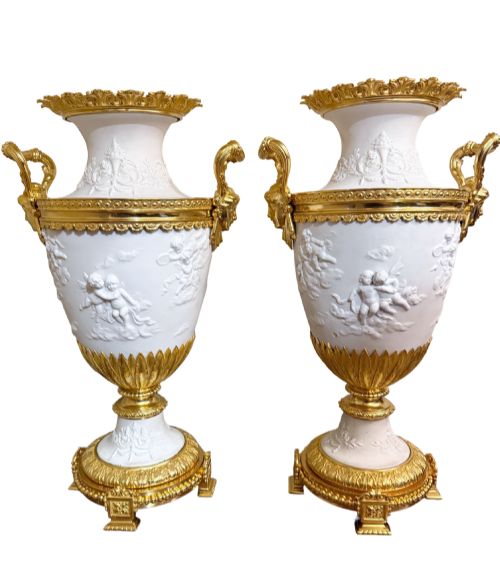
Foundries utilised bronze, gilt bronze, and ormolu for the structural urns and figural cherub mounts, often pairing the cast metal with sections of white, painted, or Bleu Celeste porcelain. Marble and onyx served as stable sub-bases for heavy table items.
Craftsmen applied mercury gilding or chemical patination to bronze surfaces to achieve the characteristic rich lustre seen across the nineteenth-century production. Champleve enamel and fine ceramic painting further enriched the decorative vocabulary of French workshops.
Cherubs appear not only as ornamental attendants flanking urns but also doubled up with dolphins on nineteenth-century lighting.
Distinguishing quality in cast metal and porcelain
Quality rests in the crispness of the bronze chasing and the delicacy with which the cherub figures are modelled and attached to the vessel body. Superior examples demonstrate deep, clean casting lines that retain facial expressions and wing feather details without soft spots.
The integration of materials dictates the upper tier of pieces, where hand-painted porcelain panels or Sevres-style ceramic inserts fit precisely within heavy ormolu or gilt bronze mounts rather than relying on loose mechanical assembly.
Jean-Baptiste Delettrez·Sevres·Meissen·Clodion
The Cherub Bronze Urn Glossary
- Ormolu
- Gilt bronze created by applying a gold and mercury amalgam to a bronze base and heating it to leave a durable metallic coating. This finish gives nineteenth-century decorative urns their bright, warm golden sheen.
- Campana urn
- A classical vessel shape resembling an inverted bell with an everted rim and a pedestal foot. These forms frequently served as the structural basis for nineteenth-century decorative urns and lamps.
- Champleve
- An enamelling technique where troughs or cells are hollowed out of the bronze surface and filled with vitreous enamel paste before firing. It appears on nineteenth-century French lidded vases and clock garnitures.
- Bleu Celeste
- A bright turquoise blue enamel or porcelain ground colour developed at the Sevres factory. Pieces featuring this hue command strong interest among nineteenth-century ceramic collectors.
- Garniture
- A set of three or more matching decorative objects, typically comprising a central clock or large urn flanked by smaller vases or candelabra. These sets dominated nineteenth-century mantelpiece decoration.
Cherub Bronze Urn: Frequently Asked Questions
What periods do these pieces date from?
The pieces recorded in the evidence stem primarily from the nineteenth century, with specific dates clustering around the 1860s, 1870s, 1880s, 1890s, and into the early 1900s.
Stylistic influences span French Rococo Revival, Neoclassical, and Grand Tour classicism, reflecting popular nineteenth-century tastes across European workshops.
How were these decorative urns used originally?
In nineteenth-century interiors, these items functioned as decorative mantel garnitures, table lamps, potpourri containers, and grand centrepieces. Many were mounted with clock movements or oil lamp reservoirs.
They stood in formal reception rooms and parlours as displays of classical learning and refined domestic taste during the Victorian era.
How do I care for gilt bronze and porcelain?
Maintain gilt bronze and ormolu surfaces by dusting gently with a soft, dry cloth to prevent abrasion of the thin gold layer. Avoid chemical cleaners that strip historical patination.
Protect integrated porcelain panels and glass components from impact, keeping them away from direct heat sources and strong sunlight to preserve painted ceramic colours.
What distinguishes French revival styles here?
French Rococo Revival and Louis XVI Revival pieces utilise asymmetrical scrollwork, naturalistic foliage, and playful cherubs. Neoclassical and Grand Tour designs draw on stricter architectural proportions, urn shapes, and mythological figures.
Comparing the cast mounts reveals whether a piece leans toward exuberant eighteenth-century court aesthetics or sober archaeological classicism.