

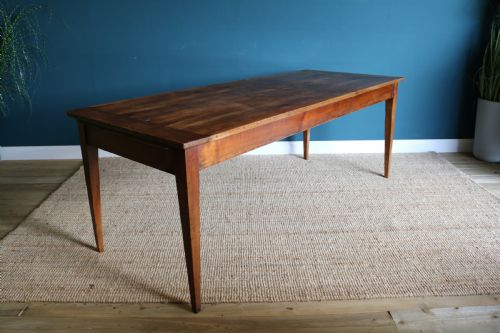
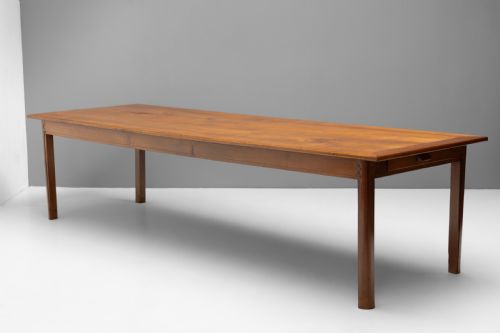


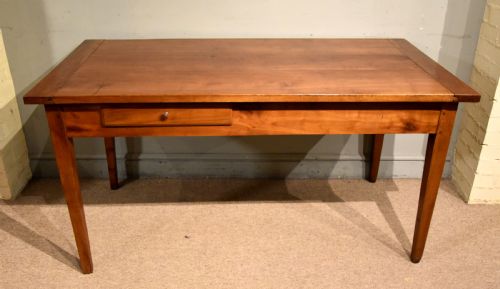


Cherry Wooden Table
A cherry wooden table brings warmth and rich grain to a room, spanning rustic farmhouse designs and formal dining forms.
Cherry Wooden Table
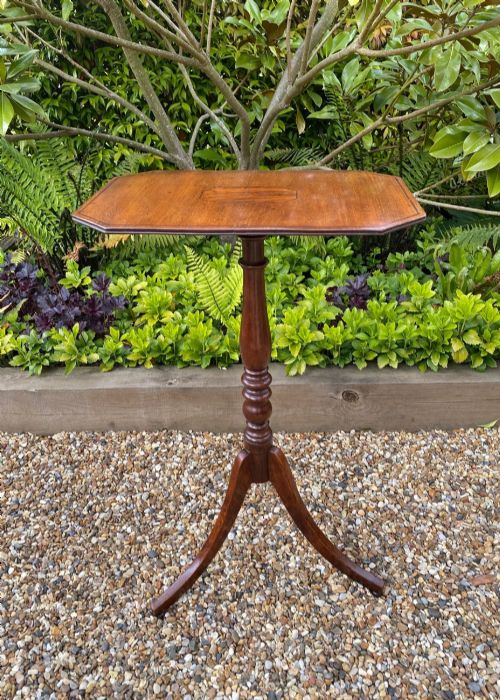
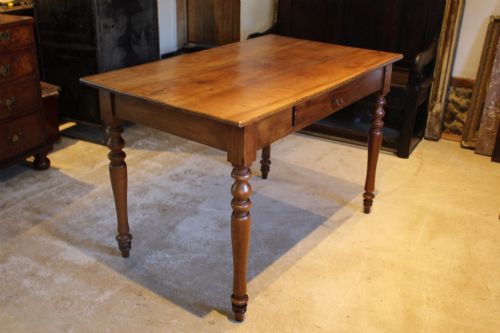
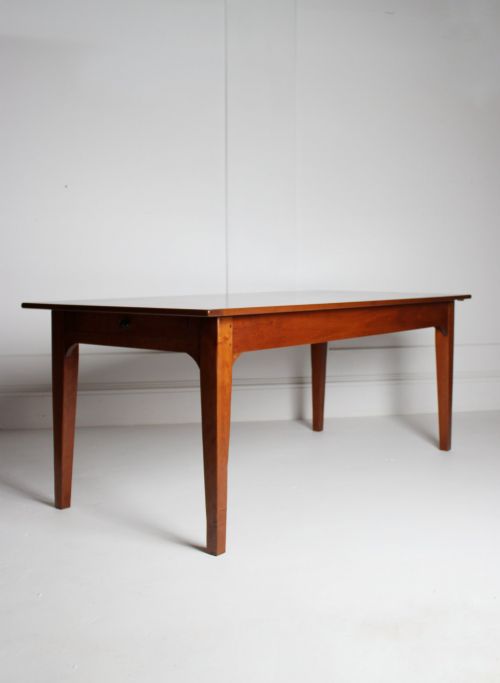
A cherry wooden table is a versatile surface found in various forms, from large kitchen tables to compact wine and coffee tables. When exploring a cherry wooden table, buyers frequently encounter French provincial and farmhouse styles alongside nineteenth-century examples.
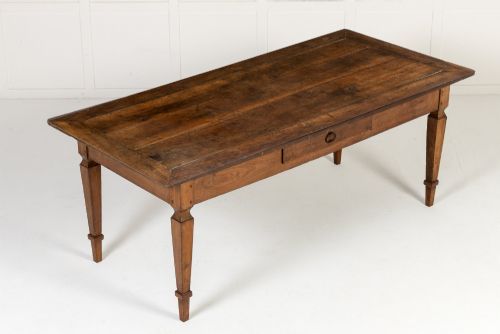
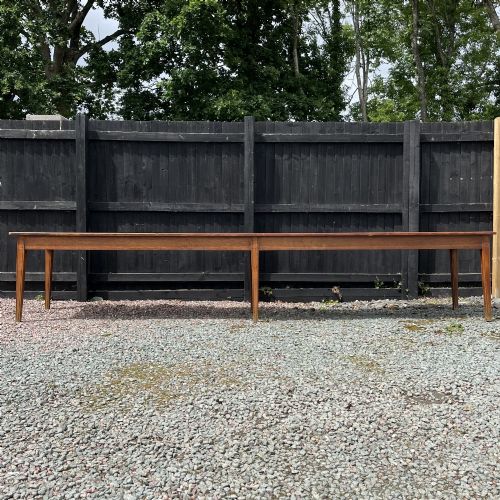
The selection on offer spans centuries of cabinet-making, featuring everything from grand refectory boards to intimate bedside nightstands. Regional French country pieces dominate the selection, often showcasing the characteristic warmth of domestic fruitwood.
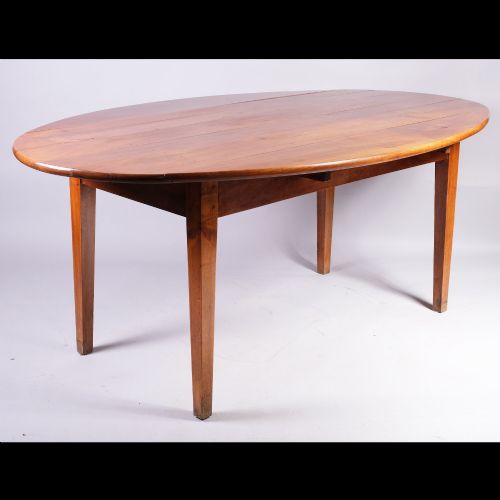
Beyond dining pieces, the inventory includes console tables, drop-leaf tables, and lowboys. These smaller variations demonstrate how cabinet-makers utilised the timber for occasional furniture as well as heavy-use domestic surfaces.
Materials and construction
Constructed primarily from solid cherrywood, cherry, and fruitwood, these tables often incorporate secondary timbers like oak for internal framing or structural stability. Cabinet-makers selected these dense woods for their resilience in daily domestic use.
Joinery techniques range from traditional turned legs and sliding breadboards to sophisticated double draw-leaf mechanisms and folding frames. Metal and brass elements appear selectively as handles, hinges, or decorative mounts on specific console and bedside pieces.
Listings feature items dated across the eighteenth, nineteenth, and early twentieth centuries, incorporating materials such as cherrywood, oak, and brass.
What separates the finest examples
Quality in these pieces rests upon the selection of the timber, particularly the depth of grain and the natural patina developed over generations. Superior tables display uniform colour and careful matching of planks across large tabletops.
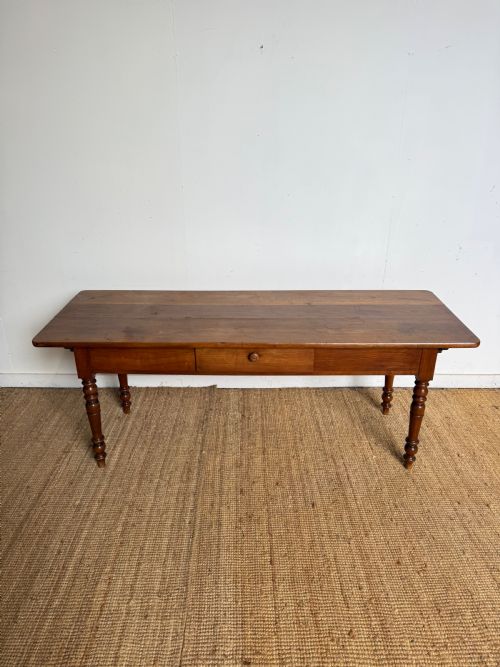
The execution of structural details, such as hand-turned legs, integrated drawers, and the smoothness of extending leaf mechanisms, marks the distinction between standard workshop production and finer craftsmanship.
The Cherry Wooden Table Glossary
- Cherrywood
- A dense, close-grained hardwood prized for its warm reddish-brown hue that deepens with age and exposure to light.
- Refectory table
- A long, narrow dining table traditionally used in communal halls and later adapted for domestic farmhouse kitchens.
- Breadboard ends
- Transverse pieces of wood fixed to the ends of a tabletop to prevent the main planks from warping while allowing for natural wood movement.
- Vendange table
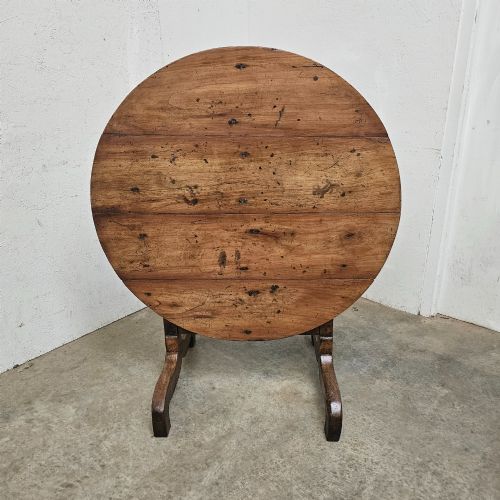
- A folding table traditionally used during the grape harvest in France, designed for easy storage when not in use.
- Lowboy
- A small colonial American table with one or more drawers, typically supported by slender legs.
Cherry Wooden Table: Frequently Asked Questions
How do I care for a cherry table?
Keep the timber away from direct heat sources and strong sunlight to prevent uneven fading and drying of the wood.
Regular dusting with a soft cloth and occasional treatment with appropriate natural wax maintains the lustre of the surface.
Are these tables suitable for daily dining?
Most of these pieces were constructed specifically for heavy kitchen and dining use, making them robust for everyday living.
Farmhouse and refectory variants offer substantial surface areas and sturdy framing designed to withstand regular family gatherings.
What periods do these pieces represent?
The selection spans from the eighteenth century through to the Edwardian era, with a strong representation of nineteenth-century French provincial items.
Individual pieces reflect the prevailing domestic design sensibilities of their respective decades, ranging from simple rustic builds to more formal styles.
How can I identify French provincial styles?
French provincial tables typically feature warm fruitwood or cherry timbers, simple apron rails, and often practical additions like sliding breadboards or single drawers.
They prioritise utility and unpretentious domestic charm over elaborate ornamentation, fitting naturally into both traditional and contemporary interiors.