
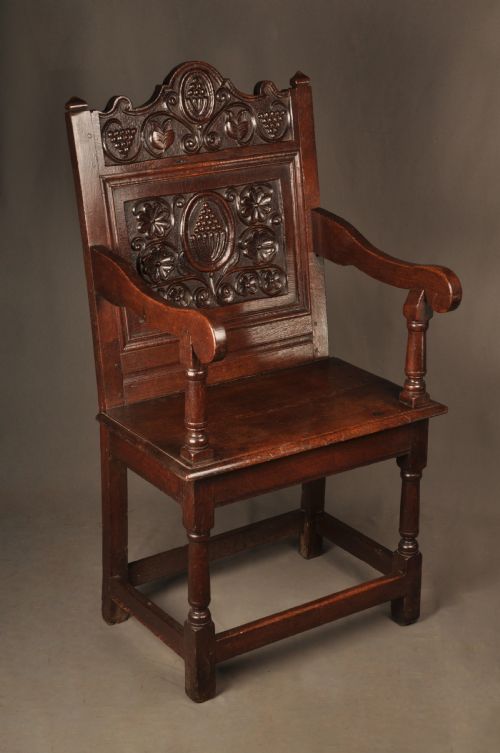
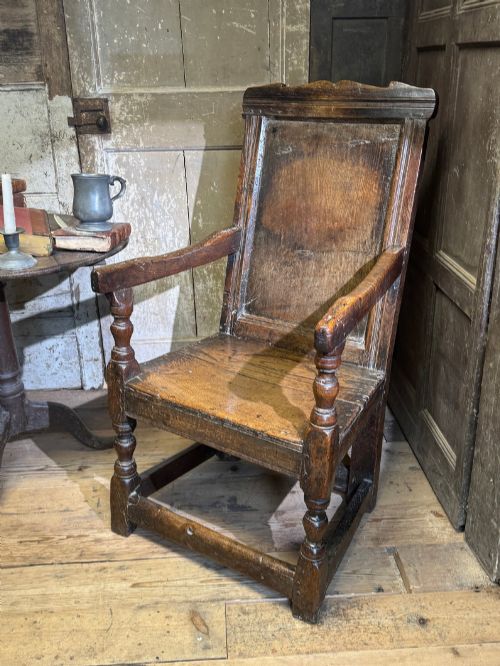


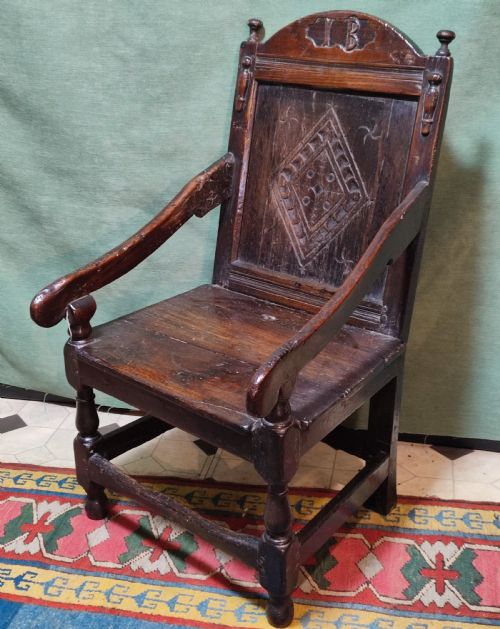
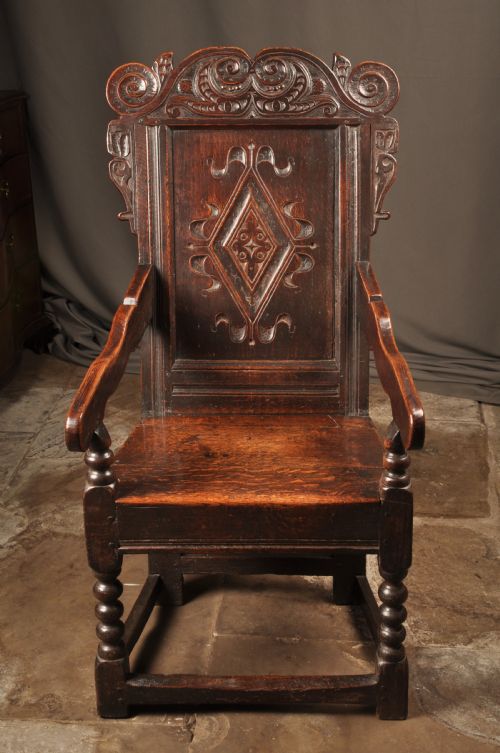


Charles I Wainscot Armchair
A charles i wainscot armchair is a solid wood seat built to command a room, offering historic character and sturdy joinery.
Charles I Wainscot Armchair
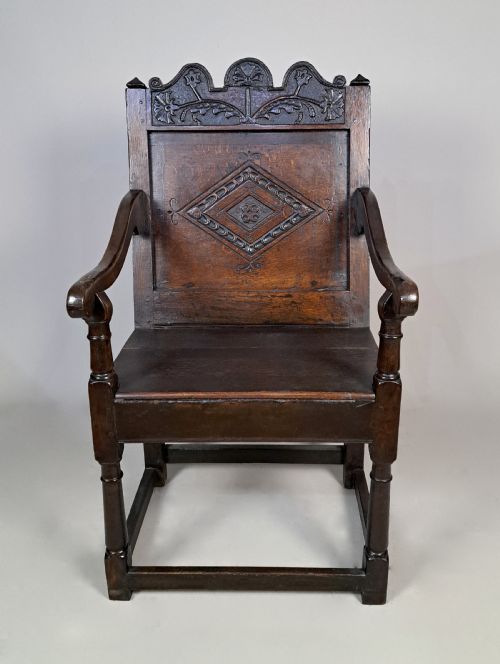
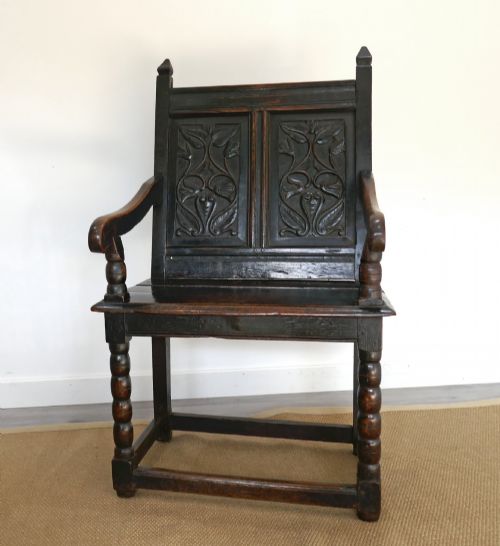
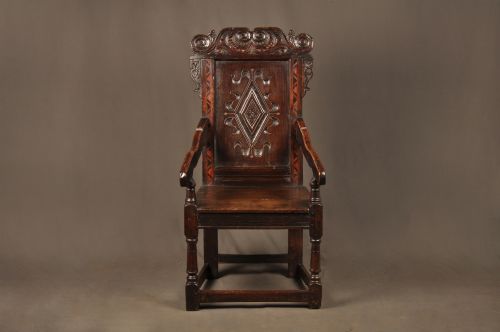
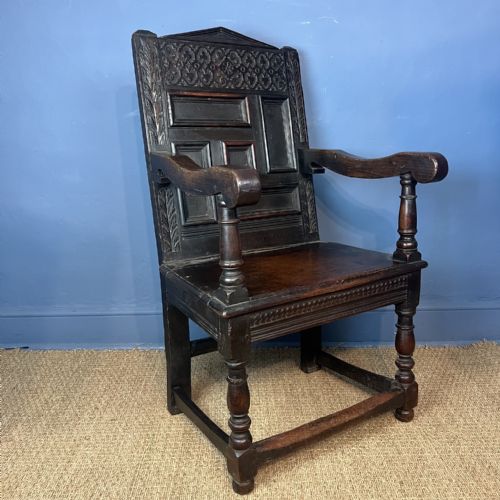
A charles i wainscot armchair represents heavy timber seating from the seventeenth century, constructed with panelled backs and solid wooden arms. These chairs originate from various English and Welsh regions including Yorkshire, Lancashire, Cheshire, and the West Country.
Most examples encountered on this page date from the seventeenth century, spanning the Jacobean, Charles I, and Charles II periods. Buyers find standard adult armchairs alongside smaller proportions intended for children or ladies, plus master's armchairs.
How they were made
These pieces rely on solid oak construction, sometimes incorporating yew-wood panels for contrast within the timber framework. Joiners utilised traditional mortise and tenon joints secured with wooden pegs to build the rigid frames.
Carving provides the primary ornamentation, featuring strapwork, foliage, and geometric patterns cut directly into the solid wood panels and rails. Certain pieces also accommodate velvet upholstery for added comfort.
What varies in quality
The depth and crispness of the hand carving distinguish finer examples from plain workshop output, particularly on the back panel and crest rail. Proportions and regional style purity also influence the standing of an individual piece.
The integrity of the original timber frame and the survival of early surfaces determine the overall character. Alterations to the lower legs or replaced wooden panels alter the historical standing of the chair.
The Charles I Wainscot Armchair Glossary
- Wainscot
- A wooden panelled construction method used historically for walls and heavy furniture. This term specifically denotes a stiff, high-backed wooden armchair.
- Joined chair
- A piece of furniture built using tight wooden joints rather than simpler pegged or nailed boards. This method defines seventeenth-century carpentry standards.
- Crest rail
- The top horizontal member of a chair back, frequently shaped or carved with decoration. It sits above the main panel.
- Strapwork
- A carved ornament resembling flat interlaced bands or leather straps. It appears commonly on Jacobean panels.
- Mortise and tenon
- A fundamental woodworking joint where a projecting tongue fits snugly into a corresponding hole. This technique holds the frame rigid.
Charles I Wainscot Armchair: Frequently Asked Questions
How do I identify a genuine charles i wainscot armchair?
Examine the timber for authentic age-related shrinkage, tool marks, and construction using pegged mortise and tenon joints. Regional variations in the carving and panel layout often point to specific English or Welsh workshops.
Check that the proportions match seventeenth-century seating standards and that the wood species, typically oak, shows consistent oxidation throughout.
Where were these armchairs placed originally?
These heavy wooden seats sat in the principal rooms of manor houses and substantial farmhouses, traditionally reserved for the head of the household. Their solid construction protected occupants from draughts.
In modern settings, they function well as hall chairs or statement pieces in studies and living rooms.
Did these chairs always have cushions?
Original seating surfaces consisted of bare timber boards, sometimes softened with loose cushions or squabs covered in materials like velvet. Owners added textiles for comfort during colder months.
Surviving examples occasionally retain evidence of historical upholstery tracks on the wooden seats.
What is the difference between Yorkshire and Welsh examples?
Yorkshire pieces frequently display intricate carved strapwork and cresting along the top rail of the back panel. Welsh variants from regions like Llanrwst often utilise local timbers such as yew-wood panels alongside oak frames.
Regional joinery habits and specific decorative motifs help attribute pieces to particular local traditions.