

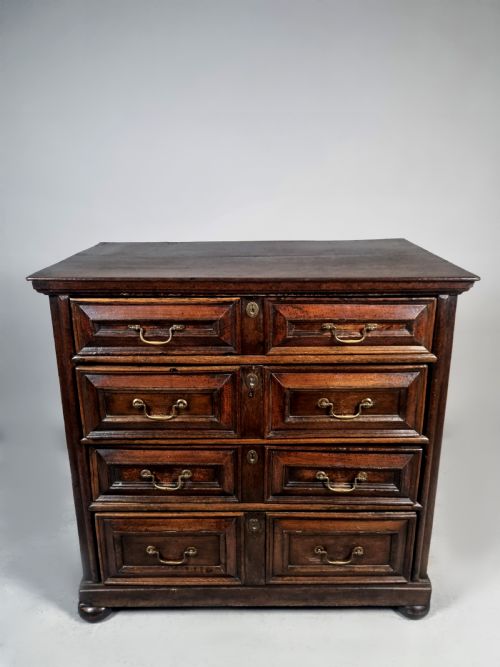
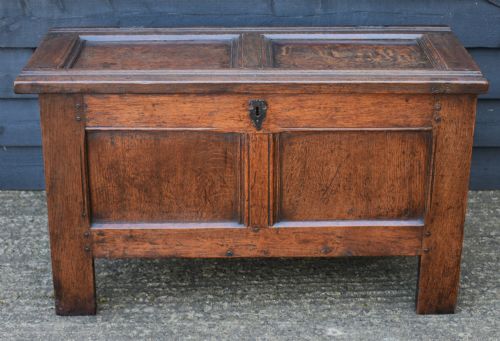
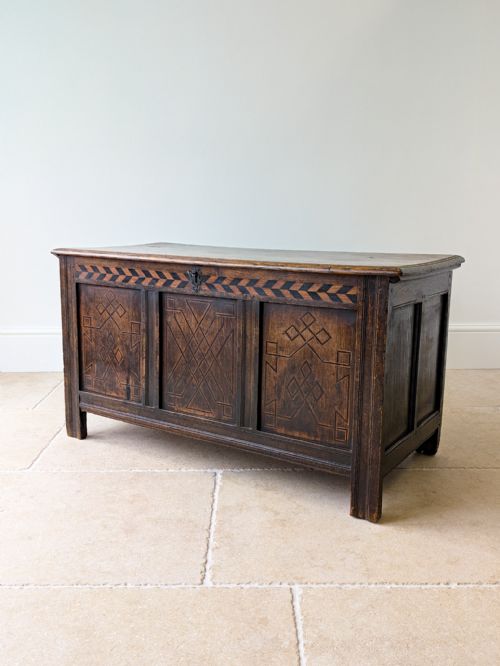
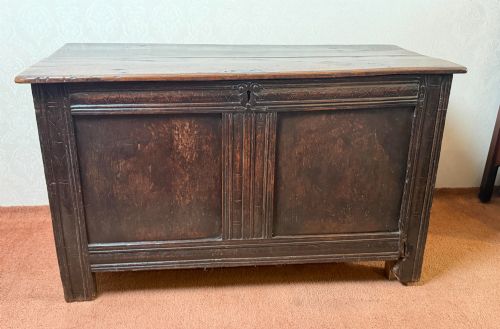

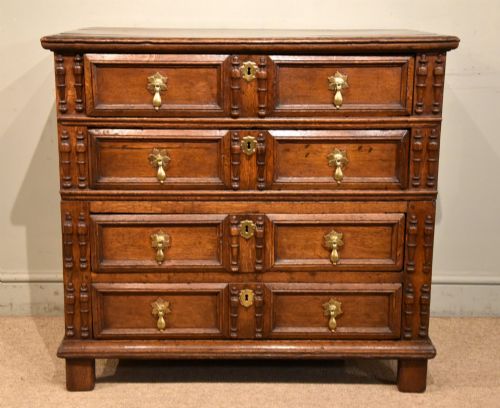
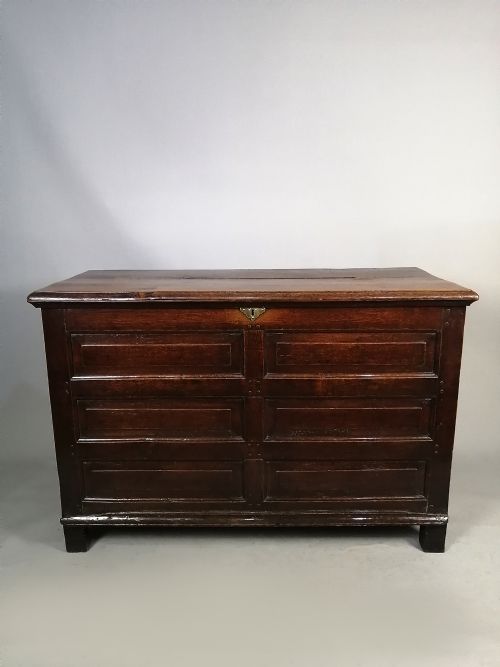
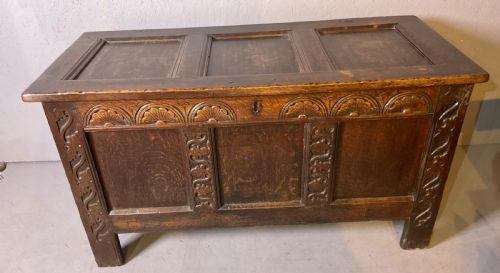
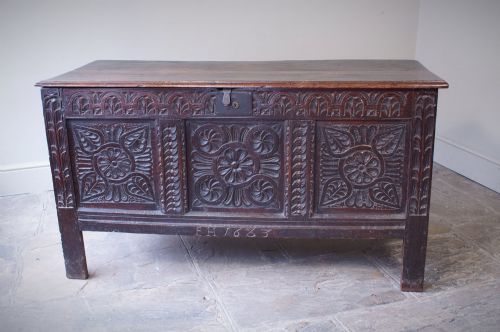
Charles I Coffer
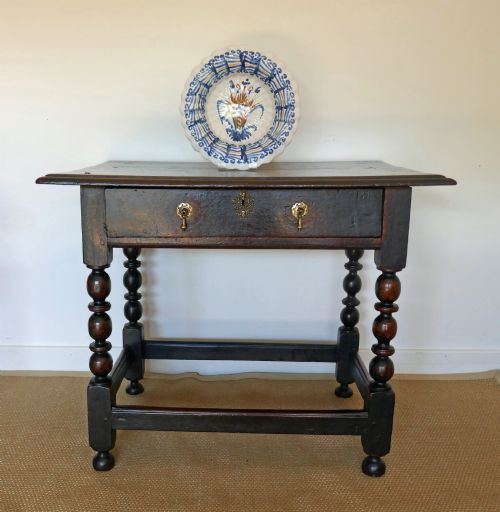
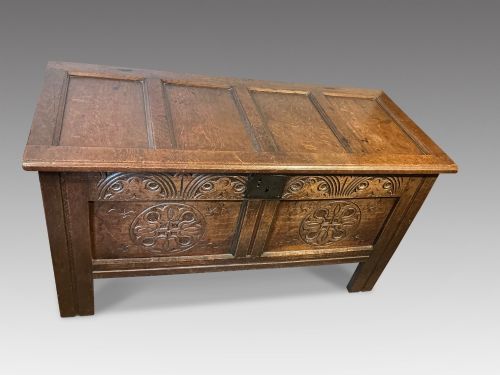
When evaluating a charles i coffer, collectors examine heavy oak construction and panelled lids designed for domestic storage.
Charles I Coffer
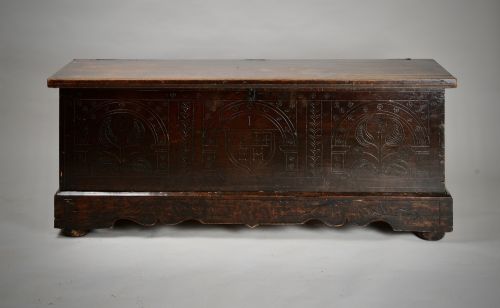
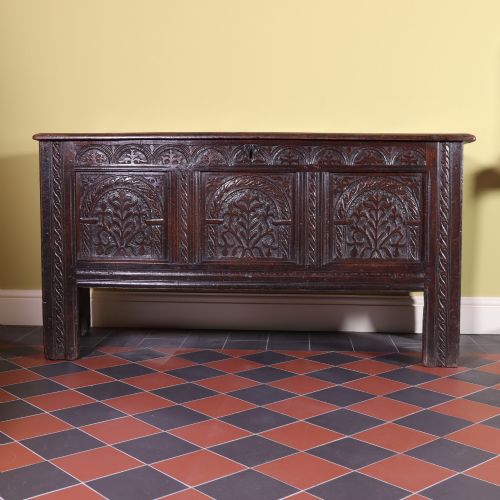
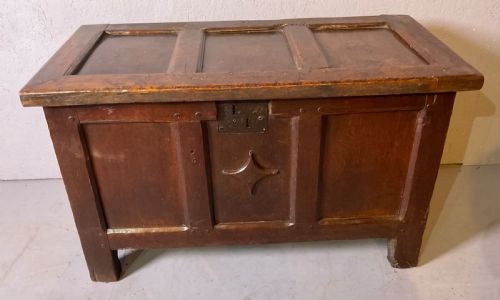
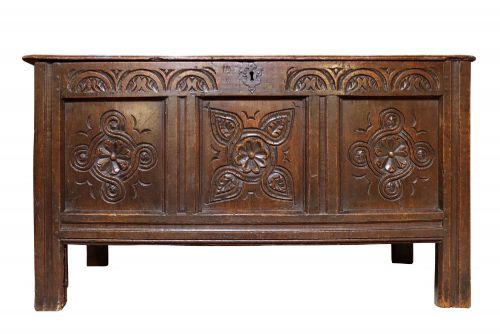
A charles i coffer represents early seventeenth-century English storage furniture, typically constructed as a rectangular wooden chest with a hinged lid. Buyers encountering these pieces on the market will frequently see panelled fronts, scratch carving, and board construction dating from the seventeenth century.
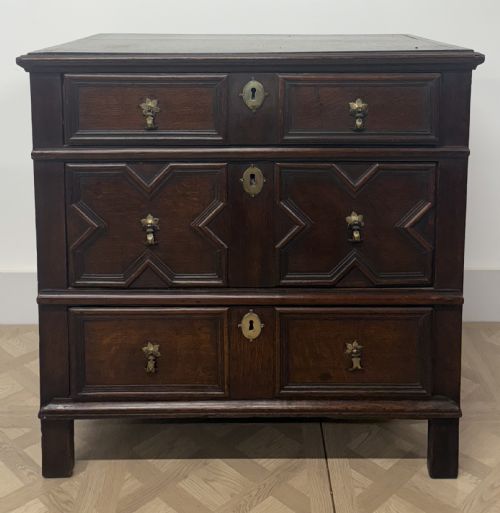
Beyond standard blanket chests, related forms appear in the listings including table boxes, strong boxes, and two-part chests of drawers. These utilitarian objects served households for storing valuables, linens, and documents before dedicated wardrobes became common.
Origins trace primarily to English regional workshops, with examples specifically attributed to counties such as Somerset and the West Country. The survival of these early pieces relies on the durability of native timber and simple joinery.
Distinguishing quality factors
The integrity of the original construction separates superior examples from heavily restored or altered pieces. Original panelled lids, unaltered board thicknesses, and untouched hinges command greater regard among collectors.
Depth of carving and clarity of regional decorative motifs determine visual distinction. Crisp arcaded fronts, distinct scratch carving, and well-preserved surface patination indicate finer craftsmanship from seventeenth-century workshops.
Charles I Coffer Retail Price Guide 2026
Typical asking prices for charles i coffer among the pieces listed under this phrase on Sellingantiques today, from the lower quarter to the upper quarter. They describe what is for sale here now, not the wider market.
Several surviving chests retain their original complex steel locks, complete with seventeenth-century keys designed to outsmart wandering servants.
The Charles I Coffer Glossary
- Coffer
- A large wooden chest used for storage, typically fitted with a hinged lid and raised on stiles or feet. These sturdy boxes formed a primary item of furniture in early domestic interiors.
- Joinery
- The method of connecting pieces of wood using interlocking joints secured by wooden pegs without relying on metal nails. This technique defines seventeenth-century cabinet making.
- Arcaded
- Decorated with a series of arched motifs carved in relief onto wooden panels. This architectural style frequently appears on early panels.
- Patina
- The surface sheen and colour developed by wood over centuries of handling, exposure, and waxing. Collectors value undisturbed surfaces showing genuine age.
- Stile
- The vertical upright member of a panelled frame into which horizontal rails are fitted. Stiles often extend downward to form the feet of the chest.
Charles I Coffer: Frequently Asked Questions
What was a coffer used for?
These chests served primarily for storing household valuables, garments, and important documents securely within the home. Their robust construction allowed them to double as seating or tables when space required.
In wealthier households, smaller boxes held bibles, currency, or jewellery, while larger chests accommodated bulky textiles and winter blankets.
How do I date a seventeenth-century chest?
Dating relies on examining the joinery methods, tool marks, timber preparation, and stylistic carving details. Early pieces utilise hand-riven oak boards and pegged mortise-and-tenon frames.
Hardware such as wrought iron hinges and complex steel locks also provide reliable chronological markers when they remain entirely original to the piece.
Are these chests made of solid oak?
Authentic period examples consist almost entirely of native English oak, selected for its density and structural strength. Secondary timbers like cedar or walnut occasionally appear in geometric inlay work.
Every structural component, from the lid planks to the floor boards, utilises heavy timber rather than veneered substitutes found in later centuries.
How should I care for antique oak?
Maintaining these pieces requires stable room humidity and protection from direct sunlight to prevent timber shrinkage and splitting. Natural beeswax applied sparingly helps preserve the surface sheen.
Avoid modern liquid polishes or silicone-based cleaners, which penetrate the open grain of the oak and degrade the historic patina over time.