

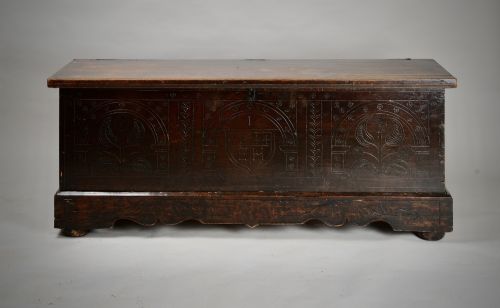
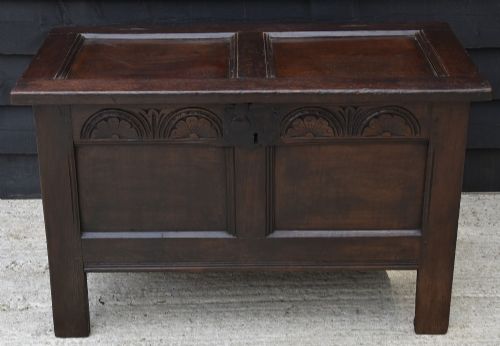
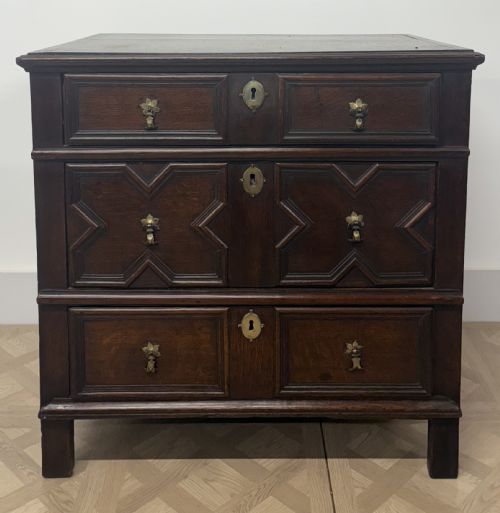
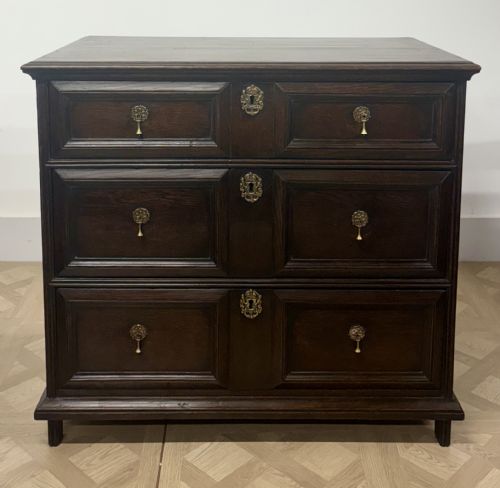
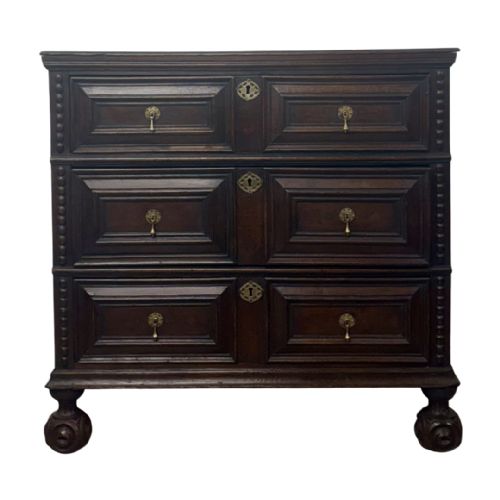
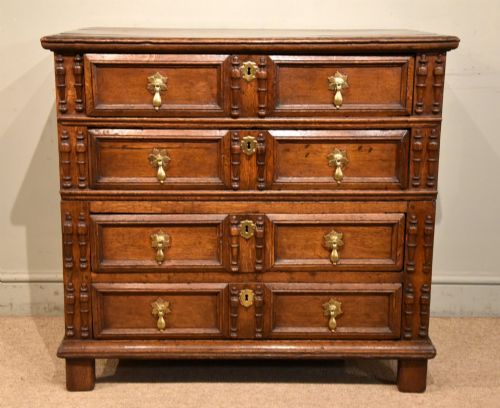
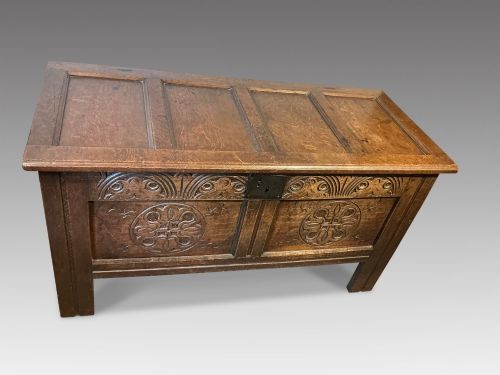
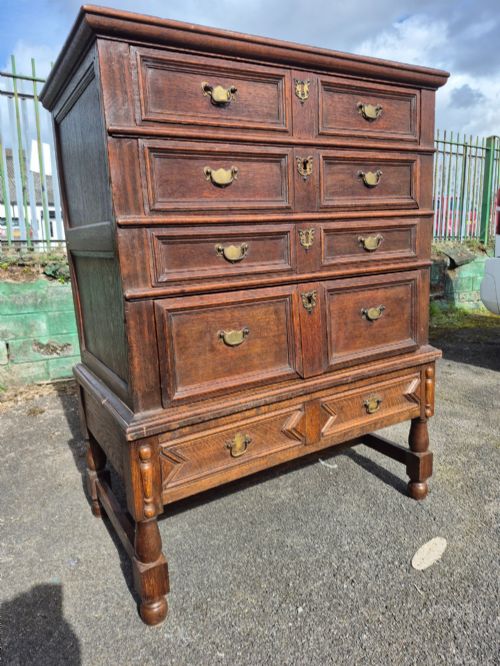
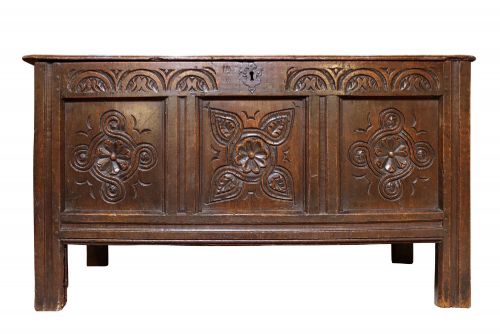
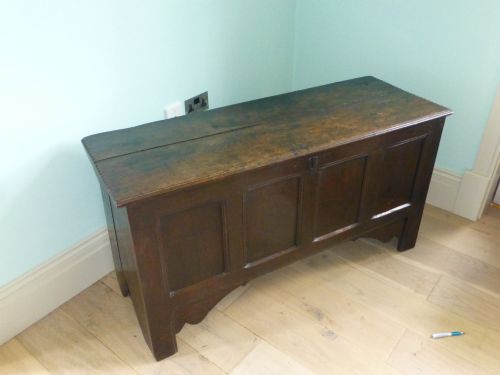
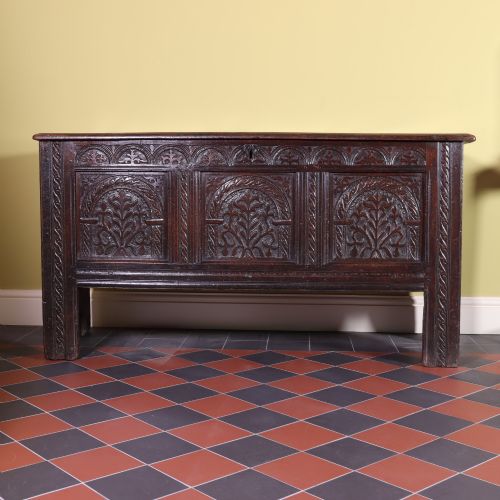
Charles I Carved Chest
A charles i carved chest brings tangible seventeenth-century craftsmanship into a modern room, offering robust storage built from solid oak.
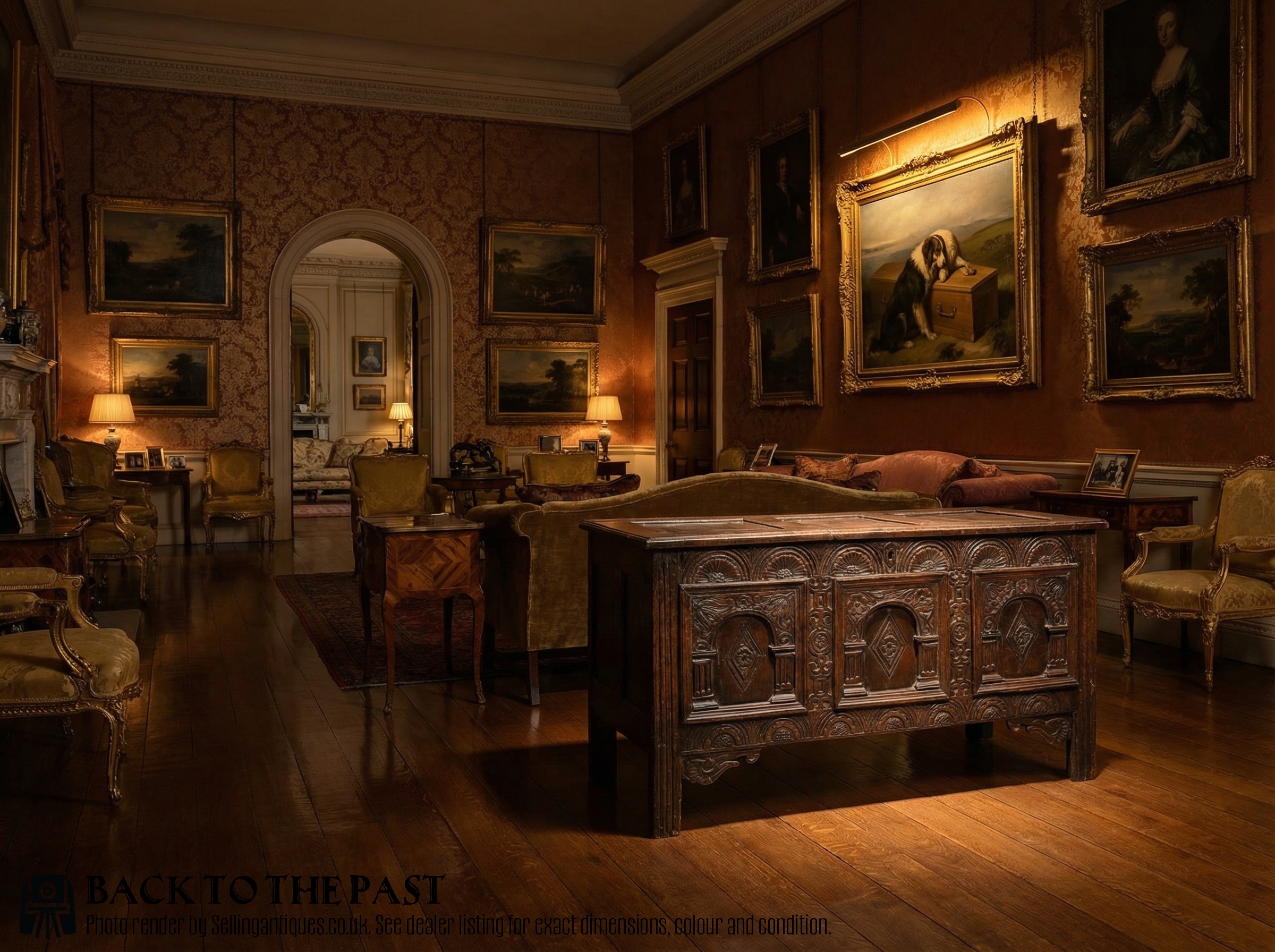
Charles I Carved Chest
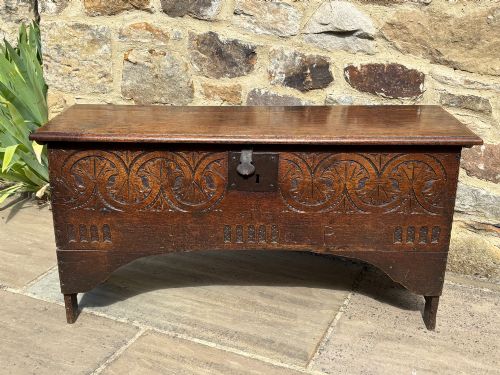
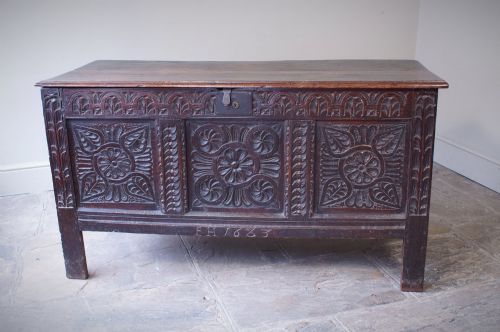
A charles i carved chest encompasses sturdy oak coffers, blanket boxes, and storage chests dating primarily from the seventeenth century. These sturdy domestic items served everyday storage needs in early homes, often detailed with arcading, scratch carving, or panelled construction.
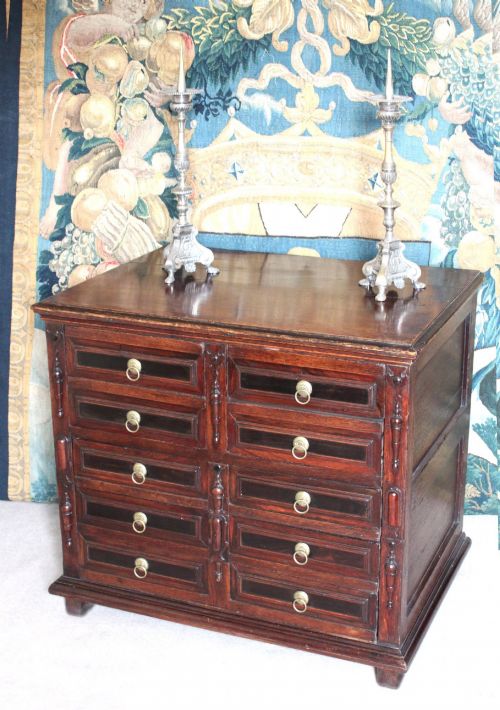
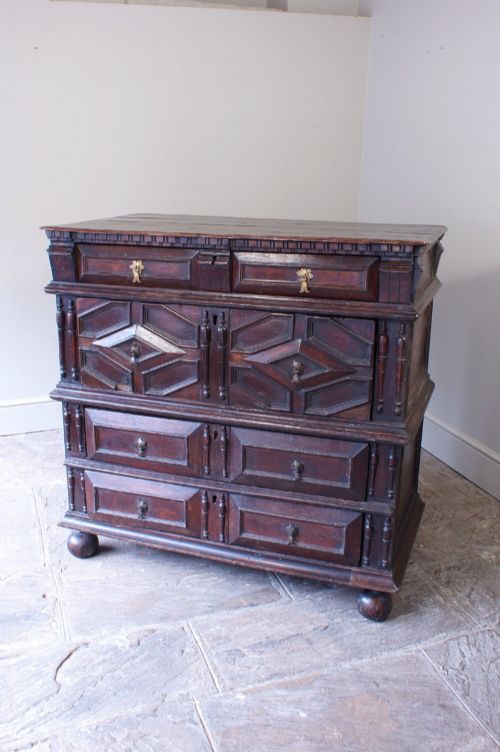
Buyers meeting these pieces on this page encounter robust rectangular forms ranging from simple boarded boxes to panelled coffers and chests of drawers. Oak dominates the selection, occasionally supplemented by walnut, cedar, and iron hardware.
Regional variations appear across the inventory, including Welsh examples and pieces bearing Lancashire or West Country traits. The selection also bridges into the subsequent Charles II and Restoration periods with geometric mouldings and mule chests.
What varies in quality
The sophistication of the carving and the proportion of original material separate standard examples from finer works. Crisp, deep relief work on the panels indicates superior cabinet-making compared to shallow or worn surface decoration.
Survival of original elements, such as hinges, boards, and feet, dictates the desirability of a piece. Alterations, replaced lids, or later stands alter the historical integrity of these early containers.
Listings feature seventeenth-century oak supplemented by walnut, cedar, iron, and brass across various regional coffer forms.
The Charles I Carved Chest Glossary
- Cofer
- A large wooden chest used for storing valuables, linen, or documents in early households. These storage boxes often feature hinged lids and sturdy panelled construction.
- Mule chest
- A traditional storage box featuring one or more drawers beneath the main compartment. This form bridges the gap between the simple coffer and the chest of drawers.
- Arcading
- A decorative row of arches carved into wooden panels, frequently seen on seventeenth-century furniture. This architectural motif mirrors stone church carving of earlier eras.
- Boarded box
- A simple chest constructed from thick planks fastened together directly at the edges rather than set into a framed structure. These represent some of the earliest surviving domestic storage forms.
- Scratch carving
- A basic decorative technique where a profile is scraped or gouged into the surface of the wood using a template. It creates simple linear patterns on period panels.
Charles I Carved Chest: Frequently Asked Questions
What did people store in a charles i carved chest?
Households utilised these heavy timber containers to store valuable woollen textiles, family linen, and important documents away from damp floors and pests.
Their robust construction and heavy lids provided security for personal possessions before fitted closets became common in domestic interiors.
How do I care for seventeenth century oak furniture?
Keep these timber pieces away from direct heat sources and rapid humidity fluctuations to prevent the oak from splitting or warping.
Apply traditional beeswax occasionally and buff gently with a soft cloth to maintain the natural finish without sealing the pores of the antique wood.
What is the difference between a coffer and a chest?
A coffer traditionally describes a lidded box constructed with frame-and-panel techniques, often associated with secure storage.
Chests in later seventeenth-century contexts frequently incorporate drawers beneath the main compartment, evolving toward the standard chest of drawers format.
How can I tell a genuine period piece from a reproduction?
Examine the construction methods for hand-cut joinery, pegged tenons, and timber shrinkage consistent with centuries of age.
Genuine pieces show natural wear patterns around handles and feet alongside tool marks appropriate to seventeenth-century hand woodworking traditions.