

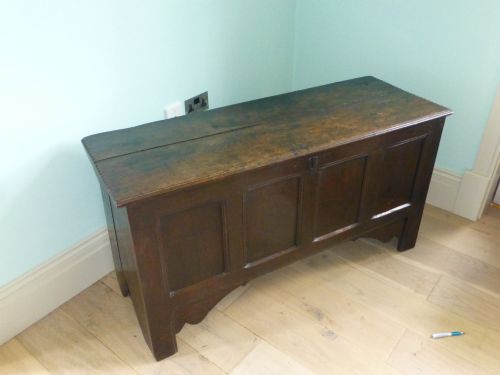
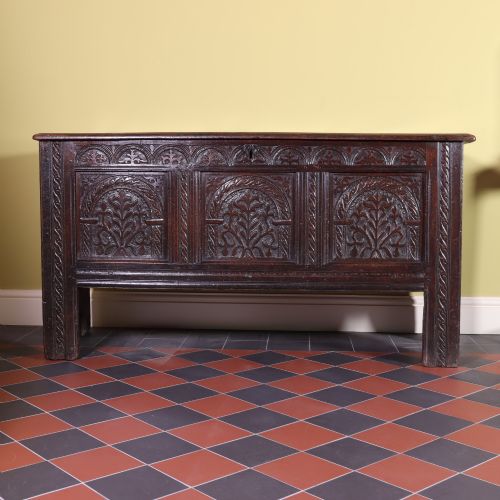
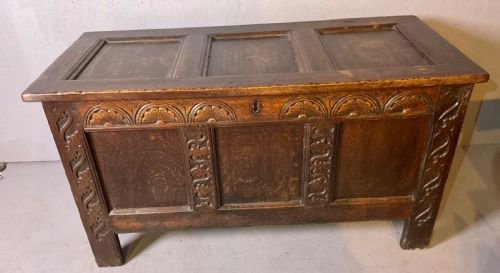
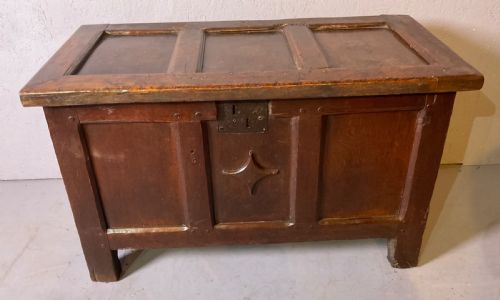
Charles I Oak Trunk
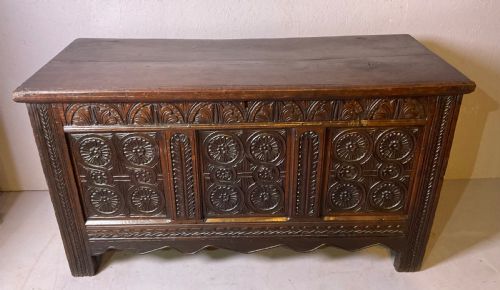
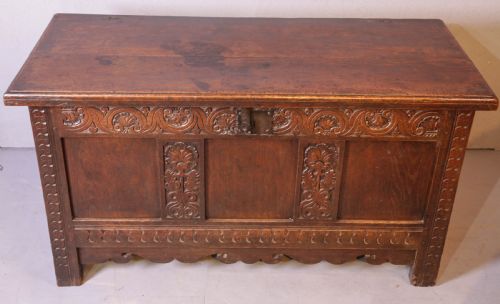
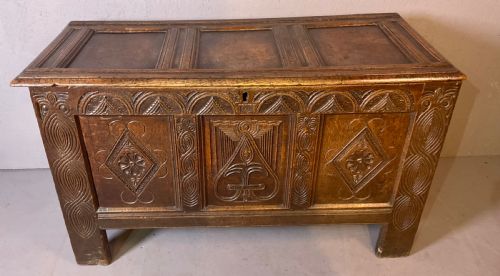
A charles i oak trunk offers heavy timber construction and centuries of tactile history for storage and display.
Charles I Oak Trunk
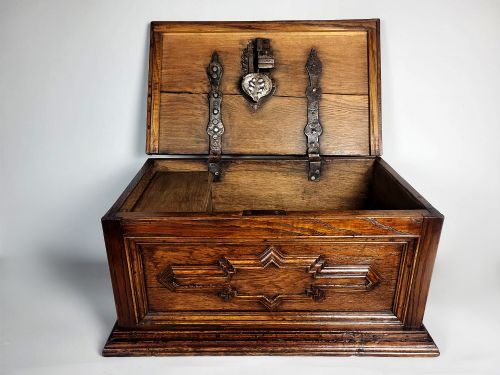
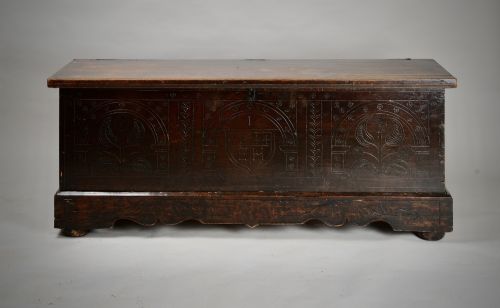
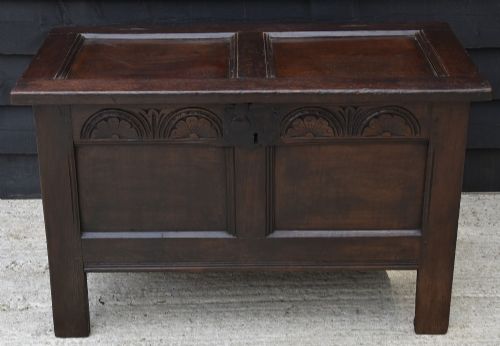
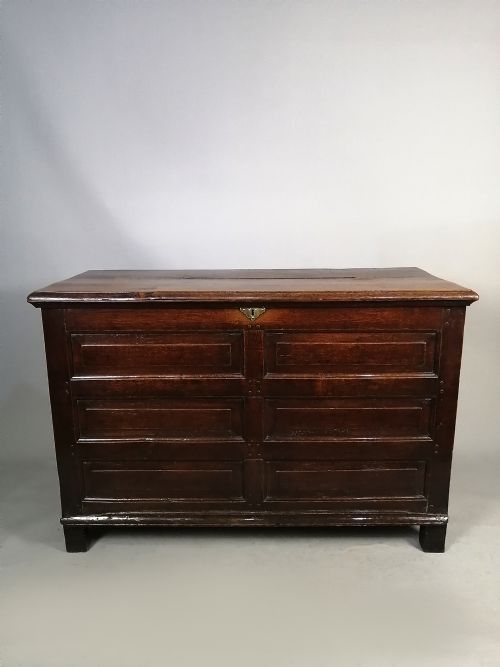
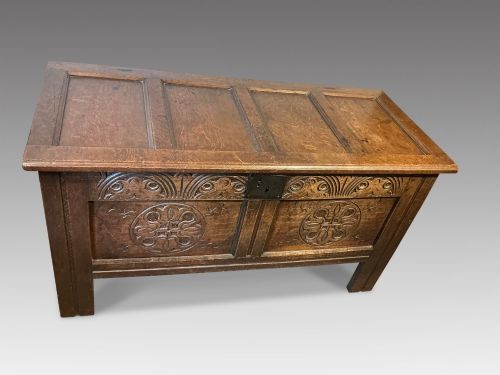
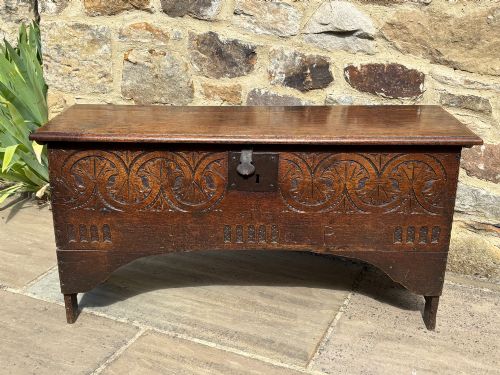
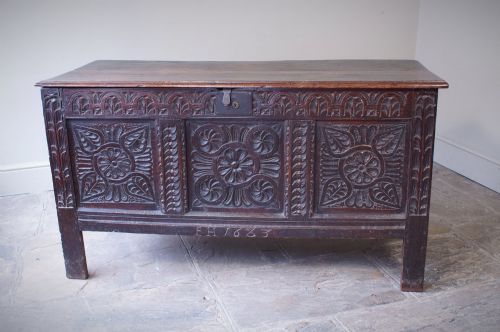
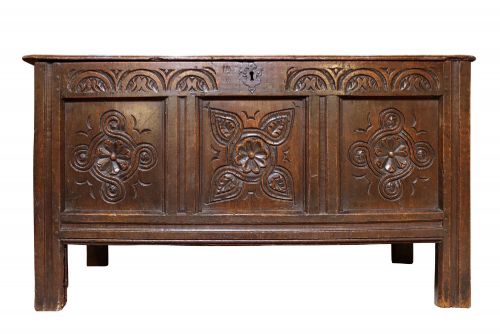
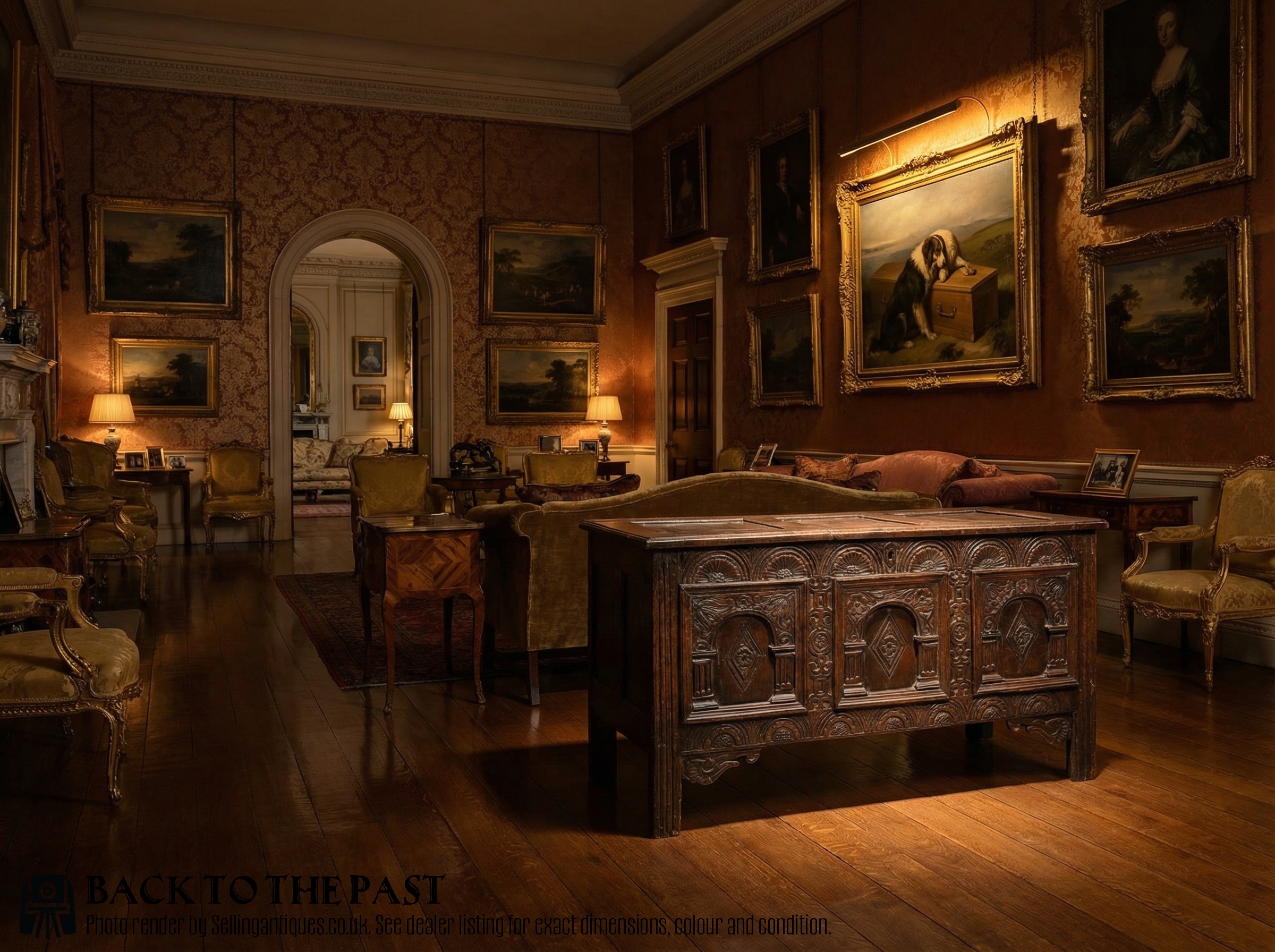
A charles i oak trunk typically appears as a robust timber storage chest or coffer, often constructed with panelled sides or boarded planks. These pieces serve domestic utility, originally housing textiles, valuables, or household provisions.
The versions most common on this page date from the seventeenth century, spanning periods associated with Charles I, Charles II, and Jacobean styles. Regional variations such as Welsh or Lancashire types also emerge through specific panel designs and proportions.
Materials and construction methods
Carpenters built these trunks using native oak, shaped with hand tools and assembled with frame-and-panel techniques or six-plank board construction. Structural joints frequently rely on pegged mortise and tenon joints.
Iron, brass, and steel components appear on hinges, brackets, and complex locks. Secondary decorative treatments involve scratch carving, relief carving, or occasional wood inlay and marquetry.
Early carpenters frequently utilised the natural grain direction of green oak, letting the timber warp slightly around hand-forged iron nails without losing its grip.
Distinctions in craftsmanship and survival
Quality separates pieces by the integrity of their original timber and the depth of surface patination accumulated over centuries. Intact structural elements and original hardware distinguish superior examples from those with extensive replacement parts.
The sophistication of the joinery and the execution of carved decoration mark the upper tier of these pieces. Crisp relief work on panels reflects greater skill than simple scratch carving or plain boarded surfaces.
The Charles I Oak Trunk Glossary
- Cofer
- An antique chest or box used for storage, frequently fitted with a hinged lid. These items form the primary category of domestic furniture in seventeenth-century households.
- Joined oak
- Furniture constructed from frames and panels secured with wooden pegs rather than simple boards. This method accommodates seasonal wood movement.
- Scratch carving
- A decorative technique where a profile is gouged or scratched directly into the surface of the timber. It provides simple linear patterns on period woodwork.
- Mule chest
- A storage chest featuring one or more drawers beneath the main compartment. This form bridges the evolution between early coffers and modern drawer chests.
- Patina
- The surface sheen and colour developed by aged wood through handling, wax, and oxidation. It serves as a key indicator of genuine age.
Charles I Oak Trunk: Frequently Asked Questions
How are these trunks dated?
Dating relies on construction methods, tool marks, and stylistic details such as carved arcading or panel layouts. Seventeenth-century pieces typically display pegged joints and hand-riven oak.
Comparative analysis with dated examples in archives helps narrow the period. Alterations and replaced hardware require careful examination to establish original age.
What was their original purpose?
Households utilised these heavy chests to store valuable textiles, blankets, documents, and silver. Their robust construction offered security against theft and damp conditions.
Travelling nobility and merchants also used smaller trunk variants for transporting belongings. In domestic settings, they frequently doubled as seating benches.
How do I maintain the wood?
Periodic application of traditional beeswax maintains the moisture balance and enhances the surface sheen. Avoid placing timber furniture near direct heat sources or in fluctuating humidity.
Gentle dusting with a soft cloth prevents particle buildup. Modern silicone polishes should be avoided as they penetrate the pores of ancient oak.
Are original locks common?
Original iron and steel locks survive on some examples, often accompanied by complex internal mechanisms. Many period pieces retain their initial key plates.
Replacement locks and repaired hasps occur frequently due to centuries of operational wear. Surviving original hardware significantly enhances historical interest.