




Charcoal Study on Paper
A charcoal study on paper brings the direct hand of the artist into a room through raw, monochromatic line and tone.
Charcoal Study on Paper
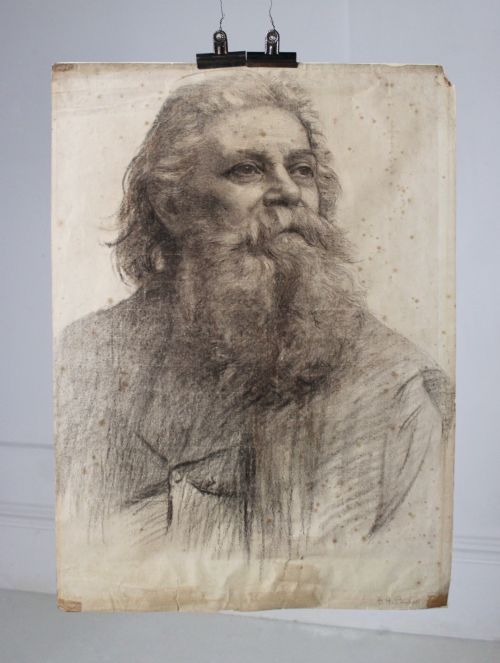
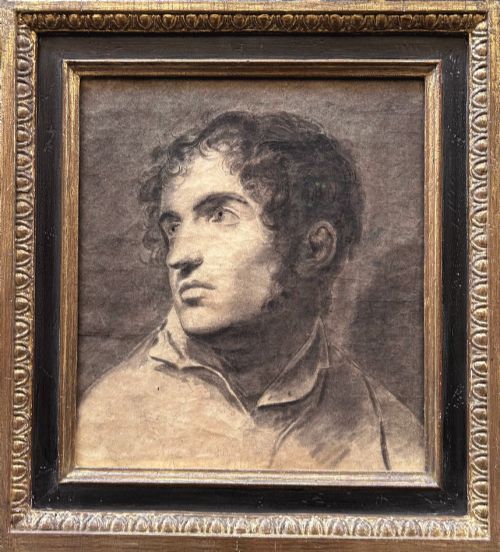
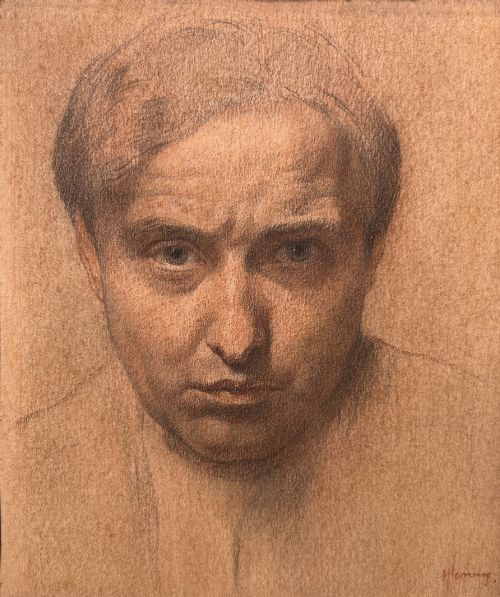
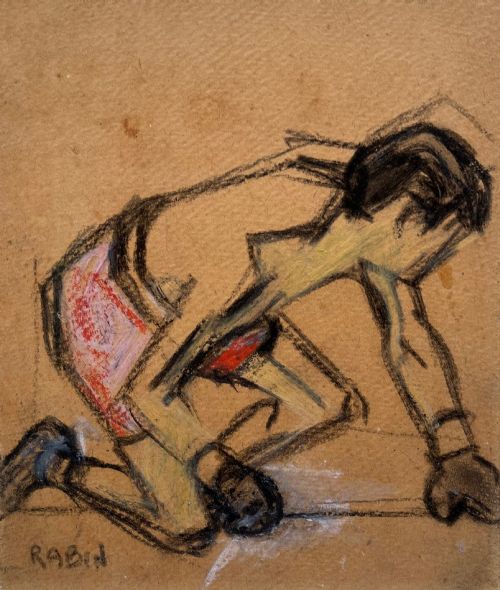
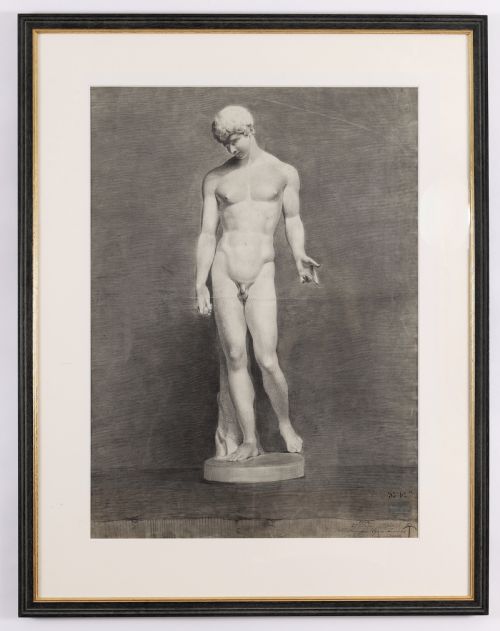
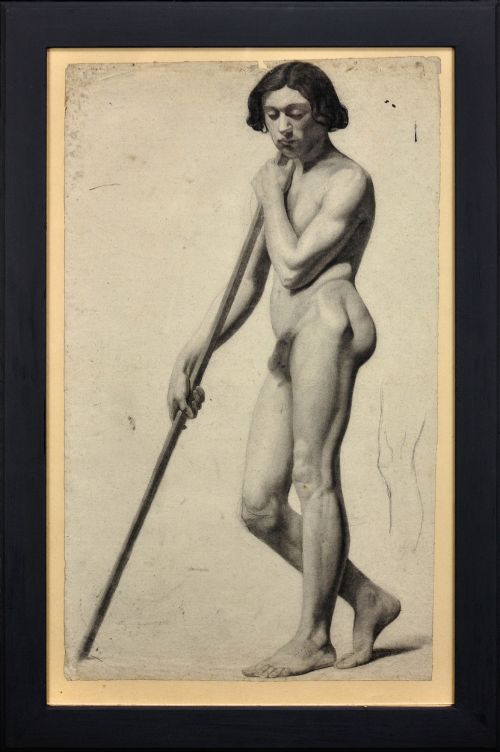
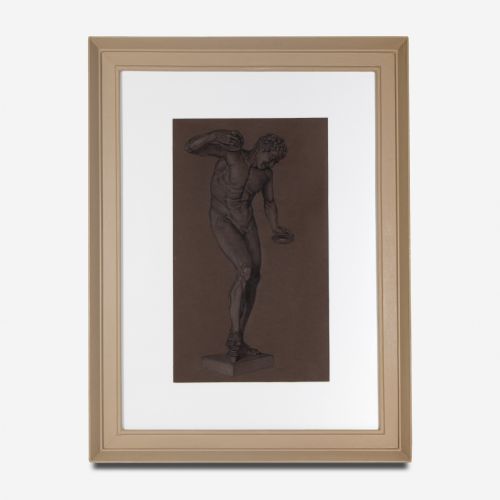
A charcoal study on paper captures the immediate observation of an artist, recording figures, portraits, and landscapes through swift application and tonal massing. These works range from rigorous academic life studies of the human form to atmospheric landscapes and preparatory sketches intended for larger canvases.
The selections span multiple centuries, showing a heavy representation of nineteenth-century academic exercises alongside twentieth-century modernist and realist compositions. Works appear in various formats including framed drawings, original sheets, and wall art, reflecting both formal studio practice and intimate personal observation.
Materials and technique
Artists utilise compressed or vine charcoal combined frequently with chalk, graphite, and pastel on various paper supports, including toned paper that allows for dramatic highlights. These mediums permit rapid transitions between deep shadows and sharp linear definitions, often fixed to prevent smudging.
Framed works commonly incorporate wood and glass to protect the fragile powdery surface from environmental damage while maintaining visibility of the delicate texture inherent to paper.
Listings span periods from the seventeenth century through to the 1960s, featuring academic life studies, portraits, and landscapes.
Assessing quality in works on paper
The strength of a drawing rests on the confidence of the draughtsmanship and the structural integrity of the composition, particularly in anatomical life studies where proportion and gesture dictate success. Superior examples demonstrate a command of tone that suggests volume and light without relying on excessive blending.
Condition plays a vital role in evaluation, distinguishing sheets preserved with minimal foxing and fading from those compromised by light exposure or moisture. The distinction between a hurried preliminary scribble and a fully resolved study also marks the upper tier of execution.
Herbert Johnson Harvey·Samuel Rabin·Henry Arthur Roberts·Demetrios Galanis·Arthur Todd·Winifred Eugene Ballard·John Hoppner·Reginald G. Eves·John Macallan Swan·Frank Dobson·Theobald Chartran·John Seymour Lucas·Ernest Borough Johnson·George Richmond·Francis Dodd·Henri Joseph Harpignies·Cecil CP Lawson·Thomas Monro·Juliet Pannett
The Charcoal Study on Paper Glossary
- Academic Realism
- A style of painting and drawing produced under the influence of European academies of art, emphasising precise anatomical accuracy and classical proportions.
- Chalk
- A soft drawing material made from earthy minerals, used alone or alongside charcoal to introduce crisp white or coloured highlights onto paper.
- Graphite
- A crystalline form of carbon used to create fine grey lines and subtle shading, frequently paired with charcoal in mixed-media studies.
- Toned Paper
- Paper manufactured or prepared with a neutral mid-tone colour such as grey or tan, allowing the artist to build up darks and pull out lights efficiently.
- Deux Crayon
- A drawing technique utilising two distinct pencils or chalks, typically black and red, to create warmth and tonal variation.
Charcoal Study on Paper: Frequently Asked Questions
How should I frame a charcoal study?
Protect the delicate surface by ensuring the glass does not touch the paper directly, using a mat or spacer to create a secure air gap. This prevents humidity from causing the charcoal particles to adhere to the interior glass.
Keep the framed work away from direct sunlight to avoid fading the paper support and destabilising the drawn medium over time.
What is the difference between a study and a finished drawing?
A study is typically an exploratory exercise created to understand form, light, or anatomy before executing a larger oil painting or sculpture. These pieces prioritize expressive mark-making and rapid observation over rigid polish.
Finished drawings are intended as standalone works of art, possessing a higher degree of tonal completion and compositional resolution.
How do I identify the period of a drawing?
Examine the watermark on the paper, the framing materials, and the stylistic conventions employed in rendering the subject matter. Nineteenth-century academic pieces often follow strict neoclassical proportions, while early twentieth-century examples display looser modernist tendencies.
Signatures, inscriptions, and artist stamps on the reverse can also provide definitive chronological markers.
Why are life studies so common in charcoal?
Charcoal allows artists to make rapid adjustments and sweep across large areas of paper quickly, making it the ideal medium for capturing a live model during short posing sessions. The material responds immediately to pressure changes, accommodating deep shadows and soft gradients with equal ease.
Art schools institutionalised this practice, ensuring a steady output of rigorous anatomical drawings from students and instructors alike.