






19th Century Charcoal Study
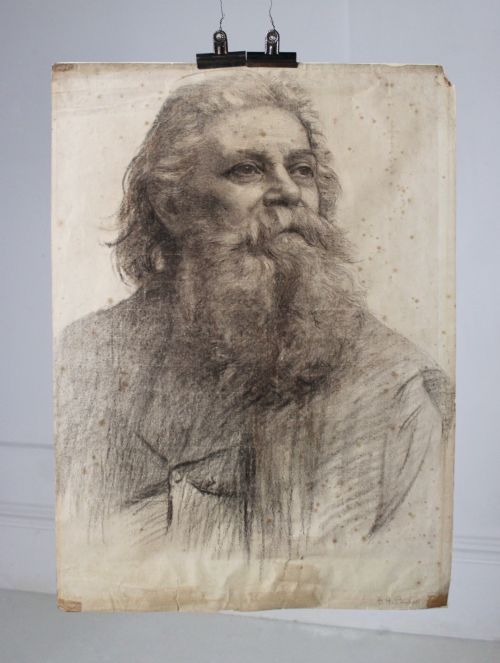
A 19th century charcoal study captures the direct hand of a draughtsman working in monochrome, offering an intimate window into period academic training and portraiture.
19th Century Charcoal Study
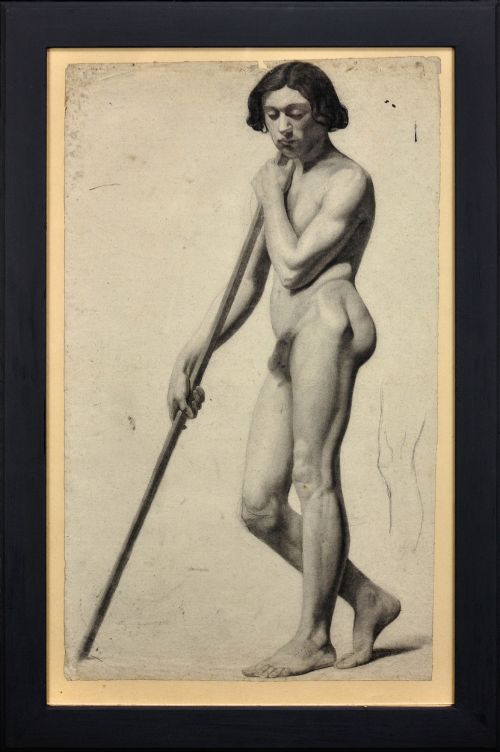
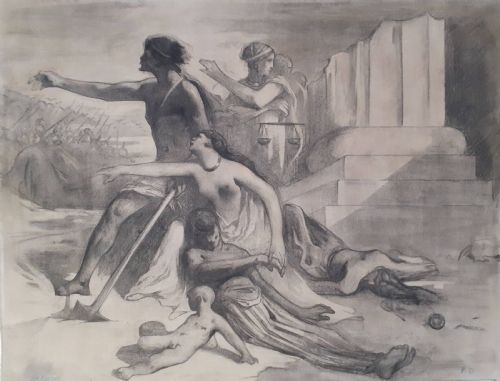
A 19th century charcoal study comprises original monochrome works on paper originating from the nineteenth century, spanning academic life drawings, portraits, and landscapes. These pieces record the rigorous training methods of European schools through direct hand-rendered marks on paper.
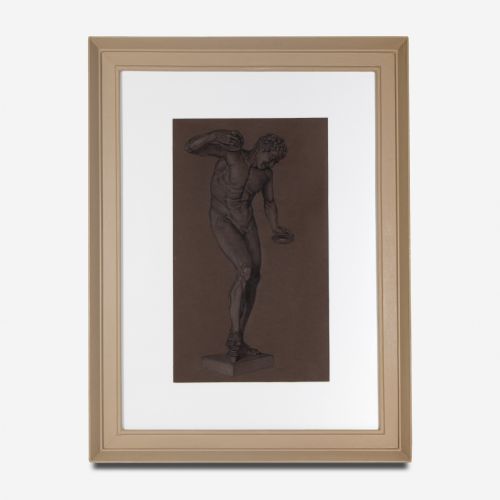
The selections encountered here most frequently include framed academic life studies of male and female figures, alongside character portraits and preparatory sketches. Artists utilised charcoal often combined with chalk or graphite on toned paper to capture light and form.
Originating across English and French schools, these drawings reflect Neoclassical, Academic Realism, and Orientalist movements. Each work preserves the immediate gesture of the artist before transfer to a finished canvas.
How they were made
Artists drew with compressed or willow charcoal sticks supplemented by graphite and white chalk for highlights. The support material typically consists of laid or wove paper, sometimes toned in grey or buff hues to enhance tonal contrast.
Framing often involves period wood or gilt wood enclosures protecting the delicate paper surface beneath glass. Fixatives were sometimes applied to stabilise the friable charcoal medium against friction.
Several gentlemen depicted in these studies appear genuinely startled to have been interrupted mid-thought by an academic draughtsman.
What varies in quality
Quality rests upon the anatomical surety of the draughtsmanship and the expressive economy of line. A confident hand commands proportions precisely without heavy reworking, whereas weaker examples betray hesitation and stiff contouring.
The preservation of the paper support and the clarity of the monochrome tones distinguish superior works. Tonal depth achieved through subtle blending and sharp highlights elevates a utilitarian academic exercise into a compelling portrait.
Henry Arthur Roberts·John Macallan Swan·Theobald Chartran·George Richmond·Henri Joseph Harpignies·Cecil CP Lawson·Thomas Monro
The 19th Century Charcoal Study Glossary
- Academic life study
- A drawing executed from a live human model within a structured school or studio setting. This practice formed the core of nineteenth-century artistic training.
- Toned paper
- Paper manufactured with a neutral tint such as grey or tan rather than pure white. This base allows artists to apply dark charcoal and bright white chalk simultaneously for rapid tonal value studies.
- Chalk
- A soft calcareous material used alongside charcoal for adding bright highlights to tinted paper. It creates crisp opaque marks contrasting with powdery dark lines.
- Graphite
- A crystalline form of carbon used for fine linear detail in preparatory sketches. It provides harder, shinier metallic lines compared to the matte black of charcoal.
- Neoclassical
- An artistic style drawing inspiration from the classical art and culture of ancient Greece and Rome. Works in this vein emphasise austere lines, classical drapery, and heroic forms.
19th Century Charcoal Study: Frequently Asked Questions
What is a 19th century charcoal study?
A 19th century charcoal study is an original monochrome drawing on paper created during the nineteenth century as an observational exercise or preparatory work.
These pieces range from life drawings of models to landscape and portrait compositions produced within European academic traditions.
How do I care for framed drawings?
Drawings on paper require protection from direct sunlight to prevent fading of the charcoal medium and yellowing of the paper support.
Keep them in stable environments away from excessive humidity to preserve the integrity of the paper and frame.
How can I tell French school works apart?
French school drawings from this era frequently exhibit academic realism with an emphasis on dramatic lighting and precise anatomical rendering.
Inscriptions, collector stamps, or signatures often point towards specific Parisian ateliers or Salons of the period.
Why use toned paper?
Toned paper provides a middle grey or buff ground that saves the artist from rendering mid-tones from scratch.
By establishing a middle value, the draughtsman only needs to add dark charcoal for shadows and white chalk for highlights.