





Champleve Enamel Vessel
A champleve enamel vessel brings rich metallic colours and heavy cast bronze into a room.
Champleve Enamel Vessel
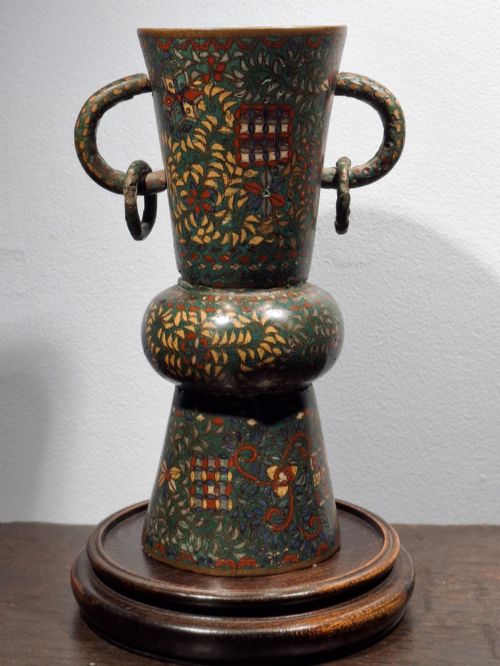
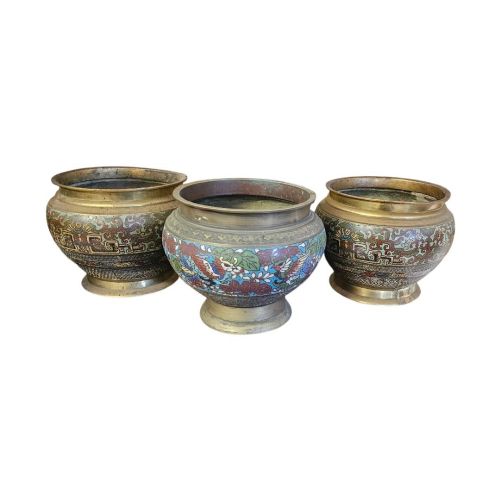
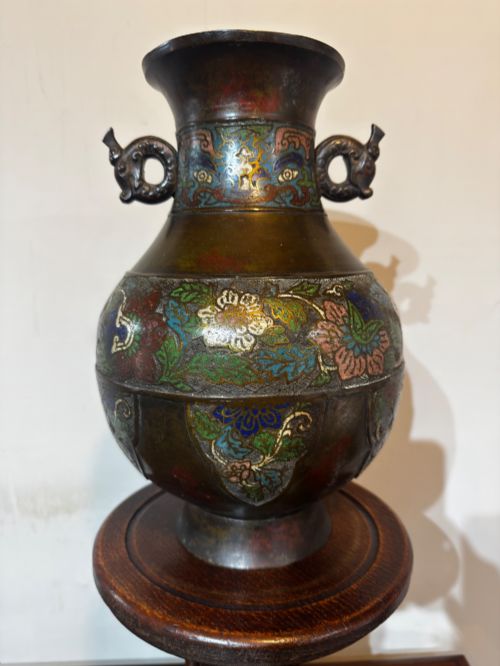
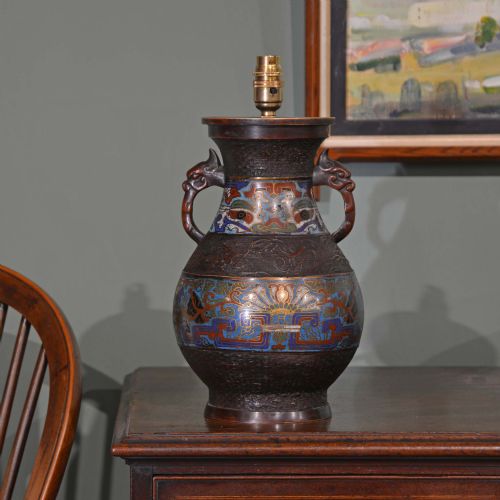
When you search for a champleve enamel vessel, you find solid bronze, brass or copper bodies decorated with coloured vitreous enamels set into recessed channels. These pieces span origins from China and Japan to France and Persia, reflecting distinct cultural aesthetic traditions.
The forms on this page include large jardinieres, lidded urns, decorative vases, planters and bowls. You are most likely to meet nineteenth century Chinese and Japanese examples alongside French nineteenth century interpretations.
The construction relies on metalwork foundations cast with hollowed compartments that receive the enamel paste before firing. This technique produces durable decorative objects intended for display on tables, mantels and sideboards.
How they were made
The makers cast vessels in bronze, brass or copper, leaving depressed cells or troughs across the exterior surface. Artisans then packed these carved or cast channels with powdered enamel before firing the metal to fuse the glass paste.
Gilt bronze mounts frequently complement the enamelled sections on European pieces, while Asian workshops combined dark patinated bronze with turquoise, blue and red enamel fills. Final polishing brought the metal ridges and the glassy infill to a flush finish.
Champleve Enamel Vessel Retail Price Guide 2026
Typical asking prices for champleve enamel vessel among the pieces listed under this phrase on Sellingantiques today, from the lower quarter to the upper quarter. They describe what is for sale here now, not the wider market.
Materials recorded across the selection include bronze, brass, copper, gilt bronze and vitreous enamel.
What varies in quality
Quality rests in the crispness of the cast metal framework and the precision of the enamel fill within each compartment. Finer examples display thick bronze or brass foundations with deep, even patination and carefully polished dividing lines between colours.
The complexity of the decorative motifs and the harmony of the enamel palette dictate the standing of a piece. Stronger workmanship shows secure bonding between glass and metal without pitting or irregular shrinkage in the fired surface.
The Champleve Enamel Vessel Glossary
- Champlevé
- An enamelling technique where troughs or cells are carved or cast into a metal surface to hold coloured glass paste before firing. The raised metal walls separate each distinct area of colour.
- Jardiniere
- A decorative ceramic, metal or bronze container designed to hold potted plants or flowers. These large vessels frequently feature heavy handles and footed bases.
- Gilt bronze
- Bronze that has been coated with a thin layer of gold using fire gilding or mercury methods. This treatment adds a bright metallic lustre to mounts and decorative details.
- Patina
- The surface sheen and colour acquired by metal through age, handling and environmental exposure. A stable patination indicates natural oxidation over decades or centuries.
Champleve Enamel Vessel: Frequently Asked Questions
How do I clean a bronze vessel?
Dust the surface gently with a soft, dry brush to prevent dirt accumulation in the recessed enamel channels. Avoid abrasive polishes or chemical cleaners that might strip the original patination from the bronze.
Keep these objects away from damp environments and direct sunlight to protect both the metal foundation and the vitreous enamel infill over time.
How do I tell Japanese from Chinese work?
Japanese pieces from the Meiji period often utilise sharp, stylized flora and fauna motifs combined with dark bronze patinas. Chinese examples frequently display archaic bronze vessel shapes with geometric or symbolic taotie mask patterns.
Examine the weight, the tone of the enamel colours and any underlying casting marks to help distinguish between nineteenth century East Asian traditions.
Are French pieces different from Asian ones?
French nineteenth century examples, such as Napoleon III designs, typically incorporate gilt bronze mounts and ornate classical handles. They apply the enamelling technique to decorative lidded urns and vases styled after European revivals.
Asian pieces rely more heavily on self-contained bronze forms where the metal acts as both structure and primary aesthetic driver alongside the colourful enamel work.