


Ceramic Pitcher and Basin
These ceramic pitcher and basin sets are practical Victorian and Edwardian washing apparatuses that bring period character to a dressing room or guest bedroom.

Ceramic Pitcher and Basin
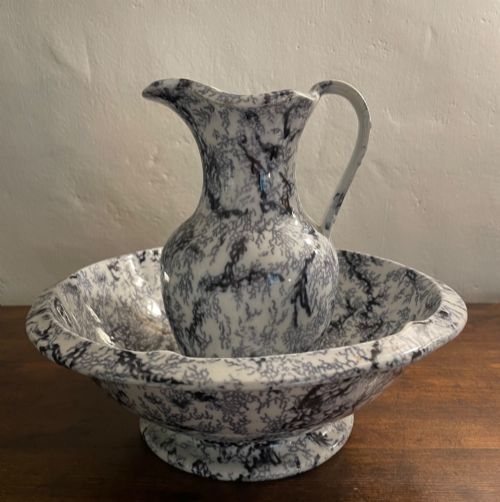
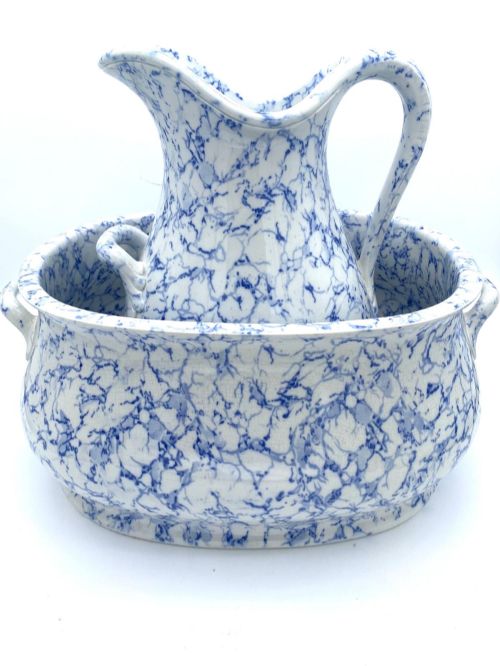
A ceramic pitcher and basin typically comprises a large pouring jug paired with a wide matching bowl, designed for personal hygiene before plumbed bathrooms became standard. The versions you encounter most frequently on this page date from the Victorian and Edwardian eras, spanning earthenware and porcelain bodies.
The evidence shows these sets appearing as wash sets, washstand sets, and jug and bowl sets across periods such as the nineteenth century, the 1880s, and 1900. Alongside standard bedroom sets, the listings include specialised forms like footbaths, miniature sets, and shaving stands paired with their original vessels.
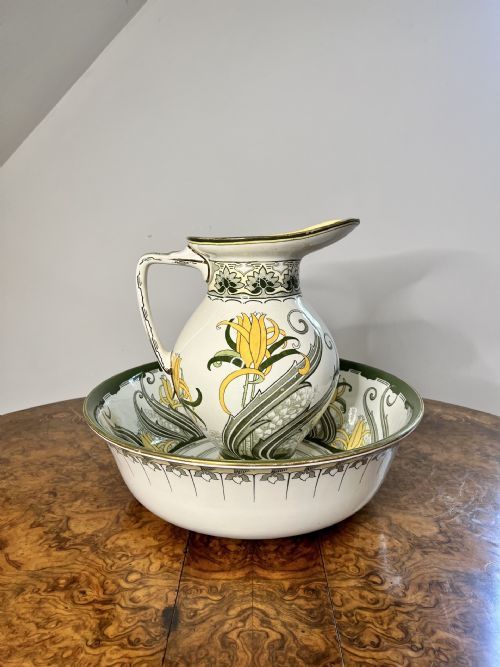
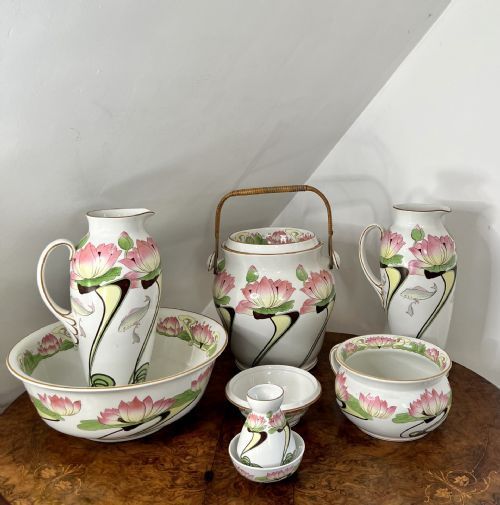
Stylistic influences range from traditional blue and white patterns and Chinoiserie designs to flowing Art Nouveau motifs. Makers and potteries such as Minton, Mason's, Doulton Burslem, and Doulton Lambeth produced these functional pieces in both utilitarian earthenware and refined porcelain.
How they were made
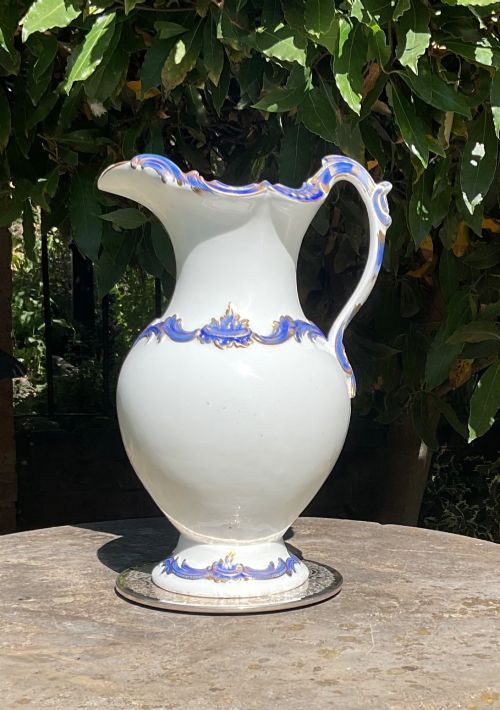
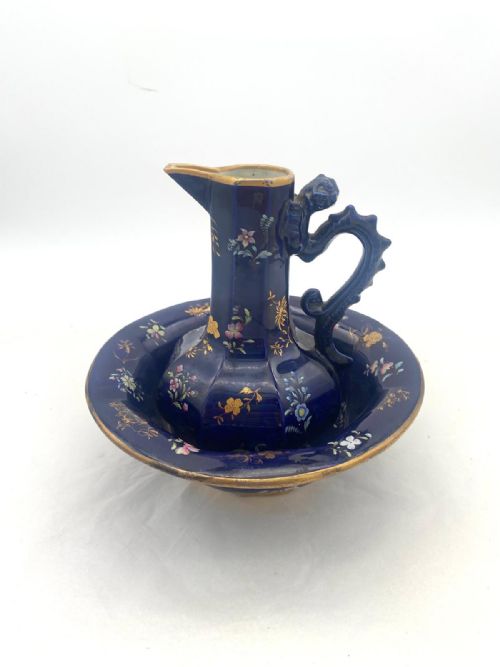
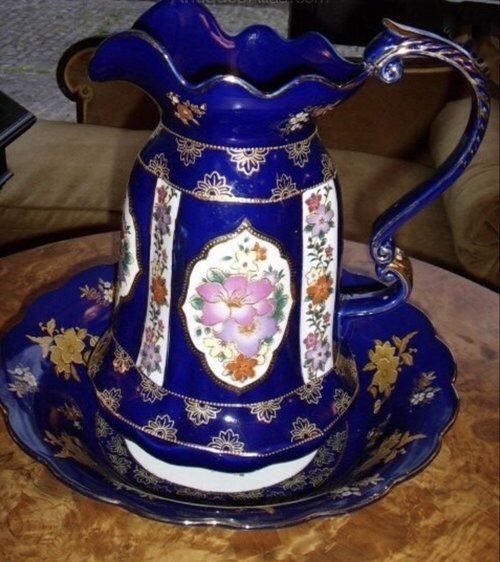
Potters shaped these vessels using earthenware, ironstone, and porcelain, applying glazes to seal the porous clay bodies for daily washing use. Cobalt blue glaze and flow blue techniques created soft, bleeding colour effects during firing, while some pieces received decorative touches of gold leaf, gilt, or enamel over the glaze.
Firing techniques determined the durability and finish of the ceramic, with ironstone providing a particularly dense, heavy body suitable for large basins and jugs. Specialised surface decoration, including floral designs and marbling patterns, was hand-applied or transferred before the final glaze firing.
Listings for this phrase span the nineteenth century up through Edwardian production, featuring earthenware, porcelain, and stoneware bodies decorated with flow blue and cobalt glazes.
What varies in quality
The distinction between standard domestic ware and top-tier pieces rests on the crispness of the transfer printing, the complexity of hand-painted enamel details, and the application of gold leaf or gilt accents. Heavier ironstone and fine porcelain bodies indicate a higher grade of manufacture than basic earthenware.
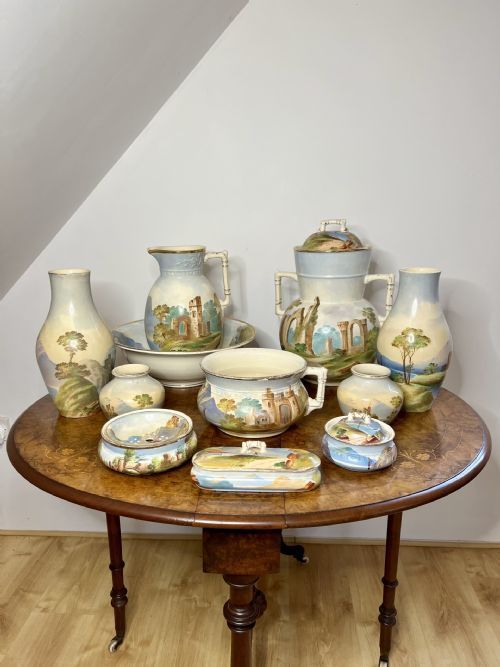
Completeness and scale also govern the hierarchy, as matching four-piece sets or unusual forms like octagonal shapes and miniature versions demonstrate greater ambition from the pottery. The precision of the glaze finish and the preservation of delicate surface decoration separate ordinary examples from exceptional ones.
Minton·Doulon Burslem·Masons Ironstone·Doulton Lambeth·Shelley·Mark Jones And Sons
The Ceramic Pitcher and Basin Glossary
- Flow blue
- A printing style where cobalt blue pigment diffused slightly into the glaze during firing, creating a blurred, soft-edged pattern. This technique originated in Staffordshire during the early nineteenth century.
- Ironstone
- A dense, durable type of earthenware patented in the nineteenth century to imitate Chinese porcelain. It resists chipping better than standard pottery.
- Earthenware
- Porous pottery fired at lower temperatures, requiring an impermeable glaze to hold water. Most everyday wash jugs utilised this practical material.
- Chinoiserie
- European decorative style imitating Chinese artistic traditions. It frequently appears in the blue and white patterns of nineteenth-century wash sets.
- Stoneware
- A robust, vitrified ceramic fired at high temperatures until semi-vitreous and waterproof. Doulton Lambeth utilised this body for heavier utilitarian pieces.
Ceramic Pitcher and Basin: Frequently Asked Questions
What is a ceramic pitcher and basin used for?
These sets served as the primary washing apparatus in bedrooms before indoor plumbing provided running water. Users poured water from the jug into the basin for morning ablutions and shaving.
Today, collectors utilise them as decorative display items, umbrella stands, or planters in traditional hallways and guest bathrooms.
How do I date an antique wash set?
Dating relies on maker marks stamped or printed on the underside of the ceramic, alongside stylistic clues such as shape and decorative motifs. Victorian pieces often feature heavy ironstone bodies and Chinoiserie patterns, while Edwardian sets tend toward lighter floral designs and Art Nouveau lines.
Comparing the registration numbers or pottery marks against known operating dates provides the most accurate manufacturing window.
Are these sets waterproof for daily use?
Most glazed ceramic, ironstone, and porcelain sets remain entirely waterproof and functional for holding water. However, hairline cracks or historic damage can compromise the structural integrity of older earthenware.
If you plan to use the basin actively, inspect the interior glaze closely and avoid exposing antique ceramics to sudden thermal shock.
What is the difference between ironstone and porcelain?
Ironstone is a heavy, opaque, and highly durable semi-vitreous earthenware developed to withstand rigorous daily handling. Porcelain is a finer, thinner, and more translucent material fired at higher temperatures.
Wash sets made from ironstone prioritize robust utility, whereas porcelain examples emphasise refined aesthetics and lighter weights.