


Ceramic Jug Still Life
Ceramic jug still life paintings capture domestic vessels alongside blooms and fruit, offering enduring colour and composition for your walls.
Ceramic Jug Still Life
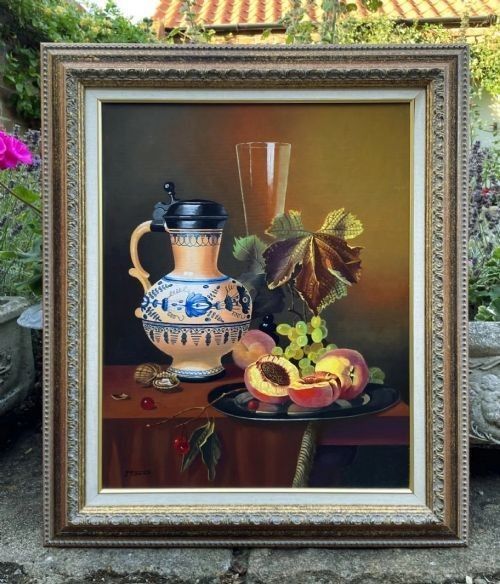
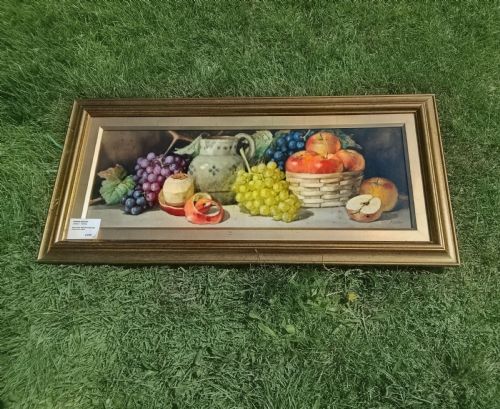
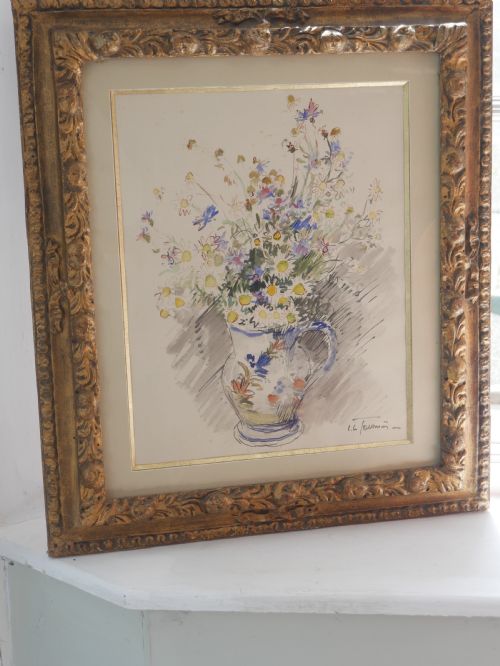
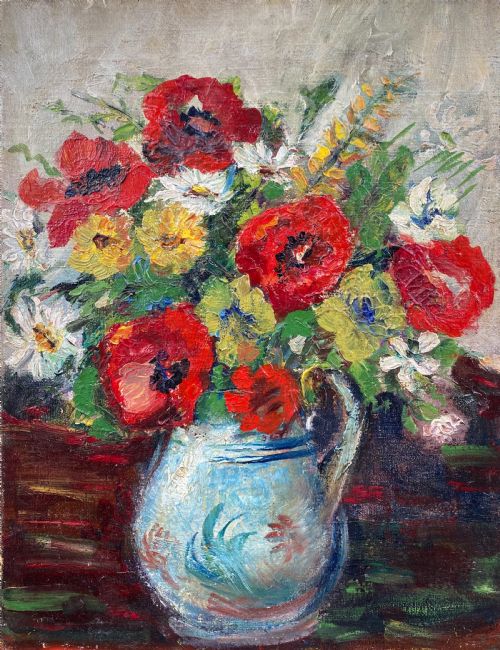
A ceramic jug still life brings together painted depictions of everyday vessels, flowers, and fruit across varied interior scenes. These works capture tangible domestic objects arranged on tables, rendered in mediums that range from oil paint to delicate watercolours.
The pieces on this page span several decades and stylistic traditions, notably drawing from mid-century European modernism and earlier Victorian sensibilities. Artists utilise these domestic containers to anchor floral compositions and fruit studies with balanced proportion.
Buyers encounter oil paintings on canvas alongside traditional watercolours and studies executed on metal supports. Each period brings distinct approaches to colouration, from the vibrant palettes of the mid-century to more muted 19th-century interpretations.
How they were made
Artists build these compositions using oil paint on canvas or metal, and watercolour pigment on paper. The application of paint varies from smooth, controlled brushwork in traditional pieces to more vigorous, expressive marks in mid-century examples.
Supports include stretched canvas, heavy watercolour paper, and occasionally metal panels, which provide the rigid ground necessary for detailed oil application. Gilt framing often completes the presentation of these painted works.
Listings feature oil paintings on canvas and metal alongside watercolours on paper, spanning the nineteenth century through to the nineteen-sixties.
What varies in quality
The handling of light and shadow defines the visual success of the composition, separating confident brushwork from rigid, flat renderings. Superior pieces demonstrate a nuanced understanding of how ceramic surfaces reflect surrounding colours in a domestic setting.
Compositional balance between the ceramic jug, the surrounding fruit or flowers, and the background plane determines the strength of the artwork. The choice of medium and the preservation of the pigment also influence the enduring presence of the piece.
Arthur Dudley·Owen Bowen·Jabez Bligh·Margaret Laing·Marion Broom·Royal Worcester·Edith Alice Andrews
The Ceramic Jug Still Life Glossary
- Oil paint
- A slow-drying paint made with pigments suspended in a drying oil, typically linseed. This medium allows for rich colour depth and subtle blending.
- Watercolour pigment
- Finely ground colour suspended in a water-soluble binder, applied to paper to create luminous, translucent washes.
- Canvas
- A closely woven fabric stretched across a wooden frame to serve as a durable support for oil paintings.
- Impressionist
- A style of painting emphasising spontaneous brushwork and the accurate depiction of light rather than microscopic detail.
- Mid-Century Modern
- A design movement spanning roughly the middle decades of the twentieth century, favouring clean lines and simplified forms.
Ceramic Jug Still Life: Frequently Asked Questions
What periods do these paintings span?
The works originate from the nineteenth century through to the mid-twentieth century. Artists painted in styles ranging from Victorian academic watercolours to mid-century European studies.
Each decade brought different tonal choices and compositional structures to the depiction of domestic vessels and floral arrangements.
How should I hang these artworks?
These paintings suit dining rooms, kitchens, or living spaces where still life subjects traditionally find a natural home. Consider the lighting in the room to ensure oil paintings on canvas avoid excessive glare.
Watercolour works require careful placement away from direct sunlight to preserve the delicate pigments on paper over time.
What materials are used?
Paintings utilise oil paint and watercolour pigment applied to canvas, paper, or metal supports. Gilt frames frequently accompany the works to complement the painted imagery.
Ceramic jugs and vessels serve as the central motif alongside botanical elements like flowers and fruit.
How do I care for an oil painting?
Oil paintings on canvas need stable humidity and temperature conditions to prevent cracking in the paint layers. Dust the surface gently with a soft, dry brush without applying pressure.
Avoid using liquid cleaners or damp cloths directly on the painted canvas or the surrounding gilt frame.
Are watercolours framed differently?
Watercolour paintings are executed on paper and typically require mounting under glass for protection against atmospheric moisture and dust. The frame and mount board separate the paper from the glass surface.
Keeping watercolour works out of bright sunlight prevents the fading of sensitive pigments.