


Ceramic Incense Burner
These ceramic incense burner examples bring together centuries of Asian and European studio work designed to hold fragrant aromatic smoke.
Ceramic Incense Burner
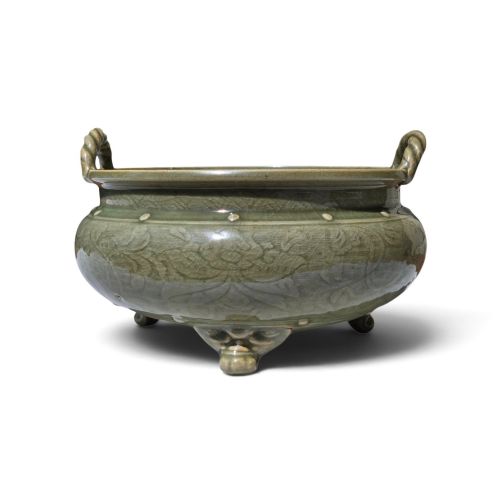
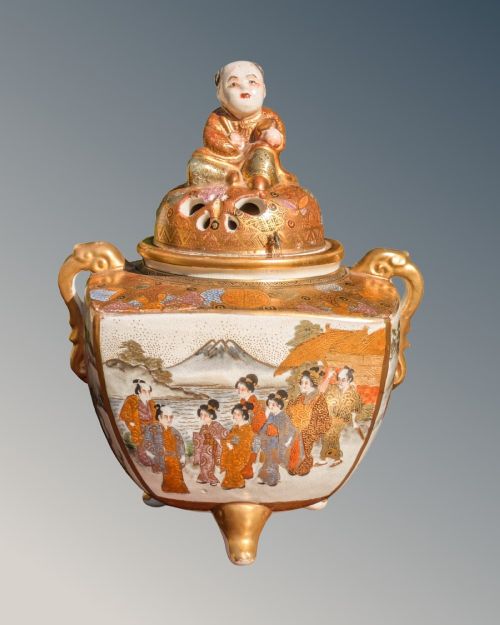
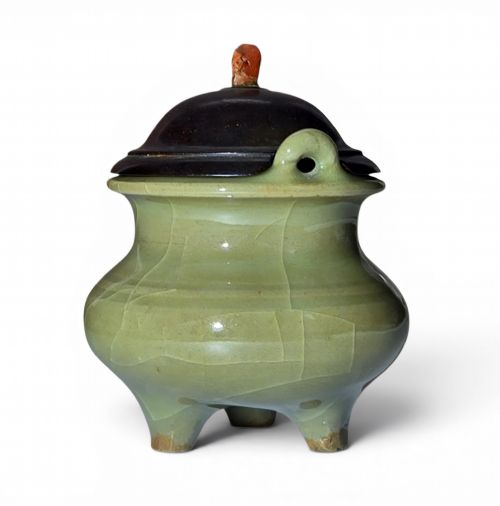
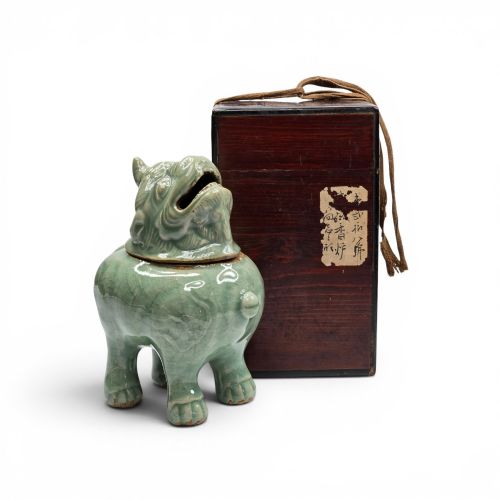
A ceramic incense burner encountered here typically takes the form of a tripod censer, a lidded koro, or a cottage pastille burner. These vessels originated across various periods including the Ming and Qing Dynasties, the Japanese Meiji and Edo eras, and the Regency period in Britain. Collectors select these objects for their sculptural forms, ranging from mythological beasts to architectural models.
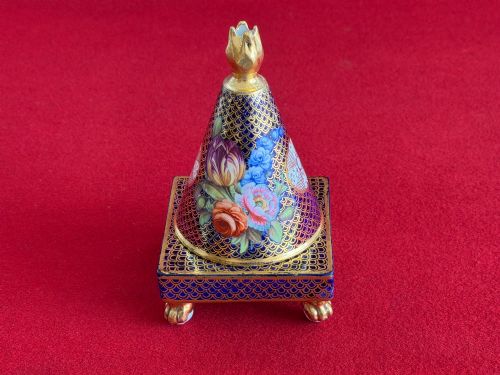
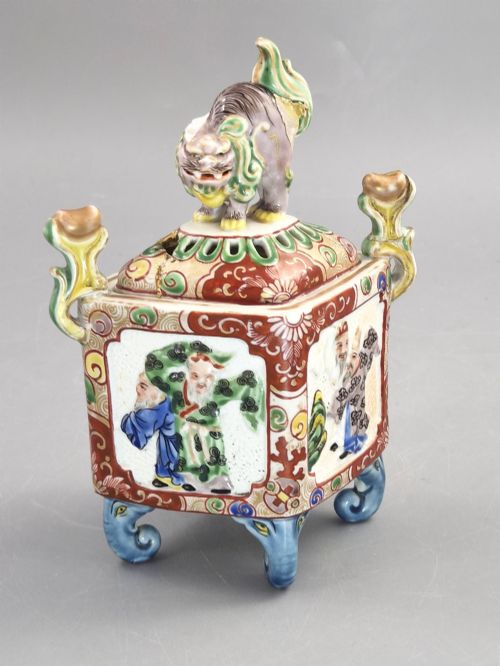
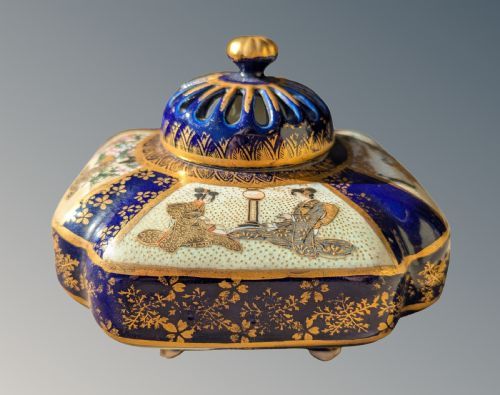
The Asian examples span celadon-glazed stoneware, Kutani porcelain, and Satsuma earthenware, often incorporating animal finials such as the karashishi lion or elephant head feet. European contributions appear as porcelain cottages and pommanders originating from English factories like Chamberlain Worcester. Each form reflects the specific domestic or ritual burning practices of its culture of origin.
Materials and methods
Potters shaped these objects from porcelain, earthenware, and celadon-glazed stoneware, applying lead, alkaline, or feldspathic glazes before kiln firing. Decoration relies on underglaze blue, enamel painting, and selective application of gold leaf, gilt, or gilding to accentuate moulded details.
Moulding and throwing techniques allowed makers to produce complex reticulated panels, sculpted dragons, and architectural roofs. Subsidiary elements like zitan wood and coral covers were occasionally added later to complement the ceramic body.
Listings feature ceramics spanning the 16th to the early 20th century, originating from Chinese, Japanese, and English kilns.
Assessing the standard
Quality rests upon the crispness of the modelling in sculpted elements like dragons, lions, and architectural brickwork. Superior pieces display controlled glaze application without pooling or thinning over high-relief moulding.
The precision of hand-painted enamel work and the integrity of subsidiary covers dictate the standing of a vessel. Potter and kiln marks, where present, further separate standard production items from workshop pieces.
Kinkozan·Kizan·Kotobuki do·Shizan
The Ceramic Incense Burner Glossary
- Koro
- A Japanese incense burner, typically fitted with a pierced cover and supported on feet. These vessels appear frequently in Satsuma, Kutani, and Imari wares.
- Celadon
- A term for ceramics glazed in jade-green or grey-green tones, originating in China during the Ming Dynasty and earlier. The thick glaze pools subtly in carved recesses.
- Pastille burner
- A small ceramic vessel designed to diffuse fragrant paste or pastilles through chimney openings in domestic interiors. British examples often mimic rural cottages.
- Blanc de Chine
- A white porcelain produced in Dehua, China, characterised by a milky glaze that melts into the porcelain body. It is often modelled with bamboo or floral motifs.
- Zitan
- A dense, dark wood native to Asia, utilised for bespoke miniature covers and stands on censers. It provides a contrasting texture to glazed ceramic surfaces.
Ceramic Incense Burner: Frequently Asked Questions
What is a koro?
A koro is a traditional Japanese incense burner designed with a removable lid and small feet. These vessels were produced in various styles including Satsuma and Kutani.
They served both ritual functions in temples and decorative roles in elite domestic spaces during the Meiji period and earlier.
How do English pastille burners work?
English pastille burners operate by holding a scented aromatic paste inside a hollow ceramic body. Smoke escapes through chimneys or windows modelled into the roof.
Factories like Chamberlain Worcester shaped these vessels as rural cottages and pommanders for Regency drawing rooms.
What is celadon glaze?
Celadon is a transparent green glaze applied over stoneware or porcelain. It was perfected in China during dynasties such as the Ming.
The thick glassy layer absorbs light and emphasises the carved or moulded details beneath.
How do I identify a Satsuma piece?
Satsuma ware is characterised by an ivory-coloured earthenware body with a fine network of crackle glaze. Pieces are typically decorated with enamels and gilding.
Subjects often include figures, dragons, and floral motifs associated with late nineteenth-century Japanese export art.