


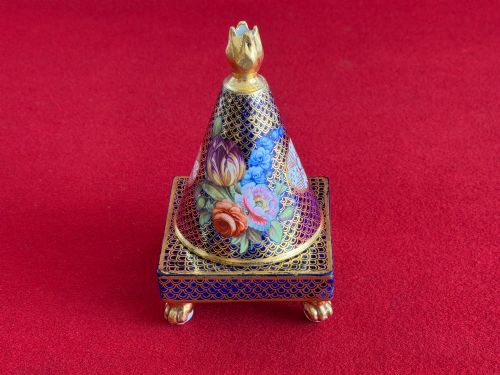
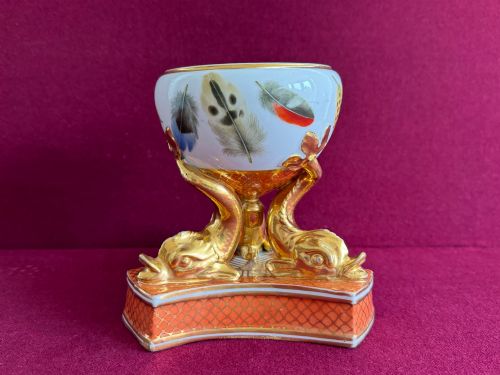


Antique Ceramic Pastille Burners
These antique ceramic pastille burners are miniature porcelain and earthenware dwellings designed to perfume the home with scented smoke.
Antique Ceramic Pastille Burners
The pieces represented here span several distinct periods including the Georgian and Victorian eras, alongside Regency examples. You will most frequently meet Staffordshire cottages and porcelain models originating from notable English factories, often taking the form of rustic dwellings or diminutive castles.
How they were made
Potters shaped these architectural vessels from earthenware, pearlware and fine porcelain, utilising slip casting and hand-modelling techniques to create the walls, roofs and chimneys. Earthenware bodies provided a robust foundation for colourful lead glazes, while porcelain versions allowed for finer detail and translucency.
Makers embellished the surfaces with painted enamels, gilt highlights and gold leaf to articulate windows, doors and thatched roof tiles. Many examples incorporate a separate base plate to catch the ash from the burning pastille housed within the hollow interior.
Antique Ceramic Pastille Burners Retail Price Guide 2026
Typical asking prices for ceramic pastille burners among the pieces listed under this phrase on Sellingantiques today, from the lower quarter to the upper quarter. They describe what is for sale here now, not the wider market.
The listings show pieces spanning the eighteenth, nineteenth and twentieth centuries, utilising earthenware, porcelain and pearlware materials.
What varies in quality
The distinction between ordinary and superior examples lies in the crispness of the modelling and the sophistication of the hand-painting. Finer pieces display delicate botanical or architectural detailing and precise gilding, whereas simpler earthenware cottages rely on bolder, more robust glazes.
Factory attribution also plays a role, with documented porcelain works from established makers demonstrating a higher degree of refinement in paste and kiln work compared to local pottery production.
Chamberlain Worcester·Spode Porcelain·Mexborough
The Antique Ceramic Pastille Burners Glossary
- Pastille burner
- A small ceramic vessel designed to diffuse fragrant smoke from a scented paste. They often take the form of miniature houses or castles with perforated chimneys.
- Pearlware
- An refined earthenware developed in the late eighteenth century featuring a subtle bluish glaze that pooled in recesses. It bridges the gap between creamware and later white earthenwares.
- Prattware
- A type of earthenware associated with northern pottery production, typically decorated under the glaze in limited colours such as ochre, blue and brown. Pieces often include figurative models and cottages.
- Flat back
- A style of ceramic figure or building designed to be placed against a wall rather than viewed in the round. The reverse is usually unglazed and plain.
Antique Ceramic Pastille Burners: Frequently Asked Questions
What is an antique pastille burner?
An antique pastille burner is a small decorative ceramic object shaped like a cottage or castle that was used to fragrance rooms.
Inside the hollow structure, a scented pastille was burned, allowing the fragrant smoke to drift out through the miniature chimneys.
How do you use a pastille burner?
You lift the roof or upper section of the ceramic cottage to place a small scented cone or pastille on the base plate.
Lighting the tip and replacing the lid allows the scented smoke to circulate through the ventilation holes in the chimney.
How do I identify a Staffordshire cottage?
Staffordshire cottages are typically modelled as rustic dwellings with applied moss, flowers and colourful hand-painted glazes.
Many feature a detachable roof section and were produced in large numbers during the nineteenth century by various potteries in the region.
Are these pieces made of porcelain or earthenware?
These pieces appear in both fine porcelain and heavier earthenware bodies depending on the factory and the period of manufacture.
Georgian examples often utilise porcelain from established works, while later nineteenth-century pieces frequently employ sturdy earthenware and pearlware.