


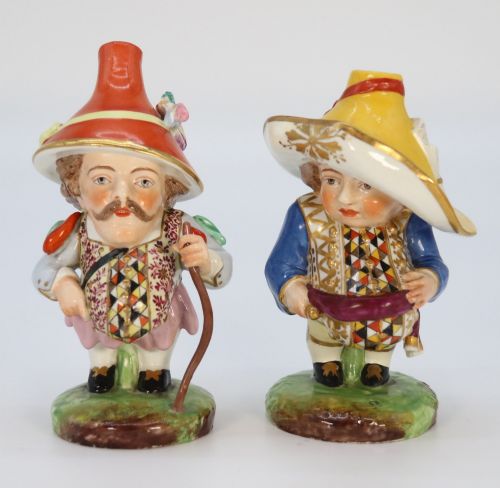


Antique Ceramic House Ornaments
These antique ceramic house ornaments bring unmistakable nineteenth-century character to a mantelpiece, offering miniature architectural charm crafted from earthenware and porcelain.
Antique Ceramic House Ornaments
When searching for antique ceramic house ornaments, buyers encounter charming nineteenth-century cottages, castles, and miniature furniture pieces alongside figurative earthenware.
The selections span Victorian Staffordshire potteries, Georgian pastille burners, and Dutch Delftware, capturing domestic and architectural forms in glazed ceramic.
Most pieces date from the Victorian era and the broader nineteenth century, reflecting popular domestic decorative tastes of the period.
How they were made
Potters utilised earthenware and porcelain bodies, shaping them into detailed architectural structures and decorative figures before applying hand-painted enamel and cobalt pigment.
Many items feature rich coloured glaze finishes, while finer examples incorporate delicate touches of gold leaf to accentuate architectural details and figures.
Antique Ceramic House Ornaments Retail Price Guide 2026
Typical asking prices for ceramic house ornaments among the pieces listed under this phrase on Sellingantiques today, from the lower quarter to the upper quarter. They describe what is for sale here now, not the wider market.
Listings feature Victorian earthenware and porcelain alongside Georgian examples, spanning periods from the early nineteenth century onwards.
What varies in quality
The standard of painting largely dictates the division between ordinary production wares and superior cabinet pieces, particularly in hand-painted cottages and figures.
Crispness of moulding and the preservation of original enamel and gold leaf separate everyday decorative items from finer collector examples.
Samson of Paris·Chamberlains Worcester
The Antique Ceramic House Ornaments Glossary
- Staffordshire pottery
- Ceramic wares produced in the numerous potteries of Staffordshire, famous for figures and cottages.
- Pastille burner
- A small ceramic vessel designed to burn scented pastilles, often modelled as a cottage with chimney smoke holes.
- Pearlware
- A fine earthenware developed in the late eighteenth century featuring a subtle bluish glaze over a white body.
- Cobalt pigment
- A metallic oxide used to produce deep blue underglaze decoration on ceramics like Delftware.
Antique Ceramic House Ornaments: Frequently Asked Questions
What is a pastille burner?
A pastille burner is a small ceramic house or building designed to diffuse fragrant smoke through its chimney.
These pieces combine decorative architectural modelling with a practical domestic function.
How do I date Staffordshire cottages?
Staffordshire cottages are generally dated by examining the paste, glaze characteristics, and modelling style.
Nineteenth-century examples often feature distinct hand-painted enamel colours and earthenware bodies.
Where were these ornaments displayed?
These ceramic ornaments typically sat on mantelpieces, side tables, and within Victorian parlours.
Their miniature scale made them ideal cabinet pieces and decorative room accents.
What materials make up these houses?
These ornaments are primarily formed from earthenware or porcelain.
Craftsmen then decorated them using coloured glazes, enamel paints, and occasional gold leaf.