


Ceramic Dog Sculptures
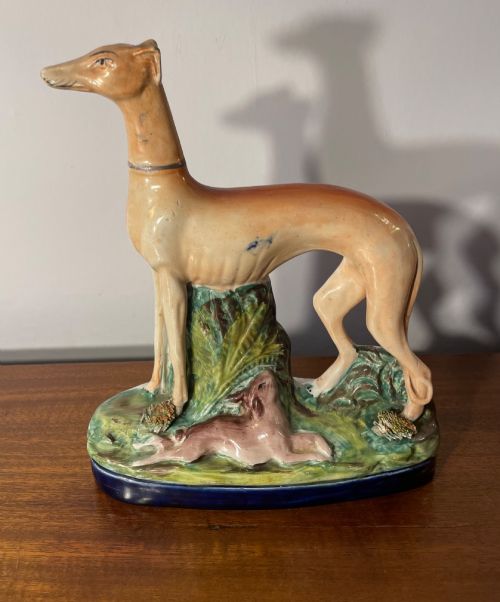
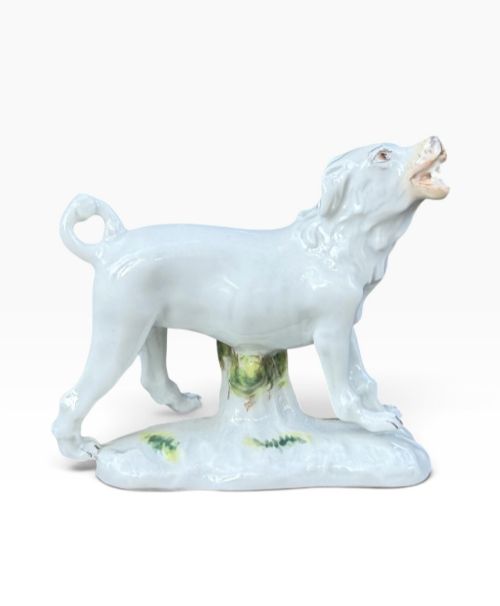
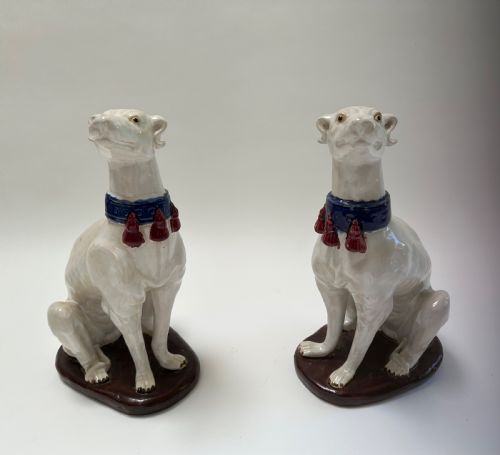
Ceramic dog sculptures bring life and character into a room, capturing breeds and mythical guardians across centuries of European and Asian pottery traditions.
Ceramic Dog Sculptures
Ceramic dog sculptures encompass a rich variety of decorative figurines, statues, and guardian figures ranging from European pugs, poodles, and hounds to Japanese and Chinese temple lions.
The pieces encountered on this page stretch from the eighteenth century through the Victorian and Edwardian eras into the early twentieth century, reflecting shifting tastes in domestic ornamentation.
Buyers will find domestic pets rendered in terracotta, earthenware, and porcelain alongside mythical beasts created in glazed and enamelled ceramics.
Materials and production
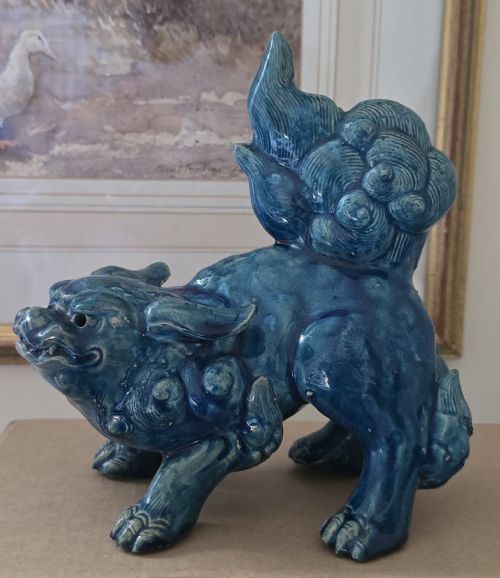
Makers shaped these animals using earthenware, terracotta, and hard-paste porcelain, often applying detailed hand-painting, turquoise glaze, or enamelling to finish the surface.
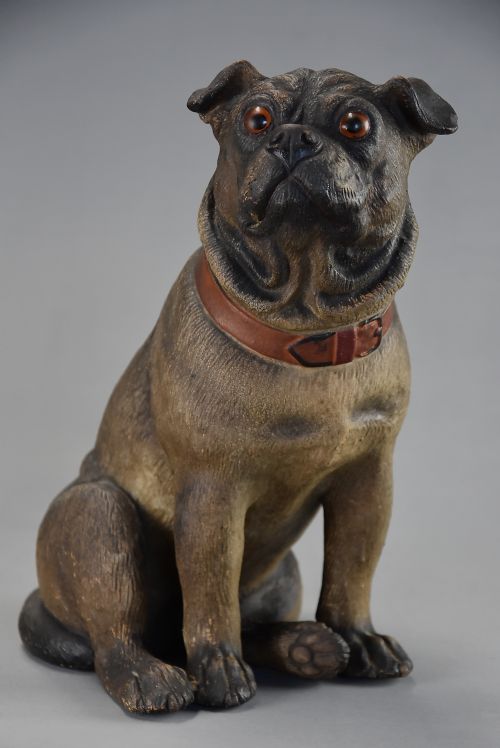
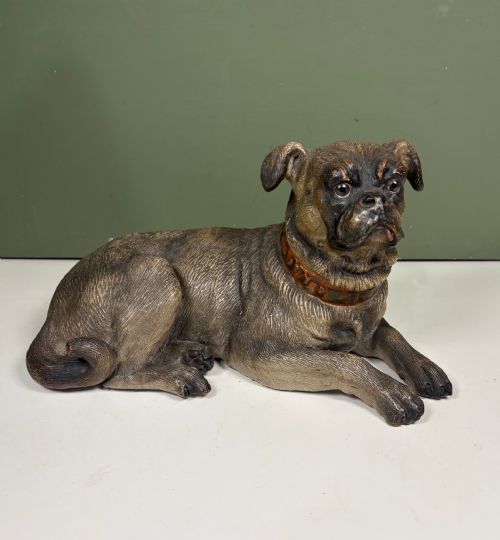
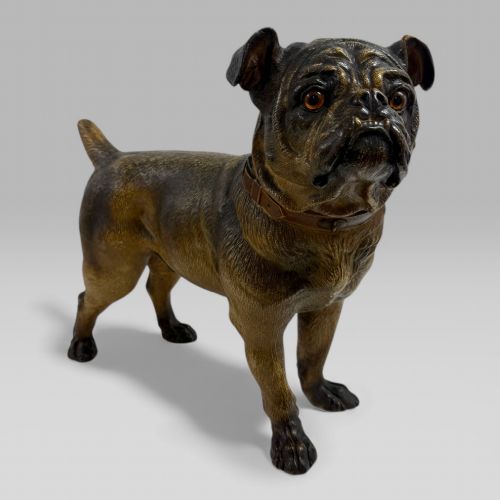
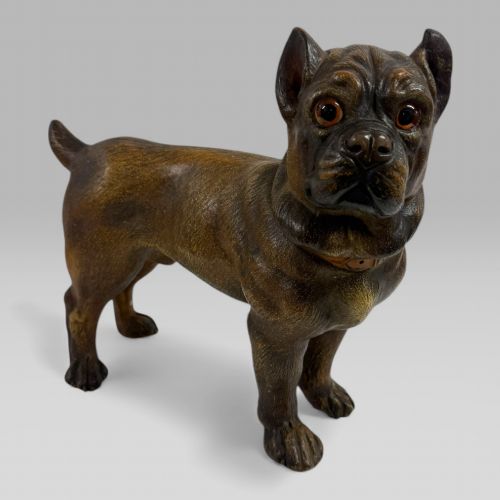
Larger pieces, such as life-size terracotta pugs or hounds, utilised robust clay bodies suited to substantial sculptural forms, while fine porcelain allowed for delicate modelling in figures like gundogs and puppies.
Several terracotta pugs wear remarkably solemn expressions despite their deeply fashionable status in nineteenth-century drawing rooms.
Evaluating sculptural quality
Quality rests in the anatomical precision of the modelling and the sensitivity with which the sculptor captures the alertness, texture, and posture of the animal.
The refinement of the glaze or enamel work, alongside the crispness of moulding in bisque, parian, or terracotta, separates standard decorative output from works by celebrated factories and individual modellers.
Thomas Parr·John Durham·Bernard Bloch·Enoch Wood factory·Royal Dux
The Ceramic Dog Sculptures Glossary
- Terracotta
- A porous reddish-brown earthenware clay used unglazed or painted, frequently chosen for large-scale nineteenth-century animal figures.
- Parian ware
- A fine-grained white porcelain developed in the nineteenth century to imitate marble, often used for statues of dogs and figure groups.
- Shishi
- A traditional Japanese guardian lion dog derived from Chinese Buddhist temple statuary, rendered in porcelain, kutani, or bizen wares.
- Majolica
- A type of earthenware coated with an opaque tin-glaze and painted with vibrant colours, seen in Italian animal figures.
- Bisque
- Unglazed pottery fired once, producing a matte, porous white surface that shows fine detail in sculptural figures.
Ceramic Dog Sculptures: Frequently Asked Questions
How do I identify a terracotta dog?
Terracotta pieces are made from porous, reddish-brown clay that is typically left unglazed or finished with a matte paint layer.
This material was especially favoured for large-scale and life-size sculptures of pugs and hounds produced in Austria and France during the nineteenth century.
What is parian ware?
Parian ware is a type of dense, fine-grained white porcelain developed in Victorian Britain to resemble carved marble.
It was widely utilised for detailed statues and figure groups depicting hunting dogs and domestic scenes.
Where were Staffordshire poodles made?
Staffordshire poodles were produced by pottery factories in the Staffordshire region of England during the nineteenth century.
These earthenware figures often feature textured clay coats and were designed as decorative chimney ornaments for Victorian homes.