






Ceramic Display Tray
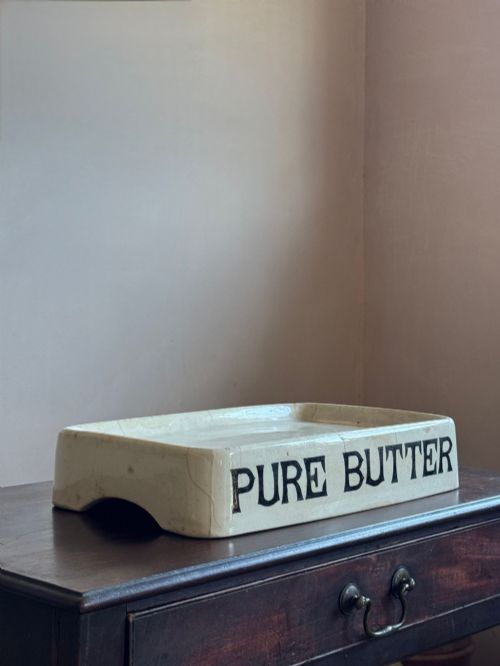
These ceramic display tray selections range from nineteenth-century Japanese imari plates to Edwardian butter slabs, offering diverse decorative forms for the home.
Ceramic Display Tray
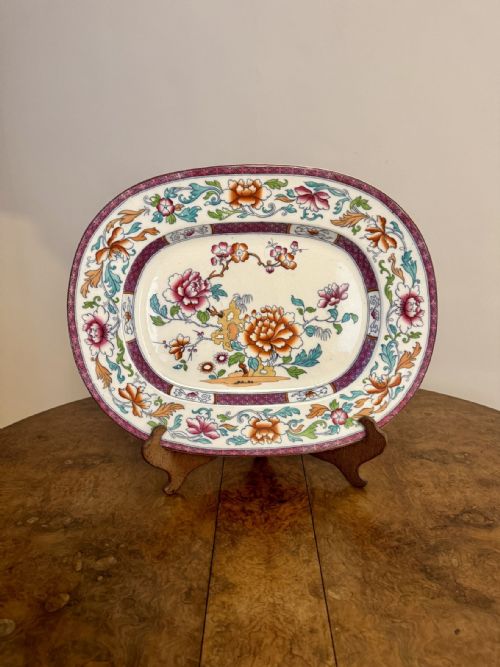
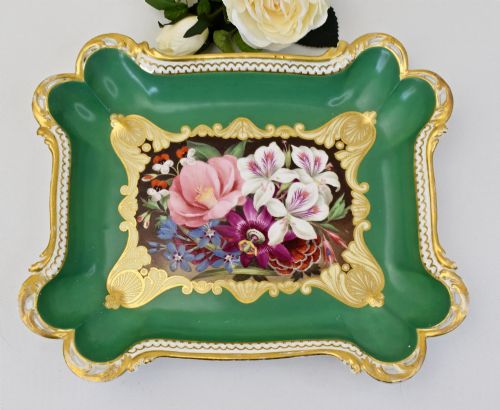
A ceramic display tray encompasses a wide variety of decorative dishes, platters, and plates spanning the nineteenth century through to the early twentieth century. Buyers seeking a ceramic display tray will encounter an eclectic mix of forms, ranging from Japanese Imari plates and Victorian meat platters to Edwardian dairy collectables and decorative cabinet dishes.
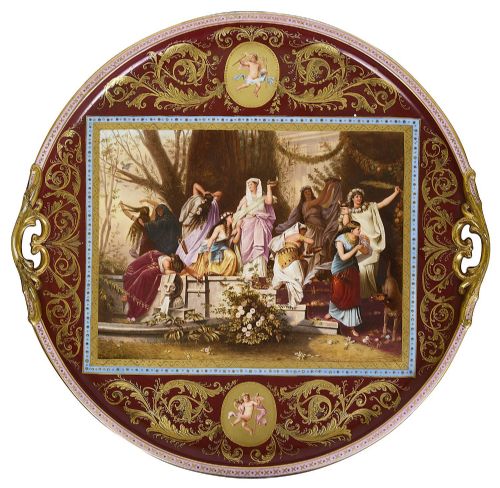
The assortment on this page reflects multiple distinct regional traditions and aesthetic movements. Pieces include Chinese Canton Famille Verte dishes, Scottish Art Pottery featuring Wemyss cabbage roses, and classical Vienna porcelain trays depicting historical scenes.
Functional serving pieces sit alongside strictly decorative items, such as Masons ironstone cheese dishes and Majolica bread plates. Each object demonstrates the varied utility and artistic ambition of ceramic production across the Victorian and Edwardian periods.
Materials and methods
Makers utilised hard-paste porcelain, earthenware, ironstone, and standard ceramic bodies as the primary foundation for these pieces. Glaze applications and gold leaf details frequently enhanced the surface texture and visual depth of the finished wares.
Decoration techniques varied considerably, encompassing hand-painted botanical and figurative scenes, transfer printing, and traditional blue and white underglaze painting. Specific regional methods are evident in the intricate enamelling of Japanese Imari wares and the vibrant coloured glazes characteristic of Majolica and Wemyss pottery.
Ceramic Display Tray Retail Price Guide 2026
Typical asking prices for ceramic display tray among the pieces listed under this phrase on Sellingantiques today, from the lower quarter to the upper quarter. They describe what is for sale here now, not the wider market.
Listings feature ceramics spanning the nineteenth century, the Edwardian period, and the 1920s, utilising porcelain, ironstone, and earthenware.
Markers of distinction
Quality in these ceramics rests upon the precision of the hand-painting, the clarity of the glaze, and the sophistication of the modelling. Pieces bearing specific artistic attribution or associated with known painting hands demonstrate a higher level of artisanal execution.
The complexity of the form and the preservation of delicate decorative elements, such as gold leaf accents or intricate enamel work, further separate standard production items from finer cabinet pieces.
Doe and Rogers·Wemyss·Royal Doulton·David Dewsberry·Masons
The Ceramic Display Tray Glossary
- Imari
- A style of Japanese export porcelain decorated in underglaze blue and vibrant iron-red, often with added gold. This aesthetic heavily influenced European ceramic design during the nineteenth century.
- Ironstone
- A patented ceramic body developed in the nineteenth century as a durable, dense alternative to porcelain. It typically provides a robust ground for transfer-printed or hand-painted patterns.
- Majolica
- A type of earthenware coated with an opaque tin-glaze and painted with metallic oxide colours. It is characterised by bright hues and moulded relief decoration.
- Hard-paste porcelain
- A ceramic material fired at very high temperatures, composed of kaolin and petuntse. It yields a vitrified, translucent body that resists scratching.
- Famille Verte
- A Chinese porcelain classification distinguished by a green-dominant enamel palette. This palette was widely used during the Qing dynasty and later imitated in the West.
Ceramic Display Tray: Frequently Asked Questions
What is a ceramic display tray?
A ceramic display tray refers to decorative dishes, cabinet plates, platters, and serving pieces produced in porcelain, earthenware, and ironstone.
These items were utilised for both domestic service and decorative exhibition, reflecting varied nineteenth and early twentieth-century tastes.
How do I date a ceramic tray?
Dating relies on stylistic markers, material composition, and any associated factory or artist marks present on the reverse.
Periods represented range from the mid-nineteenth century through the Edwardian era and the 1920s.
Are these trays for food use?
While many items originated as utilitarian serving dishes, meat platters, or cheese dishes, their age and glaze condition often dictate careful handling.
Many collectors choose to exhibit them as cabinet pieces or decorative wall plates rather than for daily dining.
What styles are most common?
The available selection includes Japanese Imari patterns, Victorian Chinoiserie, Rococo Revival, and Neoclassical Revival motifs.
Regional variations span Scottish Art Pottery, Vienna porcelain, and traditional English ironstone.