






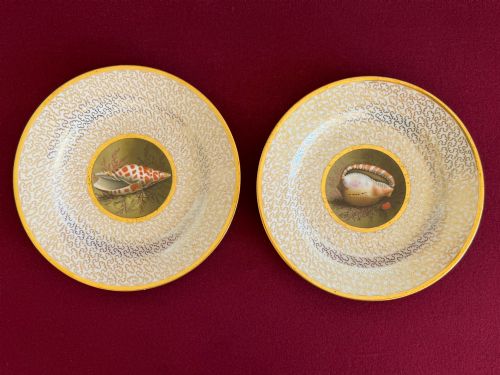

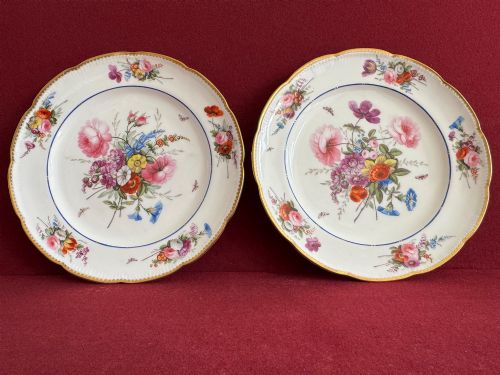
Ceramic Display Dishes
These ceramic display dishes bring together centuries of painted porcelain, earthenware and delftware crafted for visual impact rather than the dining table.
Ceramic Display Dishes
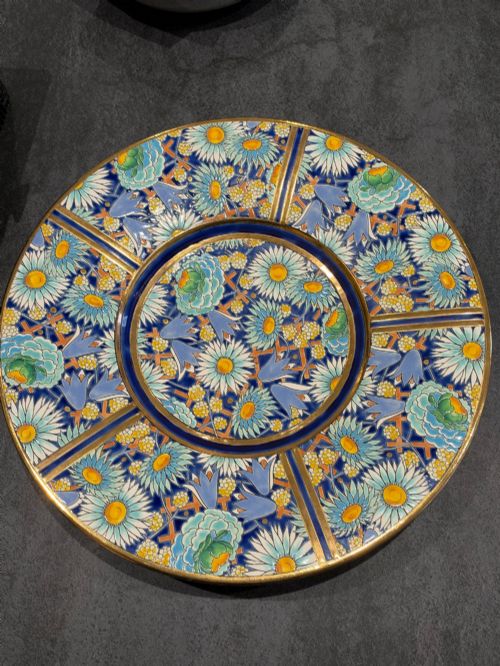
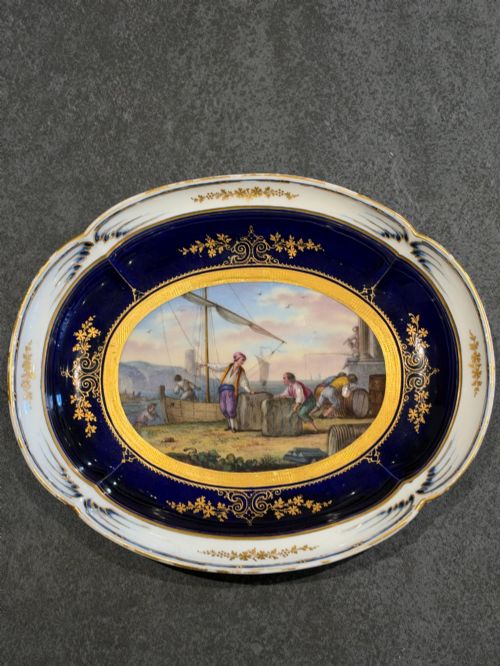
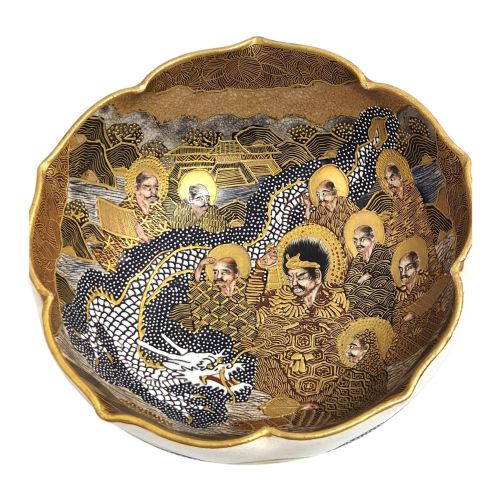
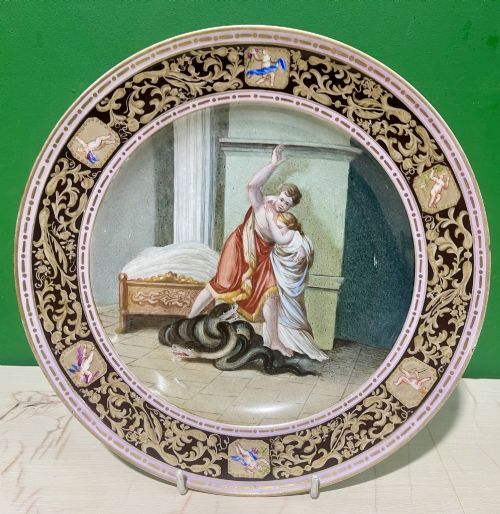
Ceramic display dishes span several centuries of domestic and decorative production, ranging from 18th-century tin-glazed chargers to late Victorian cabinet plates. Buyers encounter substantial chargers, scalloped dishes and deep platters designed primarily for presentation on walls or sideboards.
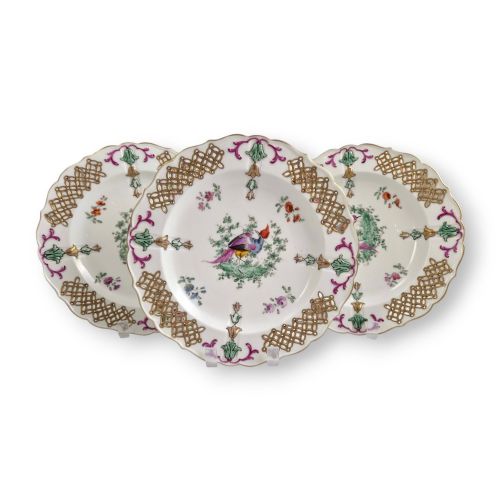
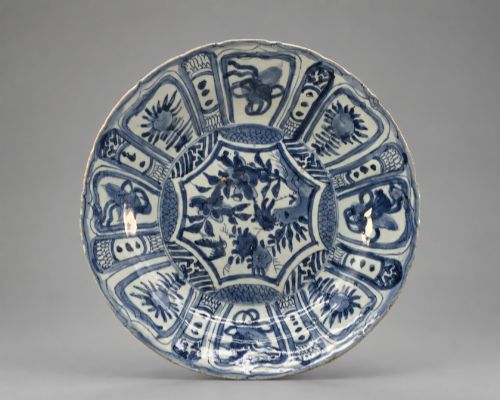
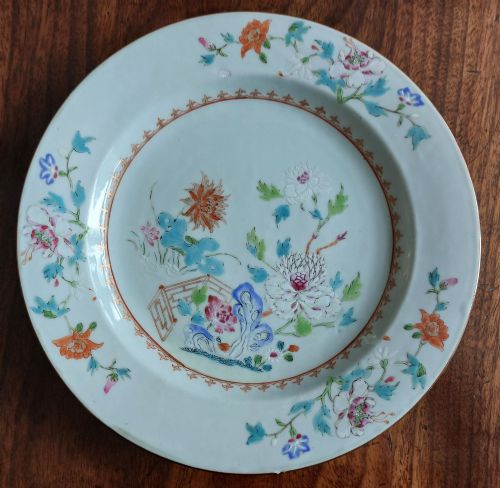
Forms vary from hexagonal and leaf-shaped plates to large circular chargers depicting birds, florals and traditional landscape scenes in polychrome or blue and white palettes.
Materials and technique
Potters shaped these pieces using porcelain, earthenware and tin glaze, applying hand-painted pigments directly onto the clay body or over an initial fired glaze. Many items incorporate gilding and gold leaf highlights applied during secondary kiln firings.
Transfer printing appears alongside freehand brushwork, particularly in later Victorian pieces, while earlier delftware utilises tin opacified glazes to create smooth white surfaces for cobalt painting.
Ceramic Display Dishes Retail Price Guide 2026
Typical asking prices for ceramic display dishes among the pieces listed under this phrase on Sellingantiques today, from the lower quarter to the upper quarter. They describe what is for sale here now, not the wider market.
Listings feature 18th-century tin-glazed delftware chargers alongside Victorian aesthetic period plates with Japanese-inspired motifs.
Assessing the pieces
Quality rests upon the crispness of the hand-painted detail and the complexity of the palette, particularly in finely rendered bird, floral and figural subjects. Crisp cobalt definition on blue and white pieces and precise enamel placement separate standard production from superior output.
The condition of the glaze, the stability of any applied gold leaf and the absence of firing distortions in large chargers heavily influence the desirability of individual items.
Barr Flight and Barr·Royal Crown Derby·Royal Worcester·H and R Daniel·Nantgarw
The Ceramic Display Dishes Glossary
- Charger
- A large decorative plate or platter, typically exceeding twelve inches in diameter, intended for display on a wall or dresser rather than for serving food.
- Tin Glaze
- An opaque white ceramic glaze containing tin oxide, used extensively on earthenware during the 17th and 18th centuries to imitate porcelain.
- Imari
- A style of Japanese porcelain featuring a distinct palette of underglaze blue, iron red and gold, named after the port from which the wares were shipped.
- Cabinet Plate
- A highly decorated plate intended to be showcased in a display cabinet rather than used in daily dining service.
- Famille Rose
- A Chinese porcelain palette introduced in the 18th century, characterised by opaque pink enamel colours alongside greens, yellows and blues.
Ceramic Display Dishes: Frequently Asked Questions
How do I hang a heavy charger?
Large chargers require specialised spring-loaded wall hangers with rubber-coated prongs that distribute weight evenly across the rim without putting pressure on the centre.
Ensure the wall fixing utilises a proper anchor suited to the weight of the ceramic piece.
Were these dishes used for dining?
Most large chargers and cabinet plates were made strictly for decorative display in living spaces, dining rooms and halls.
Finer porcelain plates from factories like Worcester or Nantgarw originated as dessert services but transitioned to display due to their hand-painted detail.
How should I clean antique painted plates?
Dust these items gently with a dry microfiber cloth or soft brush to remove surface particles without risking the painted enamel.
Avoid submerging pieces with old repairs, gilt highlights or delicate tin glaze in water.
What is the difference between delftware and porcelain?
Delftware uses a porous earthenware body covered in a tin-opacified glaze, yielding a thicker weight and softer surface.
Porcelain utilises hard-paste or soft-paste clay fired to vitrification, producing a resonant ring and a translucent body.