





Ceramic Copper Pitcher
A ceramic copper pitcher brings the rich metallic sheen of copper lustre glaze and earthenware into domestic spaces.
Ceramic Copper Pitcher
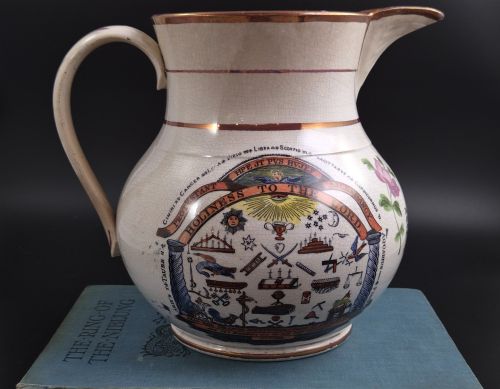
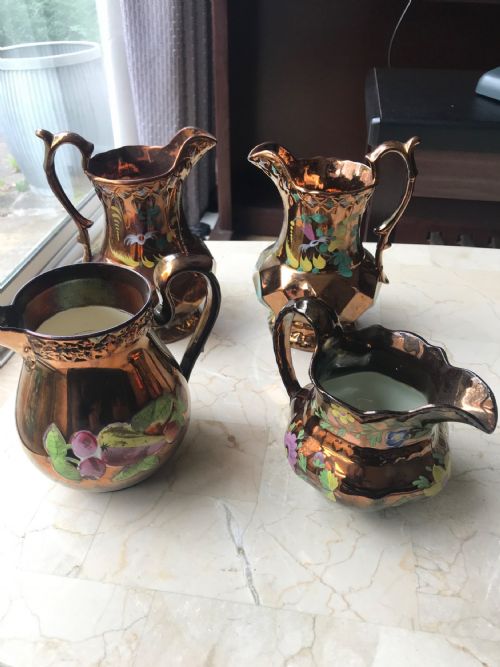
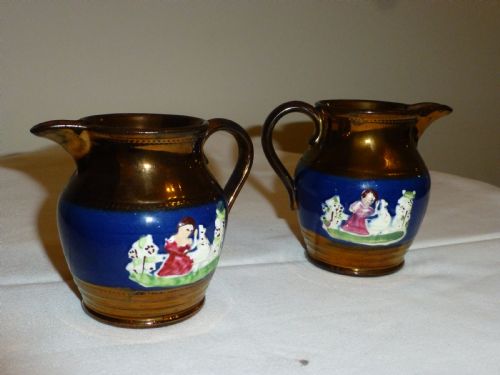
A ceramic copper pitcher is typically a pitcher, jug, or cream jug shaped from earthenware, ironstone, or pottery, then finished with a distinctive metallic glaze. These pieces frequently date to the nineteenth century, including Georgian and Victorian periods, reflecting nineteenth-century ceramic production.
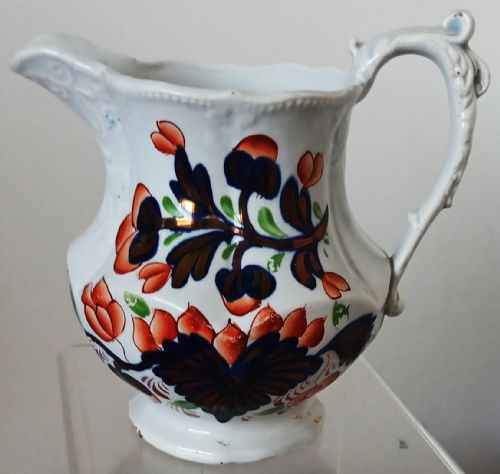
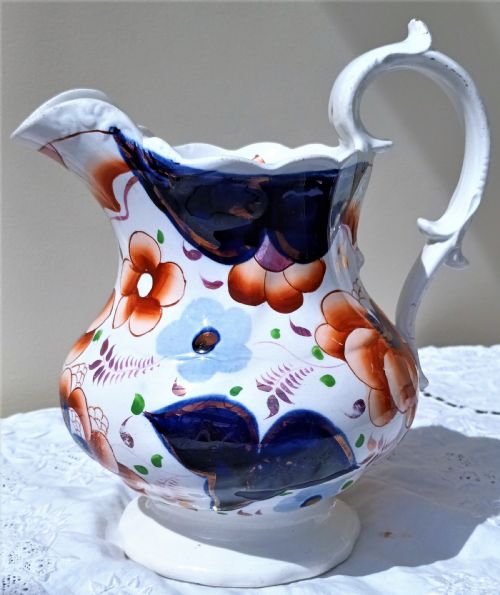
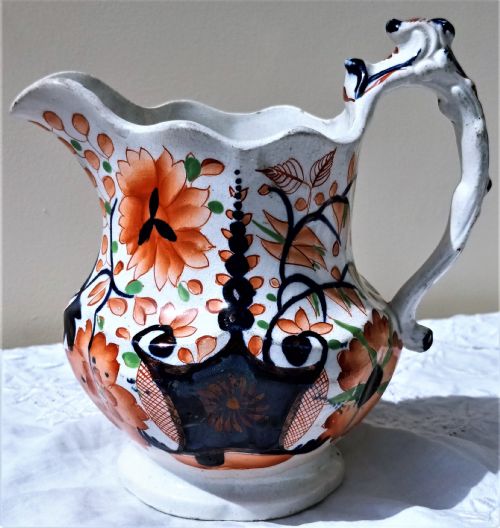
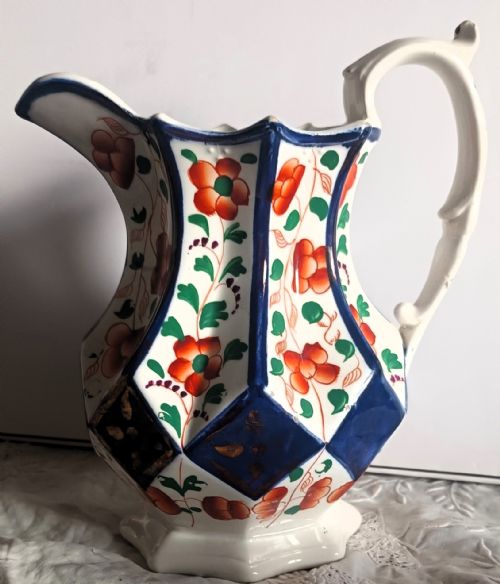
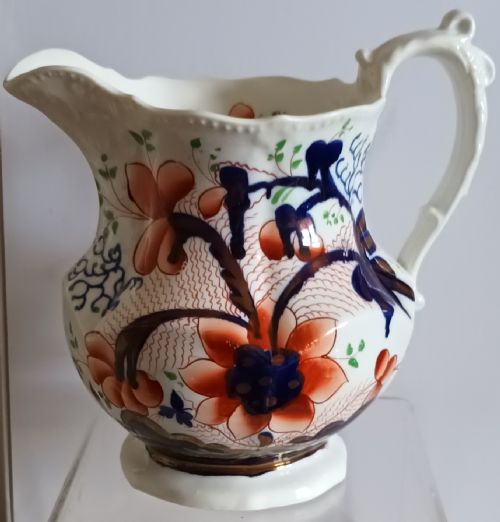
The version most commonly met on this page is the Staffordshire copper lustre jug, often decorated by hand with fruit motifs or painted in Gaudy Welsh patterns such as Bethesda, Grape, Drape, Pagoda, Harlech, Aberaeron, and Conwy. Such items span milk jugs, water jugs, and cream jugs, displaying the rich styles of Victorian Folk Art and early Staffordshire manufacturing.
How they were made
Makers formed these pitchers from earthenware, ironstone, and ceramic bodies before applying metallic lustre glazes, enamel, or polychrome decoration. The characteristic metallic surface is achieved through a reduction firing technique that deposits a thin layer of metal over the glaze.
Individual Staffordshire and Livesley Powell & Co pieces often received hand-painted details over the glaze, such as botanical motifs or fruit designs, before an additional firing fixed the colours to the body.
Listings feature earthenware, ironstone, and ceramic bodies finished with copper lustre glaze, enamel, and metallic lustre glaze.
What varies in quality
Quality varies according to the depth and brilliance of the metallic lustre glaze, alongside the crispness of moulded details on earthenware bodies. Pieces featuring careful hand-painted polychrome decoration or botanical motifs demonstrate greater finesse than plain glazed equivalents.
The complexity of the pattern, such as named Gaudy Welsh designs or detailed fruit hand-decoration on Staffordshire milk and water jugs, distinguishes finer examples within the range.
Livesley Powell & Co
The Ceramic Copper Pitcher Glossary
- Copper lustre glaze
- A metallic glaze finish applied to pottery that produces a reflective, copper-coloured sheen when fired. This technique was widely utilised on nineteenth-century Staffordshire jugs.
- Ironstone
- A dense, durable type of pottery developed as a robust alternative to porcelain. It forms a sturdy body for pitchers and patterned jugs.
- Gaudy Welsh
- A style of colourful pottery decorated with cobalt blue, copper lustre, and bright enamel colours, popular in nineteenth-century Welsh and English households.
- Staffordshire
- A major English ceramic-producing region known for earthenware figures, jugs, and lustreware made throughout the nineteenth century.
- Polychrome
- Decoration employing multiple distinct colours, frequently seen on hand-painted earthenware and ironstone jugs.
Ceramic Copper Pitcher: Frequently Asked Questions
What are ceramic copper pitchers made of?
These pitchers are fashioned from earthenware, ironstone, and ceramic bodies. They are finished with metallic lustre glazes and sometimes decorated with enamel.
Potters applied these finishes to create the reflective copper appearance characteristic of nineteenth-century lustreware.
How were these pitchers used?
They served practical functions in nineteenth-century households as milk jugs, cream jugs, and water pitchers for the table. Their durable earthenware and ironstone construction suited daily domestic service.
Over time, many also functioned as decorative display pieces due to their striking metallic lustre glazes and hand-painted patterns.
How do I identify a Victorian piece?
Victorian examples often feature characteristic Gaudy Welsh patterns or hand-decorated fruit motifs on Staffordshire earthenware. The stylistic traits align with nineteenth-century manufacturing methods.
Periods represented range from Georgian eras through the mid and late nineteenth century, including specific styles like Victorian Folk Art.
What is Gaudy Welsh pottery?
Gaudy Welsh pottery refers to ironstone and earthenware tablewares decorated with vibrant enamel colours and copper lustre highlights. These pieces often feature named patterns such as Harlech, Conwy, and Bethesda.
They are frequently found among nineteenth-century jugs and cream pitchers.