


Ceramic Albarello Jar
These ceramic albarello jar pieces are traditional apothecary vessels holding medicinal compounds, offering collectors an authentic link to historic pharmacy practices.
Ceramic Albarello Jar
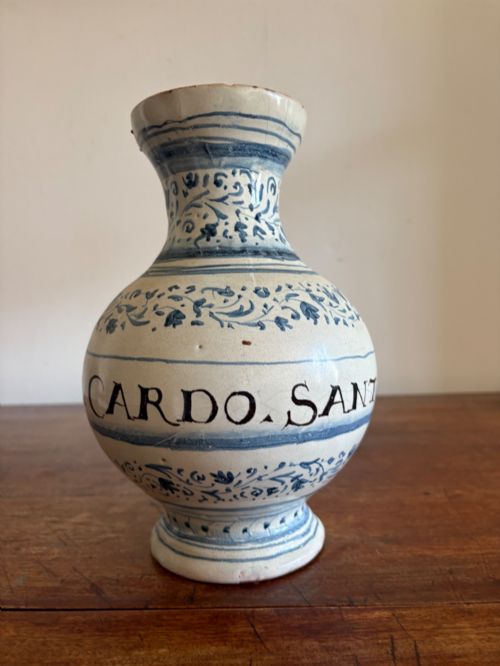
Most examples found here date from the seventeenth century through to the early twentieth century, originating primarily from Italian and Dutch workshops. These pieces frequently appear in blue and white or polychrome palettes reflecting regional faience and majolica traditions.
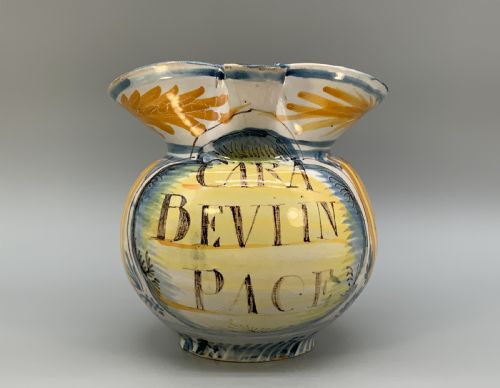
Buyers will encounter forms ranging from wet drug jars to pharmacy jugs and traditional waisted albarello shapes. The selection spans distinct historical periods including Italian Renaissance Revival and Baroque styles.
Materials and construction
These vessels are formed from earthenware or clay, shaped on the potter's wheel to create the distinctive waisted profile required for shelf storage. The porous body is then coated in a tin glaze to provide a smooth white surface for painting.
Decoration is applied directly to the unfired opaque glaze using mineral pigments such as cobalt for blue and manganese for dark purple tones. Subsequent firing fuses the pigments into the tin glaze, producing a durable finish.
Some jars retain mysterious abbreviated Latin labels for ancient cures, hinting at forgotten apothecary recipes for crushed pearls and viper flesh.
Qualities that distinguish the pieces
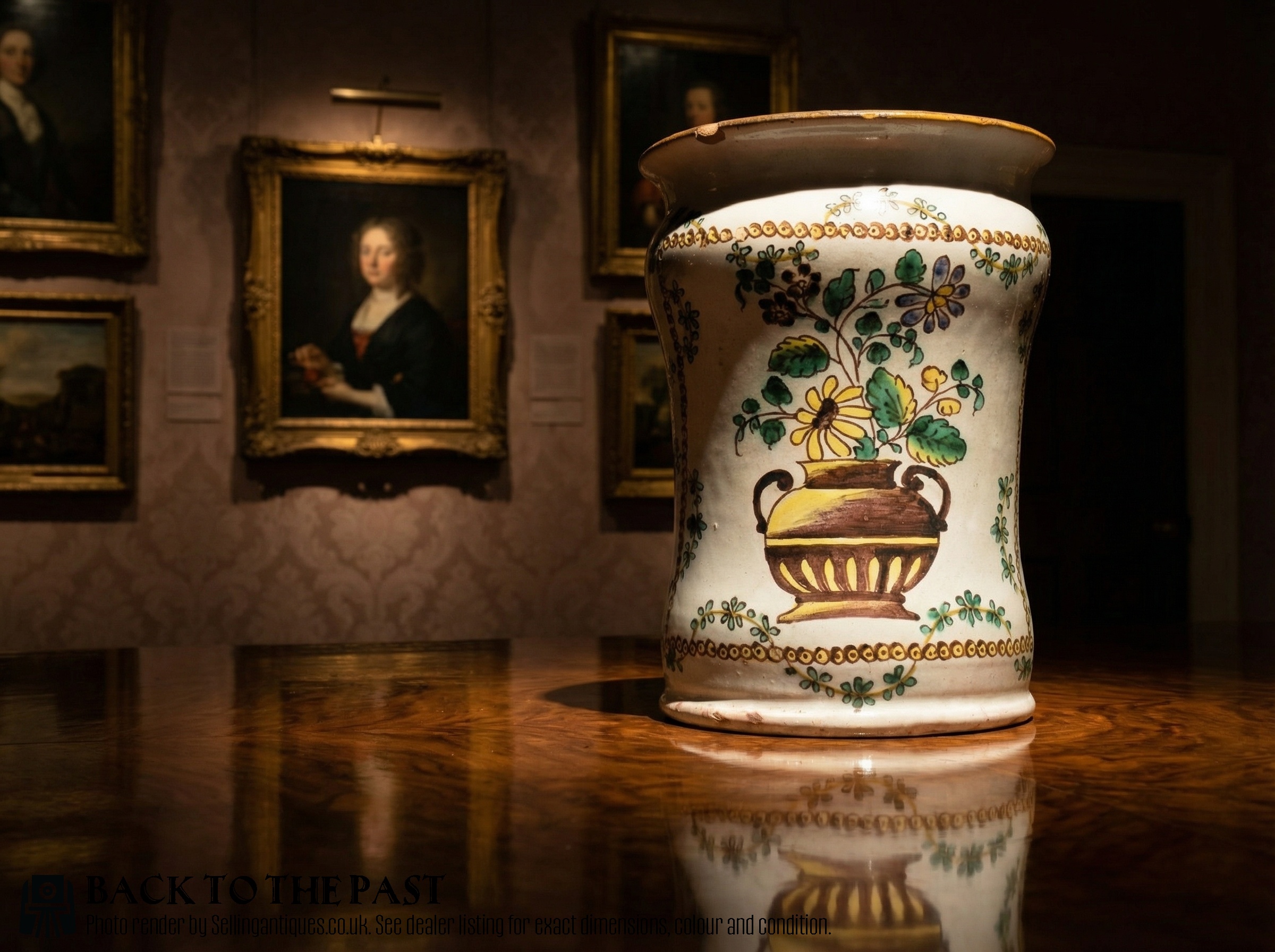
Quality in these vessels rests upon the clarity of the tin glaze and the control shown in the hand-painted decoration. Finer pieces display crisp botanical motifs, heraldic details, or figurative panels executed with distinct brushwork.
The precision of the potting also distinguishes the range, seen in the balanced proportions of the waisted body and the even thickness of the earthenware wall. Well-preserved glaze surfaces with minimal disruption elevate an example.
The Ceramic Albarello Jar Glossary
- Albarello
- A cylindrical pharmacy jar designed for storing dry drugs and electuaries. The waisted shape allowed handlers to lift jars tightly packed together on crowded apothecary shelves.
- Tin Glaze
- A lead glaze rendered opaque by the addition of tin oxide. This white surface served as a canvas for painted decoration in majolica and delftware traditions.
- Majolica
- Tin-glazed earthenware decorated with coloured pigments on an opaque white ground. Italian workshops developed sophisticated polychrome and blue-and-white variants of this technique.
- Faience
- European tin-glazed pottery originating from traditions related to Italian majolica production. Dutch and French centres adapted the technique to produce distinct apothecary wares.
- Wet Drug Jar
- A pharmaceutical vessel featuring a spout or a wide mouth suited for liquid syrups and oils. These pieces often incorporate a handle for pouring.
Ceramic Albarello Jar: Frequently Asked Questions
What were ceramic albarello jars used for?
These vessels stored dried herbs, ointments, and medicinal compounds in historical apothecary shops and dispensaries. Their distinctive cylindrical shape allowed pharmacists to line them up closely on shelves.
Labels painted directly on the body identified the contents for daily medical practice.
How do you date an albarello jar?
Dating relies on analysing the tin glaze characteristics, the style of the painted decoration, and the profile of the earthenware body. Seventeenth-century examples often feature heavier potting and distinct cobalt blue palettes.
Later nineteenth-century pieces display different pigment mixtures and stylistic revivals of earlier Renaissance forms.
Are these jars waterproof?
Most historic tin-glazed earthenware vessels are slightly porous due to the nature of the historic body and glaze. While wet drug jars held liquids historically, modern use is best restricted to dry display.
Filling them with water can cause moisture to penetrate old hairline cracks or damage the glaze.
Where were these pharmacy jars made?
The pieces originate primarily from European ceramic centres, with a strong representation from Italian and Dutch workshops. Regions such as Savona, Naples, and Nove produced notable apothecary wares.
Local guilds and independent potteries supplied these vessels to regional apothecaries across centuries.