

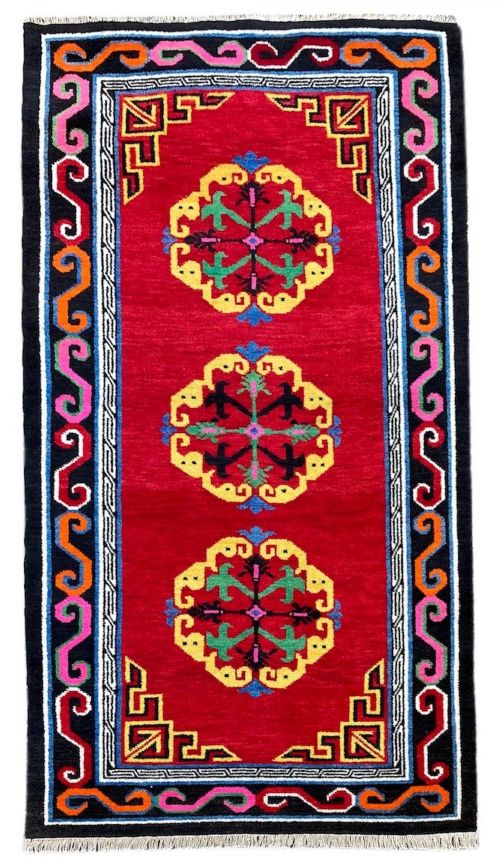
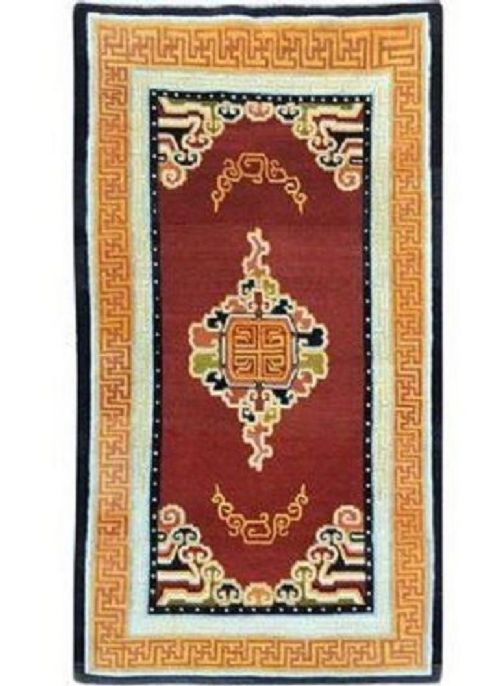
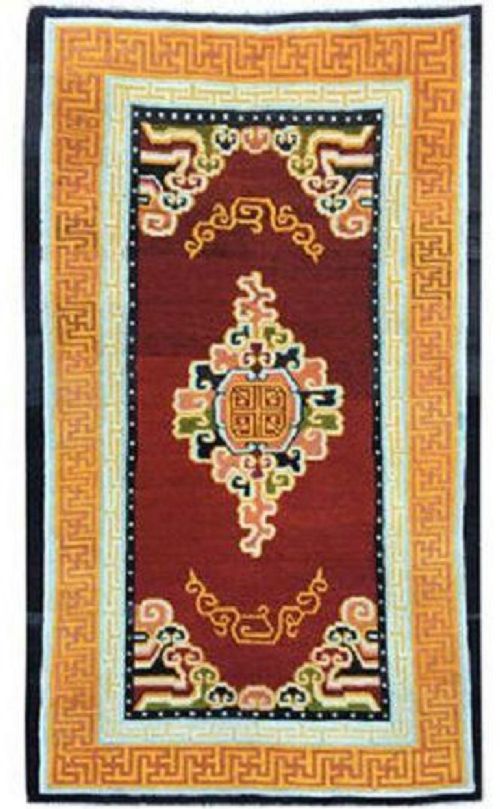
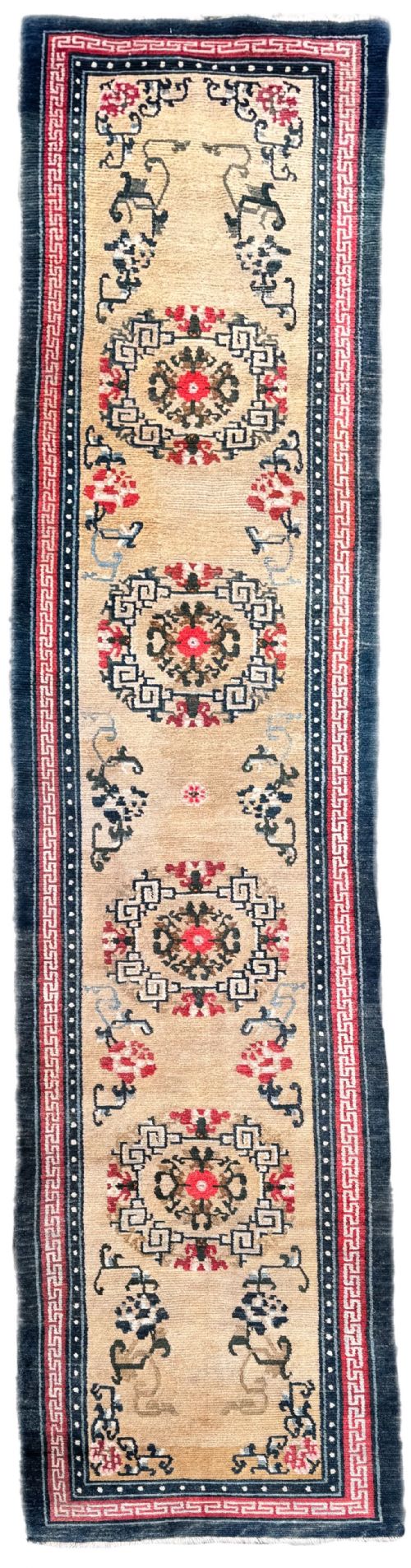




Central Asian Medallion Rug
A central asian medallion rug brings tribal warmth and intricate geometric motifs straight to your floor.
Central Asian Medallion Rug
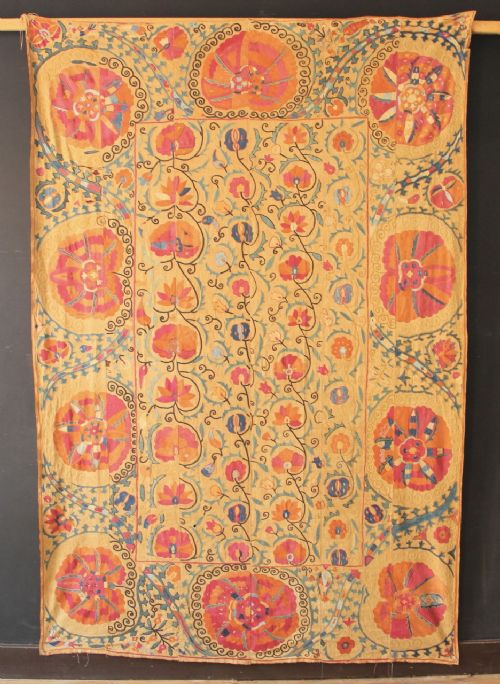
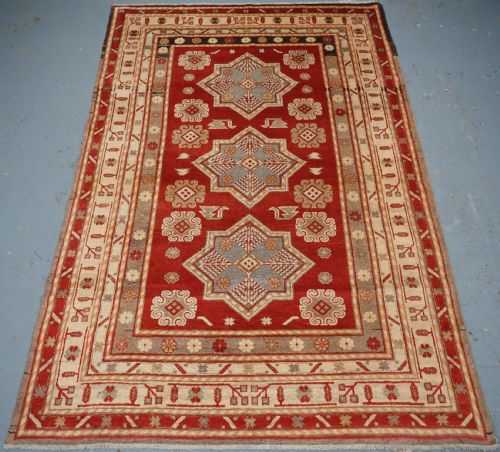
When you search for a central asian medallion rug, you encounter hand-knotted and embroidered pieces stemming from traditions across Tibet, Uzbekistan, and East Turkestan. These textiles span periods from the nineteenth century through to the early decades of the twentieth century, taking the form of runners, kilims, flatweaves, and large area rugs. The most common examples you meet on this page are vintage Tibetan rugs and antique Uzbek suzanis featuring distinct central motifs.
The regional styles vary widely, encompassing Tibetan, Persian tribal, Uzbek folk art, and Kashgai aesthetics. Pieces range from compact floor coverings to substantial runners exceeding four metres in length. Buyers select these items to anchor a room with rich cultural history and tactile depth.
Materials and construction
Weavers constructed these pieces primarily from wool, cotton, and silk, occasionally incorporating camel hair and mercerised cotton for specific textures and sheens. Uzbek suzanis utilise fine silk embroidery stitched onto cotton foundations, while traditional Tibetan and Kazak examples rely on sturdy wool piles.
Art silk and mercerised cotton appear in later twentieth-century Turkish Kayseri pieces to mimic the lustre of pure silk. The combination of these durable natural fibres with careful hand-knotting and embroidery accounts for the survival of these textiles over many decades.
Central Asian Medallion Rug Retail Price Guide 2026
Typical asking prices for central asian medallion rug among the pieces listed under this phrase on Sellingantiques today, from the lower quarter to the upper quarter. They describe what is for sale here now, not the wider market.
Several pieces on this page travelled further than most modern commuters before ever reaching a floor.
Assessing quality and execution
Quality in a central asian medallion rug rests upon the precision of the knotting or the tightness of the embroidery stitches. Finer execution allows complex geometric and floral designs to hold crisp outlines rather than blurring across the field.
The choice of foundation materials also dictates the handle and drape of the textile, with dense wool piles and heavy cotton grounds offering superior structural integrity. Superior examples display a harmonious balance between the central medallion and the surrounding field.
The Central Asian Medallion Rug Glossary
- Suzani
- An embroidered textile originating from Central Asia, typically featuring bold floral or medallion designs worked in silk on a cotton or linen ground.
- Kilim
- A flatwoven carpet or rug produced without a pile, resulting in a lightweight textile with crisp geometric patterns.
- Kelleh
- A large rectangular carpet format, longer than it is wide, traditionally suited for use in long rooms or hallways.
- Medallion
- A central decorative motif placed in the middle of the rug field, often geometric or floral in form.
Central Asian Medallion Rug: Frequently Asked Questions
How do I style a central asian medallion rug?
Place these rugs over wooden floors to let the rich red grounds and tribal motifs stand out as a focal point in a living space or hallway.
Keep surrounding furnishings neutral so the intricate patterns and varied textures of the textile retain their visual impact.
Are these rugs suitable for heavy traffic areas?
Durable wool pile examples and sturdy flatweaves handle moderate foot traffic well in residential settings.
Delicate silk embroidered pieces require gentler placement, such as low-traffic bedrooms or wall hangings, to protect the fine stitches.
How do I clean an antique rug?
Vacuum gently using suction only, avoiding the rotating brush bars that can catch loose fibres or delicate embroidery threads.
Consult a specialist rug cleaner experienced in antique textiles for any deeper washing or stain removal.
What is the difference between a rug and a kilim?
Rugs possess a raised pile created by individual knots tied to a warp and weft foundation, giving them a plush surface.
Kilims are flatwoven without a pile, resulting in a thin, tapestry-like textile that sits very flat on the floor.