

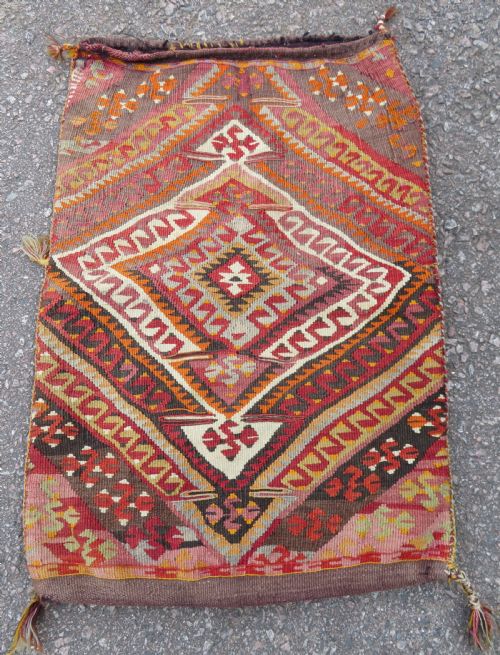


Turkish Wall Hanging Rug
These pieces are a turkish wall hanging rug, bringing historic Anatolian textile tradition and vibrant craftsmanship into contemporary interior spaces.
Turkish Wall Hanging Rug
A turkish wall hanging rug covers a diverse array of textiles, spanning centuries of regional weaving traditions across Anatolia and the broader Ottoman sphere. Collectors frequently encounter pieces originating from major centres such as Konya, Ghiordes, Kayseri, and Hereke, reflecting distinct local iconographies.
The selection ranges from early nineteenth-century tribal saddlebags and embroidered panels to finely knotted silk prayer rugs and mid-century works. These textiles served various utilitarian and decorative functions before being adapted for display on walls.
Traditional forms include geometric village rugs, flatweave cicim panels, and intricate court-style carpets featuring floral motifs. Each item carries the distinct visual language of its maker, from nomadic Kurdish workshops to urban Ottoman ateliers.
Materials and construction
Materials comprise natural animal and plant fibres, principally wool, silk, cotton, linen, and occasional leather or wooden mounting elements. Weavers utilised hand-spun wool for durable tribal pieces, whilst employing delicate silk for urban prayer rugs and miniature formats.
Construction techniques vary from symmetrical and asymmetrical knotting to flatweave embroidery and pile-woven structures. Artisans combined dyed yarns derived from natural sources to build complex geometric and floral patterns that define regional aesthetics.
Turkish Wall Hanging Rug Retail Price Guide 2026
Typical asking prices for turkish wall hanging rug among the pieces listed under this phrase on Sellingantiques today, from the lower quarter to the upper quarter. They describe what is for sale here now, not the wider market.
Current listings feature materials including wool, silk, cotton, linen, wood, and glass across periods from the eighteenth to the mid-twentieth century.
Distinctions in quality
Quality differentiates itself through knot density, material purity, and the precision of the underlying design execution. Finer silks and tightly spun wools indicate greater technical mastery by the weaver.
Condition and completeness of the textile further define the piece, particularly in older tribal items like nomadic saddlebags and embroidered panels. Original borders, intact selvedges, and vibrant natural dyes contribute significantly to the standing of a textile.
The Turkish Wall Hanging Rug Glossary
- Prayer rug
- A textile featuring a central mihrab design indicating the direction of prayer, traditionally utilised in Islamic worship. These rugs are distinguished by architectural arches and concentrated symbolic motifs.
- Cicim
- A flatweave embroidery technique where supplementary weft threads create raised patterns over the base cloth. This method is frequently observed on Anatolian panels and storage bags.
- Yastic
- A traditional short rug or cushion cover originating from Western and Central Anatolia. These pieces typically display concentrated tribal medallions within manageable proportions.
- Juval
- A large storage bag produced by nomadic groups such as the Kurds, featuring complex face designs. They represent functional tribal items repurposed for decorative display.
- Mihrab
- The arched niche depicted on prayer rugs that represents the direction towards Mecca. Its design varies widely between different weaving regions and periods.
Turkish Wall Hanging Rug: Frequently Asked Questions
How do I hang a textile safely?
Mounting a textile requires distributing the weight evenly across the entire upper edge to prevent distortion of the foundation fibres. Utilising a fabric sleeve or specialised archival Velcro systems prevents direct piercing of the wool or silk.
Avoid displaying pieces in direct sunlight to protect natural dyes from fading over time. Regular gentle rotation helps maintain even exposure to ambient light.
What is an Anatolian tribal rug?
Anatolian tribal rugs are woven by nomadic or village populations using traditional geometric motifs and regional colour palettes. These pieces reflect the specific cultural heritage and environment of the makers.
Unlike urban workshop carpets, tribal examples often display spontaneous design variations and sturdy wool constructions suited for daily nomadic life.
How are silk rugs different from wool?
Silk rugs offer exceptionally high knot counts and a lustrous surface that catches light, allowing for intricate, miniature-scale details. They were typically produced in urban centres like Kayseri and Hereke for wealthier patrons.
Wool rugs provide greater durability and heavier textures, making them characteristic of village and nomadic production across Anatolia.
Can I clean an antique rug myself?
Professional textile conservation is recommended for washing antique rugs to prevent dye bleeding and fibre degradation. Household cleaning products can permanently damage natural wool and silk yarns.
Gentle surface vacuuming with appropriate attachments helps remove dust accumulation without disrupting the fragile pile or flatweave structure.