



Central Asian Carpet Bag
When hunting for a central asian carpet bag, you are looking at nomadic utility woven into brilliant wool and dye.
Central Asian Carpet Bag
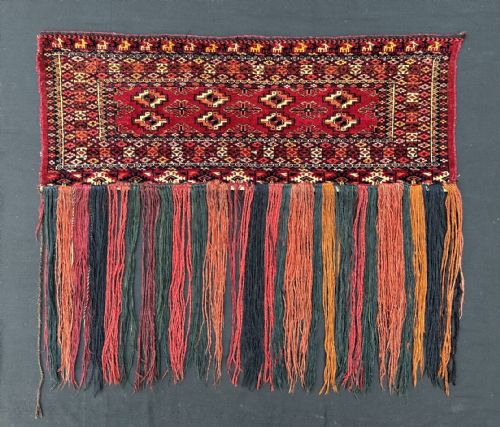
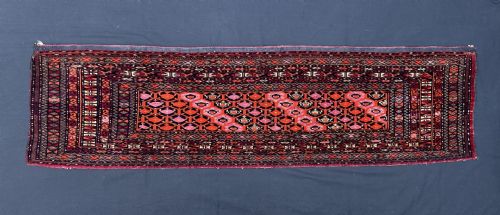
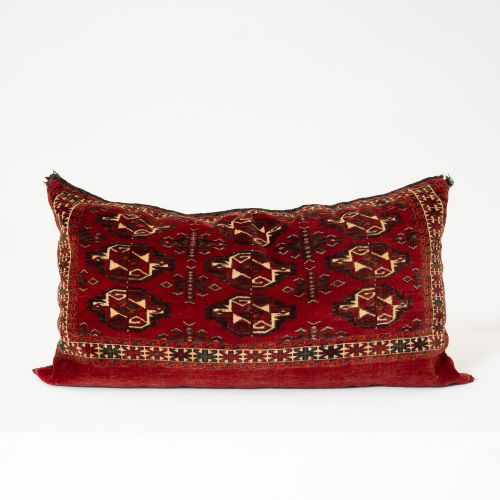
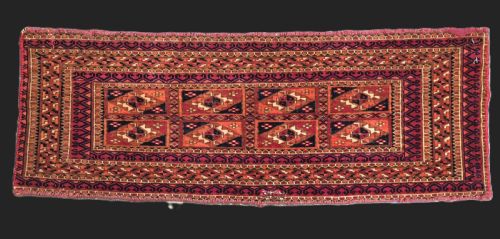
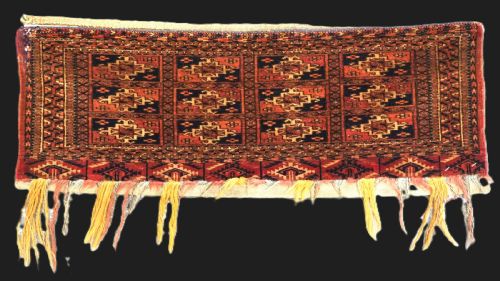
A central asian carpet bag encompasses various utilitarian containers woven by nomadic tribes such as the Tekke, Saryq, Yomut, and Ersari across Turkmenistan and the broader region. These pieces take the form of torbas, chuvals, jollars, and kap containers, originally designed for domestic storage and transport inside the felt tents of nomadic life.
Most examples found on this page consist of bag faces or complete pouches dating from the mid-nineteenth century to the early twentieth century. Their distinctive tribal patterns reflect specific regional lineages and traditional weaving traditions passed down through generations.
How They Were Made
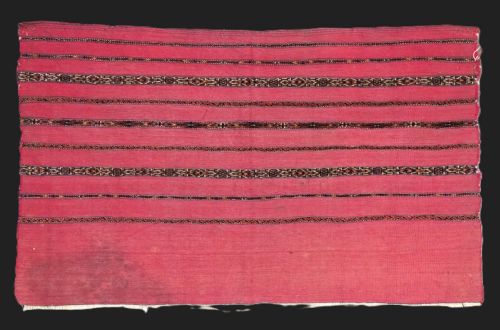
Weavers constructed these textiles primarily using hand-spun wool and cotton foundations, dyed with natural pigments that yield deep, enduring shades of madder red, brown, and ivory. Many items combine pile weaving with flatweave techniques, particularly on the backs and borders of the bags.
The precision of the knotting varies across tribes, with certain Tekke and Saryq pieces exhibiting an exceptionally fine weave that allows for intricate geometric drawing.
Listings feature wool, cotton, and natural dyes across nineteenth-century Turkmen, Yomut, and Ersari tribal weavings.
What Varies in Quality
The distinction between standard and exceptional pieces rests upon the density of the knotting, the crispness of the drawing, and the vibrancy of the natural dyes. Superior examples display precise symmetry in tribal motifs such as guls and curled leaf designs, combined with wool that retains its natural lanolin.
Integrity also plays a major role, as surviving bags complete with their original plain weave backs command greater interest than fragmentary or trimmed bag faces.
The Central Asian Carpet Bag Glossary
- Torba
- A small utilitarian bag used by Turkmen nomads for household storage inside the tent. These wide bags often hang against tent walls and feature prominent tribal guls.
- Chuval
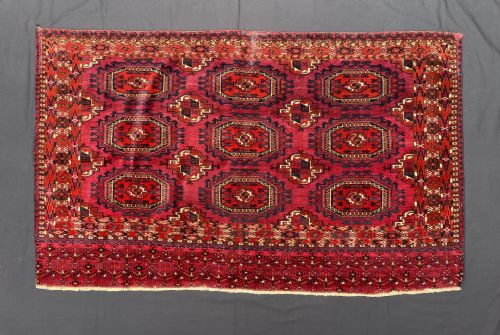
- A large storage bag utilised for bedding and heavy household goods by nomadic tribes. They typically present multiple rows of primary guls across the face.
- Gul
- A repeating medallion or octagonal motif central to Turkmen carpet design. Each tribal group utilises distinct gul patterns to signal lineage and origin.
- Mafrash
- A rectangular storage bag or trapper face used in pairs for transporting goods on pack animals. They frequently incorporate banded flatweave designs alongside pile work.
- Jollar
- A smaller bag or saddle bag produced by nomadic weavers for personal utility and transport. They often display compressed variations of major tribal motifs.
Central Asian Carpet Bag: Frequently Asked Questions
How were these bags used originally?
Nomadic families utilised these woven containers to store clothing, bedding, and smaller household possessions inside their tents. Their flat bases and sturdy construction allowed them to hang securely against lattice walls or travel on pack animals.
Many examples feature loops or integrated backs designed specifically for suspension within the nomadic household.
How do I identify different tribal designs?
Tribal attribution relies heavily on the specific drawing of the primary guls and the choice of background colours. For instance, Tekke pieces often show precise octagonal guls on madder red fields, while Yomut examples might display kepse or diamond motifs.
Examining the secondary borders and flatweave structures also helps separate pieces made by the Saryq, Ersari, and other regional groups.
How should I care for an antique bag face?
Preserving these textiles requires gentle handling, regular rotation, and protection from direct sunlight to prevent fading of the natural dyes. Vacuuming should be done cautiously through a mesh screen using low suction.
Wall hanging requires professional mounting that distributes the weight evenly across the entire upper edge of the textile.