
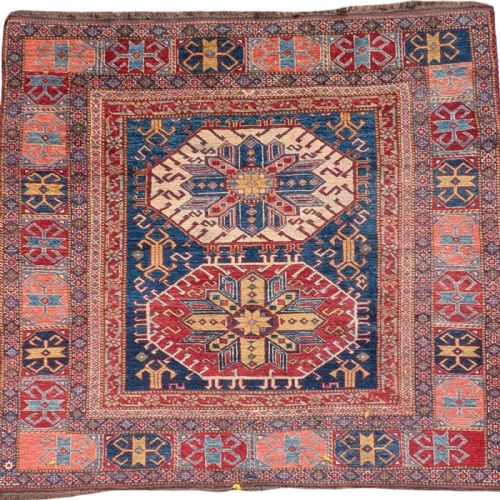
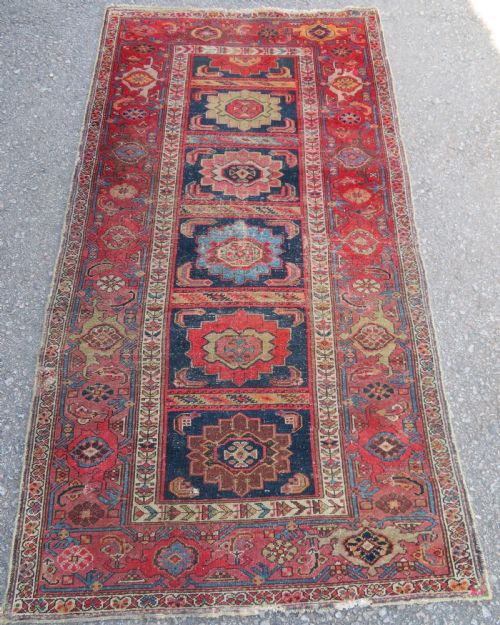
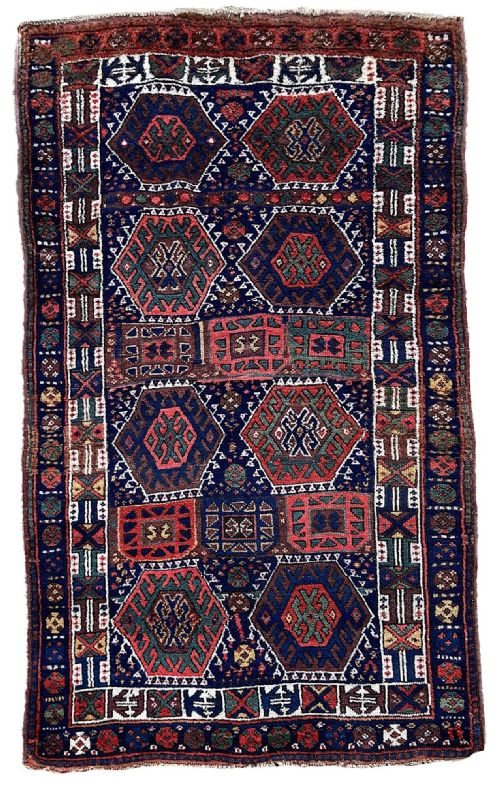


Caucasian Village Wool Rug
A caucasian village wool rug brings bold geometry and rich regional character straight to the floor.
Caucasian Village Wool Rug
A caucasian village wool rug delivers traditional tribal patterns, geometric medallions, and striking village formats from the late nineteenth and early twentieth centuries. Buyers seeking a caucasian village wool rug will discover formats ranging from small prayer rugs and square carpets to long hallway runners.
The regional types span Kazak, Shirvan, Gendje, Karabagh, Lesghi, and Moghan styles, alongside related Kurdish and Persian village workshops. These pieces showcase distinctive tribal motifs, hooked medallions, and Memling gul designs woven in local village houses.
Most examples date between the eighteen-seventies and nineteen-thirties, reflecting the traditional weaving output of the Caucasus and adjacent northern Persian districts. The selection on this page centres on genuine antique village rugs created with time-honoured methods.
How they were made
These floor coverings utilise hand-spun wool for the pile, providing a dense and resilient surface that absorbs natural dyes with deep colour variation. Foundations typically combine wool or cotton warps and wefts to build a sturdy textile structure.
Weavers relied on natural dyes to achieve rich saturations of red, blue, ivory, and earthy tones that patinate gracefully over decades. Hand-knotting techniques executed on upright looms ensured each village rug possessed unique structural irregularities and individual character.
One exceptional Karabagh village rug in the listings preserves the actual signed name of the weaver woven directly into the wool.
What varies in quality
The finesse of the knotting and the crispness of the geometric drawing distinguish finer village weavings from simpler utility pieces. Sharper delineation in medallion structures and balanced proportions indicate greater control by the weaver.
The purity and complexity of the natural dye palette also determine distinction, with rich variations adding visual depth across the field. Preserved pile height and intact original selvedges contribute to the desirability of an antique rug.
The Caucasian Village Wool Rug Glossary
- Kazak
- A distinct style of Caucasian rug known for bold geometric medallions and primary saturated colours. These rugs typically display strong octagons, squares, and animal or human forms.
- Prayer rug
- A small rug featuring a mihrab or arch design at one end, traditionally used for daily devotions. The niche points the worshipper in a specific direction during prayer.
- Medallion
- A central ornamental motif set into the field of the rug. Village weavers often used multiple stacked medallions arranged along the central axis.
- Natural dye
- Colouring derived from plant, insect, or mineral sources rather than synthetic chemical compounds. These dyes yield softer, harmonious tones that age with considerable character.
- Runner
- A long, narrow carpet format designed specifically for hallways, corridors, or narrow passageways. Village weavers produced these elongated pieces to fit domestic architecture.
Caucasian Village Wool Rug: Frequently Asked Questions
Where were these rugs made?
These textiles originate from village communities across the Caucasus region, including areas associated with Kazak, Shirvan, Gendje, and Karabagh weaving traditions. Additional examples hail from nearby northern Persian districts such as Sarab, Karadja, Bakshaish, and Kurdish territories.
Local weavers working in domestic settings produced these pieces using regional designs handed down through generations.
How do I care for an old wool rug?
Vacuum your rug gently with suction only, avoiding the rotating brush roll to protect the antique wool pile. Rotate the piece periodically to ensure even wear from foot traffic and sunlight exposure.
Professional cleaning tailored for antique textiles should be utilised when deep washing becomes necessary.
What is a Memling gul?
A Memling gul is a distinctive octagonal geometric motif featuring hooked or stepped outlines found frequently in Caucasian and Turkic weaving. The design takes its name from the early Netherlandish painter Hans Memling who depicted similar carpets in his artwork.
In village rugs, this motif serves as a powerful focal point within the field.
How can I tell the age of a village rug?
Age is determined by evaluating the materials, dye palette, structural wear, and stylistic traits typical of nineteenth and early twentieth-century production. Natural hand-spun wool and traditional organic dyes generally point toward older nineteenth-century manufacture.
Structure and knotting density also offer reliable clues to the era in which the rug was woven.