
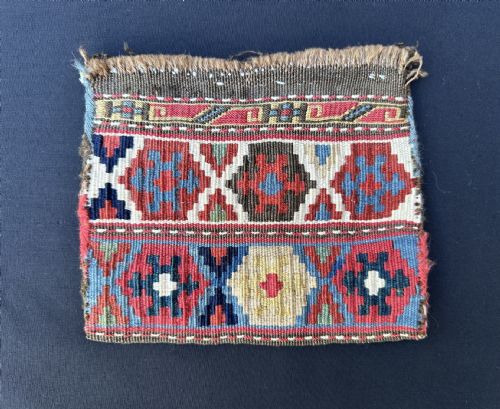


Caucasian Tribal Textile
A caucasian tribal textile brings rugged geometric geometry and rich natural dyes directly into a room from nomadic camps of the nineteenth and early twentieth centuries.
Caucasian Tribal Textile
When you search for a caucasian tribal textile, you are looking at woven items produced by nomadic and village weavers across the Caucasus and neighbouring regions. These pieces include utilitarian objects such as saddle bags, storage compartments, runner rugs, and panel fragments repurposed into cushions.
The most common versions encountered here are Shahsavan bag faces and complete storage units dating from the Victorian era up to the early twentieth century. Smaller items like vanity bags and saddle bag pairs reflect the nomadic lifestyle of groups in Moghan and Azerbaijan.
Rug formats and runner rugs also appear alongside flatwoven kilims and sumac textiles. Their origins span distinct tribal groups including the Jaf Kurd, Yomud Turkmen, and Karabagh populations.
Materials and construction methods
The fundamental material across these objects is hand-spun wool, frequently supplemented by cotton foundations and occasional highlights of silk. Weavers relied on natural vegetable dyes to produce deep, lasting colour palettes that age gracefully over time.
Construction techniques vary from pile weaving to flatwoven methods like soumak, jajim, and kilim structures. Storage bags and mafrash panels demonstrate intricate supplementary weft-wrapping techniques designed for durability during transport.
Current listings span from the mid-nineteenth century up to the 1920s, utilising wool, cotton, silk, and natural vegetable dyes.
Assessing quality in weaving
Quality rests upon the crispness of the geometric design and the saturation of the natural dyes. Tighter knotting or finer soumak wrapping separates ordinary utilitarian items from superior artistic examples.
The handling of traditional motifs, such as stylized birds and dragons, dictates the visual success of the piece. Preservation of original plain weave backs, complete side cords, and untouched edges elevates the integrity of surviving saddle bags and panels.
The Caucasian Tribal Textile Glossary
- Soumak
- A flatweave technique where coloured weft threads wrap over and under the warp threads to create a textured, durable surface. This method allows for sharp diagonal lines common in tribal bags.
- Mafrash
- A large rectangular storage chest or bedding bag constructed from four woven panels and a base. These were strapped to pack animals by nomadic groups.
- Khorjin
- A traditional double saddle bag used for transport on horseback or camel. Pairs are often separated over time, leaving individual bag faces as wall art or cushions.
- Jajim
- A brightly coloured flatwoven textile made in narrow strips and stitched together. They serve primarily as heavy utility covers or blankets.
- Jaf Kurd
- A Kurdish tribal group known for distinctive weaving traditions involving dark wools and bold geometric motifs. Their bags often feature characteristic plain weave backs.
Caucasian Tribal Textile: Frequently Asked Questions
How were caucasian tribal textiles used originally?
Nomadic groups utilised these woven items for practical daily storage, horse transport, and floor coverings inside tents. Bags held clothing and household goods during seasonal migrations.
Over decades, many complete containers were dismantled into panels as sections wore out, which explains why individual bag faces and mounted fragments survive independently today.
How do I clean and care for a textile?
Gentle surface vacuuming with a low suction attachment keeps dust from settling into the wool fibres. Avoid beating the piece or exposing natural dyes to direct, harsh sunlight for prolonged periods.
Professional specialist cleaning is recommended for antique wool items rather than standard domestic washing methods.
How can I tell the age of a bag face?
Dating relies on identifying natural dye usage, hand-spun wool characteristics, and traditional tribal design structures. Earlier nineteenth-century examples often display softer secondary wools and specific vegetable dye palettes.
Later pieces from the early twentieth century shift toward sharper chemical tones or simpler structural assembly.
Can these flatweaves be used on the floor?
Sturdier flatweaves and pile rugs handle light foot traffic in low-friction areas of a home. Thinner bag faces and delicate silk-touched panels are better suited for wall display or cushioned seating.
Using a proper rug underlay prevents slipping and reduces fibre wear on historic floor pieces.