




Flatweave Wool Tribal Textile
A flatweave wool tribal textile carries the unhurried rhythm of nomadic life, offering graphic geometry and tactile history for modern interiors.
Flatweave Wool Tribal Textile
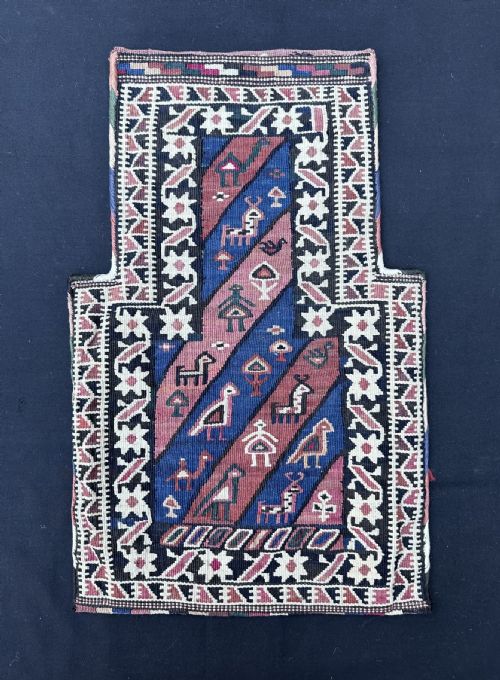
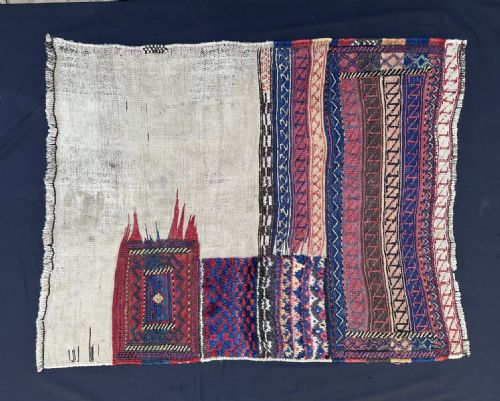
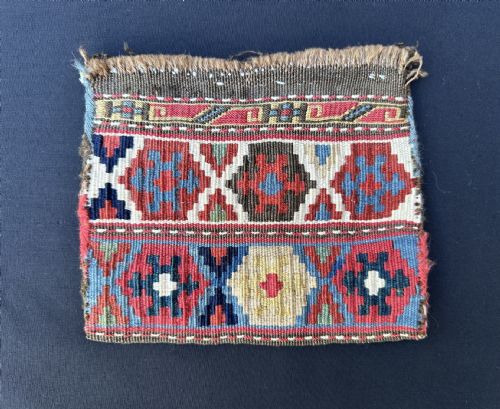
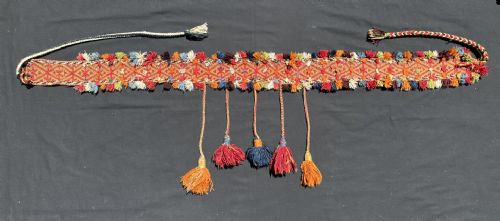
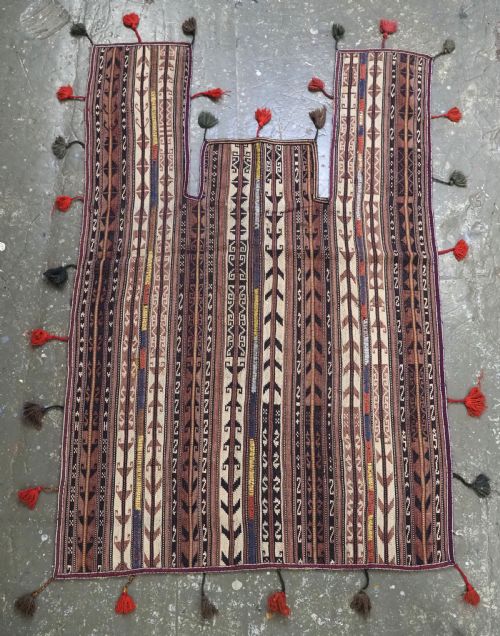
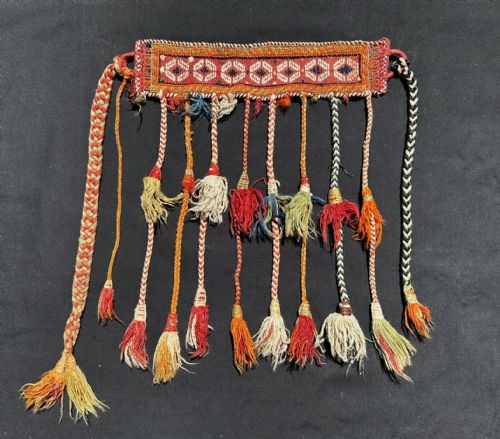
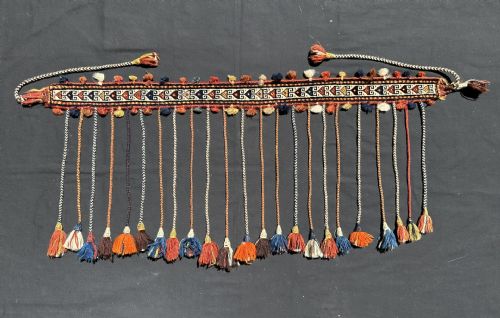
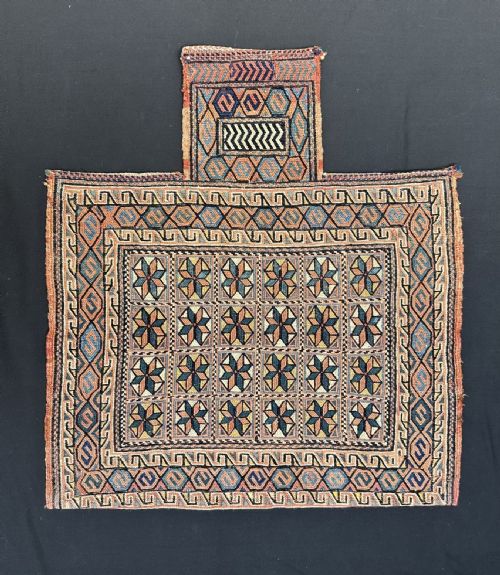
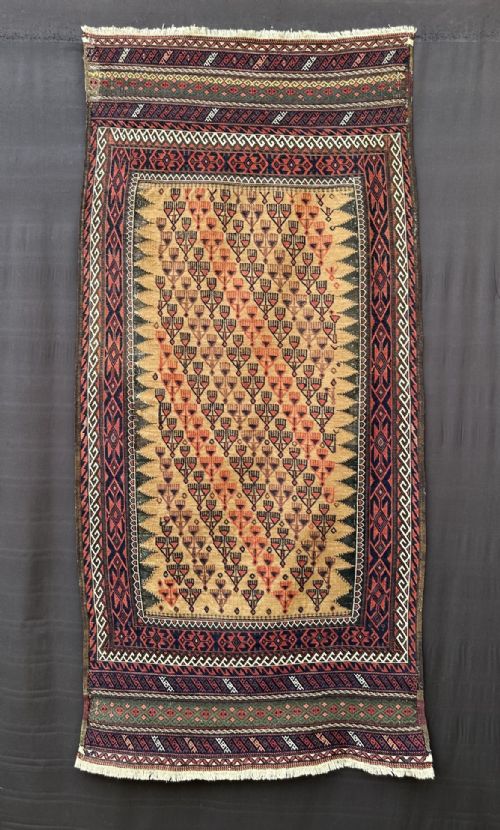
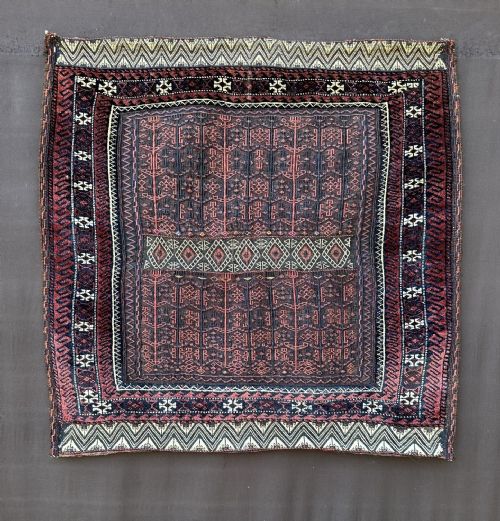
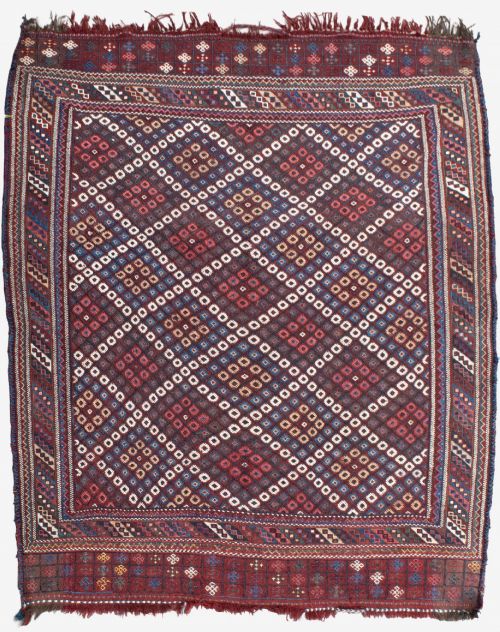
A flatweave wool tribal textile encompasses utilitarian objects such as salt-bags, bread sofreh, animal trappings, and storage bags originating from nomadic groups across Persia, Central Asia, and the Caucasus. These works include pieces made by Afshar, Qashqa'i, Shahsevan, and Yomut tribes, reflecting the specific regional aesthetics of regions like Fars, Khorassan, and Azerbaijan.
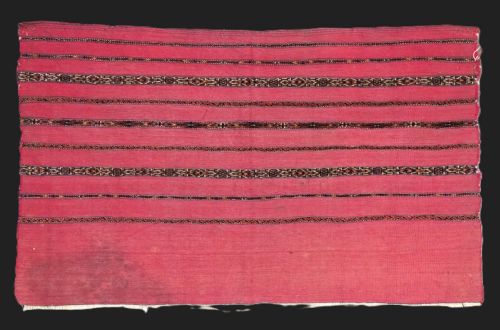
The most common formats found in this selection are domestic flatweaves without a pile, ranging from compact chanteh and salt-bags to larger ceremonial cloths and sofreh used for communal dining. Dating spans from the mid-nineteenth century through the early twentieth century, capturing a period when tribal weavers still utilised traditional vegetable dyes and indigenous animal fibres.
Materials and Techniques
These textiles rely predominantly on hand-spun wool and cotton foundations, occasionally incorporating structural details in goat hair and decorative embellishments such as cowrie shells. Weavers employed tapestry weaving, soumak wrapping, and banded flatweave techniques to create sturdy, functional surfaces without the use of mechanical looms.
Colour is derived from natural dyes applied to local wool, producing saturated hues that age with a characteristic patina over decades of use. The interaction between hand-spun yarn and botanical colourants gives each surface its slight tonal variation and depth.
Listings span the nineteenth and early twentieth centuries, featuring pieces from Persian, Caucasian, and Central Asian tribal groups.
Judging Quality
Quality in a flatweave wool tribal textile rests upon the tightness of the weave, the precision of the geometric layout, and the complexity of the structure. Finer pieces demonstrate strict control over slit-tapestry or soumak techniques, resulting in crisp pattern transitions and structural integrity across the entire face.
Another measure of distinction is the depth and saturation of the natural dye palette, alongside the condition of original finishes like braided edges, backs, and tassels. Examples that retain their complete form, including original backings and structural hardware, represent the higher end of surviving material.
The Flatweave Wool Tribal Textile Glossary
- Sofreh
- A flatweave cloth traditionally utilised for spreading food during meals or for kneading and storing bread dough. These textiles often feature minimalist striped or banded layouts.
- Soumak
- A brocade-like weaving technique where coloured pattern wefts are wrapped over the warp threads in various sequences. This creates a textured, ribbed surface that adds considerable durability to bags and trappings.
- Chuval
- A large storage bag made by Turkmen and other nomadic groups, designed for bedding and household possessions within a tent. They frequently display intricate güllü or primary guls.
- Mafrash
- A rectangular storage bag face or complete container used for transporting household goods on pack animals. They typically exhibit banded flatweave designs or structured soumak panels.
- Chanteh
- A small vanity or personal bag woven by nomadic women for carrying small possessions. These miniature pieces often showcase the highest density of pattern relative to their scale.
Flatweave Wool Tribal Textile: Frequently Asked Questions
What is a tribal sofreh used for?
A sofreh serves as a communal cloth placed on the ground for eating, serving bread, or preparing dough within nomadic households. These textiles combine utilitarian function with sophisticated regional geometry.
Because they were made for daily domestic routines, their designs reflect the local weaving traditions of specific tribal groups across Persia and Central Asia.
How do I care for an antique flatweave?
Gentle vacuuming without a rotating brush helps remove dust from the tight wool fibres of antique flatweaves. Professional textile cleaning should be sought for deeper maintenance.
Keeping these pieces out of direct sunlight prevents natural dyes from fading over time while preserving the lanolin in the wool.
What distinguishes a salt-bag from a saddle-bag?
Salt-bags are typically single-faced containers with specialised narrow necks designed for storing coarse rock salt, featuring sturdy hanging loops. Saddle-bags often comprise paired pouches joined by a central slit or bridge.
Both forms display dense geometric patterns unique to the specific sub-tribe that produced them.
How are different tribal styles identified?
Identification relies on structural characteristics, colour palettes, and specific motif repertoires associated with regions like Fars, Azerbaijan, or Turkmenistan. Qashqa'i work, for instance, often contrasts with Shahsevan or Yomut output through distinct border arrangements and dye choices.
Examining the weave type, such as soumak or plain slit-tapestry, provides further clues to tribal origin.