







Catholic Religious Canvas Art
These catholic religious canvas art pieces bring centuries of devotional painting into domestic spaces through oil on canvas and gilt wood.
Catholic Religious Canvas Art
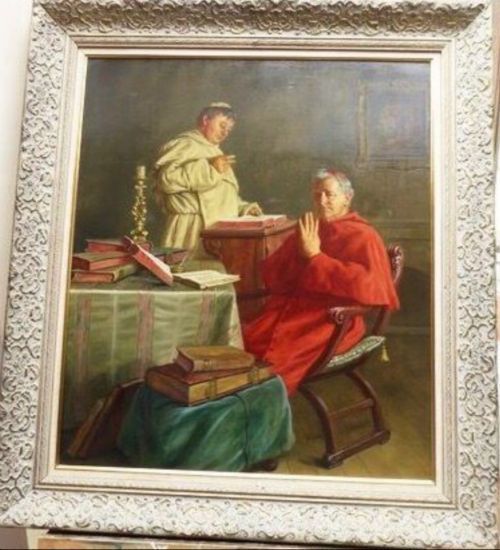
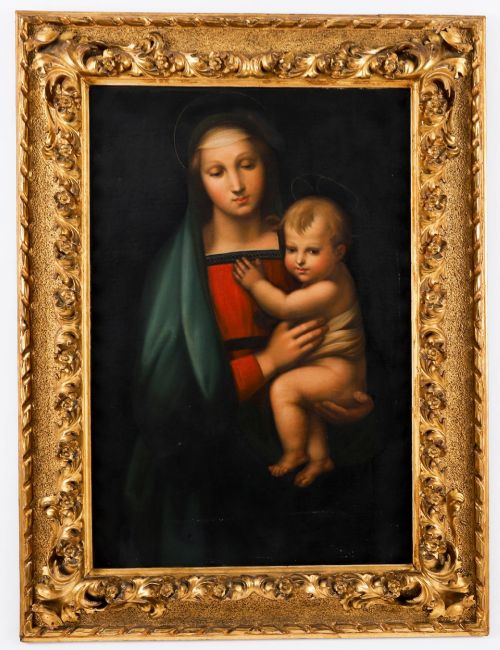
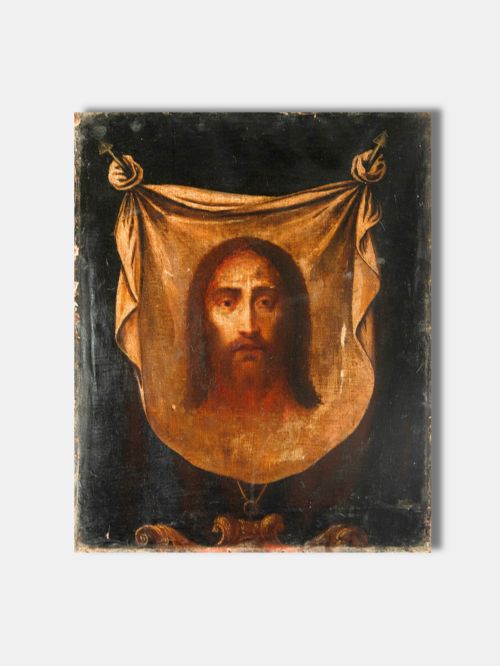
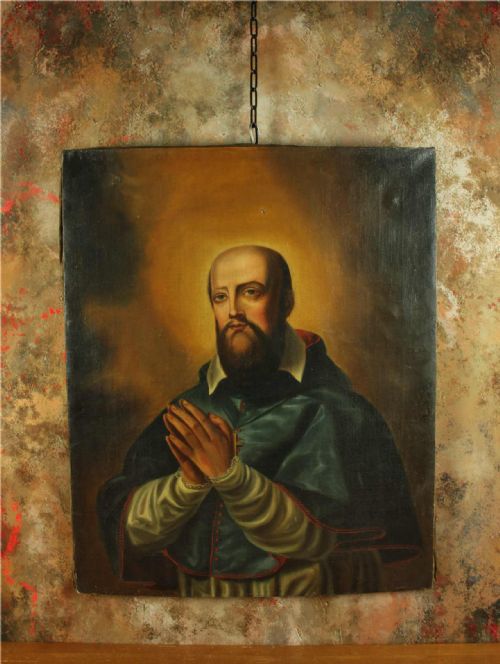
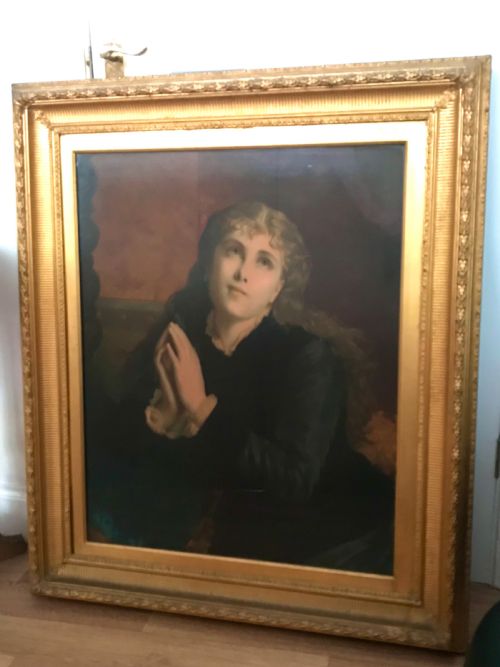
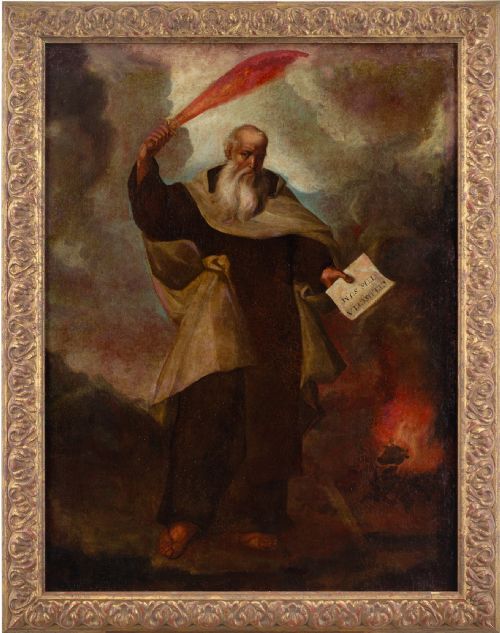
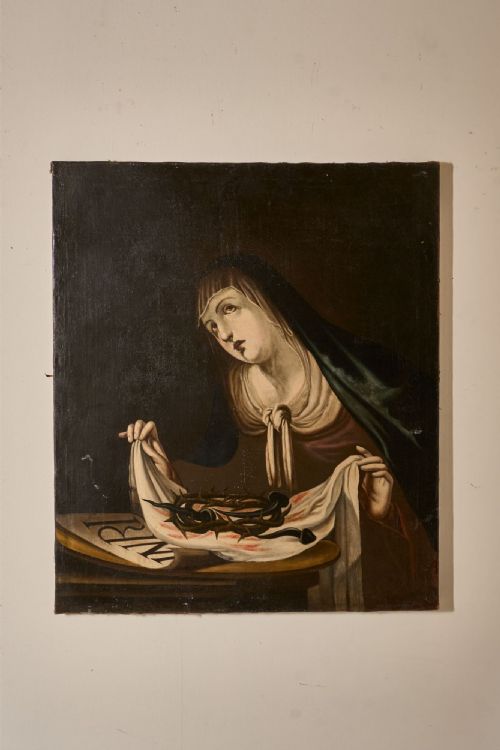
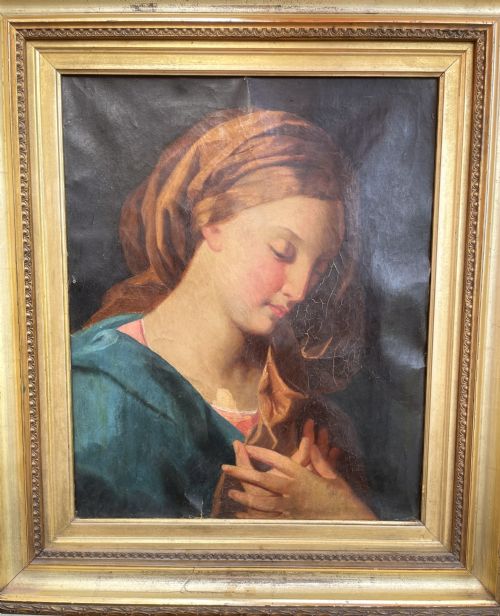
When you search for catholic religious canvas art, you encounter oil paintings spanning the seventeenth, eighteenth and nineteenth centuries. These works include devotional portraits, depictions of the Virgin Mary, portrayals of saints and scenes from the Passion of Christ.
You are most likely to meet nineteenth-century devotional canvases and eighteenth-century Italian or Spanish school paintings on this page. Subjects range from large portraits of popes and cardinals to smaller panels depicting the Holy Family and individual saints.
The regional origins of these works stretch across Italy, Spain, France and colonial workshops, demonstrating diverse European and Latin American artistic traditions. Formats vary from framed oil paintings to oleographs on canvas under glass.
Materials and techniques
These works utilise oil paint applied to woven canvas stretched over wooden supports. Pigments are layered to achieve deep tonal contrasts, particularly in Baroque and Renaissance style compositions.
Frames and accents frequently incorporate gold leaf and gilt wood, enhancing the devotional focus of the imagery. Certain nineteenth-century examples combine canvas with protective glass or specialised mounting techniques like the globe de marie.
Catholic Religious Canvas Art Retail Price Guide 2026
Typical asking prices for catholic religious canvas art among the pieces listed under this phrase on Sellingantiques today, from the lower quarter to the upper quarter. They describe what is for sale here now, not the wider market.
Several pieces feature earnest depictions of saints accompanied by very serious expressions and heavy drapery.
Assessing quality
The distinction between standard works and exceptional pieces lies in the fidelity of the brushwork and the strength of attribution. Paintings linked closely to recognised old masters or specific regional schools display superior anatomical precision and expressive depth in figures like Mary and Christ.
The integrity of the original canvas and the preservation of the oil pigment layer dictate the overall standing of an artwork. Superior examples maintain clear glazing and minimal overpainting across significant compositional areas.
Ernst Stierhof·Jozef Jansessens·Costantino Frixione·Gaspar de Figueroa·Pompeo Batoni·Guido Reni·Raphael
The Catholic Religious Canvas Art Glossary
- Oleograph
- A mechanical colour lithograph printed on canvas to imitate an oil painting. This technique became common in the nineteenth century for mass-producing devotional imagery.
- Ex-voto
- A votive offering presented to a saint or the Virgin Mary in fulfilment of a vow or in gratitude for a grace received. These paintings often record miraculous events or personal thanksgiving.
- Gilt wood
- Wood decorated with gold leaf or gold paint applied to its surface. This material frames many traditional religious canvases to create an ornate boundary.
- Baroque
- An artistic style originating around the seventeenth century characterised by dramatic movement and high contrast between light and dark. Italian and Spanish schools frequently employ these intense theatrical effects.
Catholic Religious Canvas Art: Frequently Asked Questions
How are catholic religious canvas art pieces dated?
Dating relies on stylistic evidence, costume details, canvas preparation and records linking the piece to specific periods like the seventeenth or nineteenth century.
Examinations of the stretcher frames and pigment composition provide further confirmation of the era in which the work was produced.
Where were these religious paintings originally displayed?
Many of these works hung in private chapels, churches, convents and domestic shrines across Europe and colonial territories. Smaller devotional canvases served personal prayer spaces within private homes.
Larger portraits of popes and cardinals often originated in institutional settings or ecclesiastical residences.
What is the difference between an old master follower and an original?
An old master follower refers to an artist painting in the style or copying the compositions of a master such as Raphael or Guido Reni. These works date from the period of the follower rather than the primary master.
Such pieces reflect the enduring influence of major artistic workshops across subsequent centuries.
How should I care for an antique oil painting on canvas?
Keep the canvas away from direct sunlight, high humidity and extreme temperature fluctuations to prevent cracking in the oil paint. Stable indoor environments preserve both the pigments and the wooden stretchers.
Dust the surface gently with a soft, dry brush and avoid chemical cleaning agents entirely.