

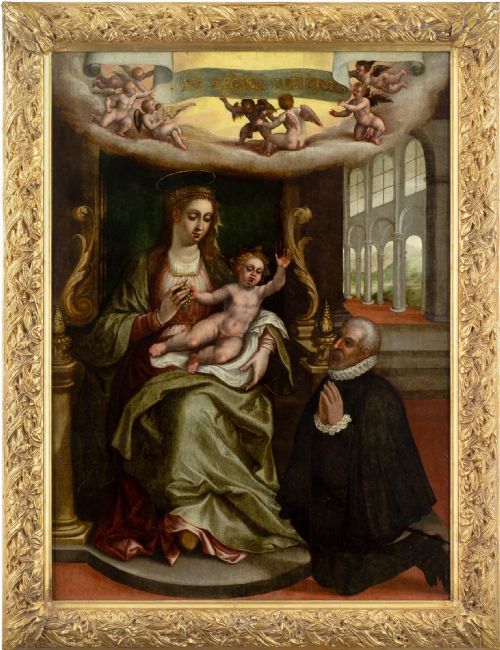


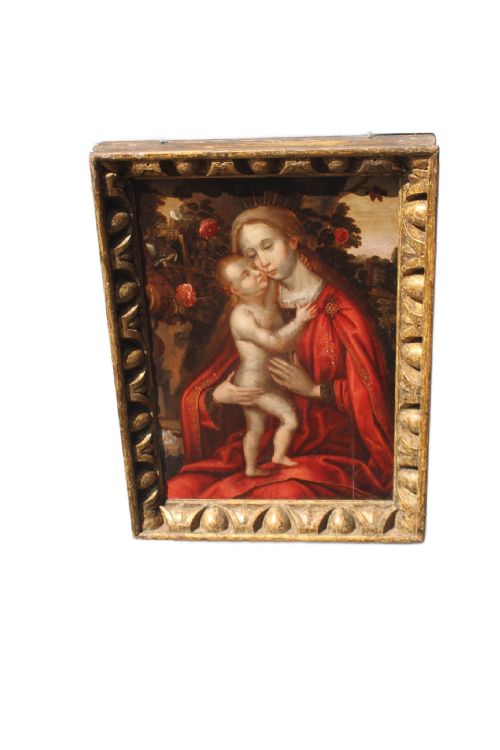


Virgin and Child Portrait
A virgin and child portrait brings centuries of devotional devotion and masterwork composition into your space through traditional oil on canvas and panel.
Virgin and Child Portrait
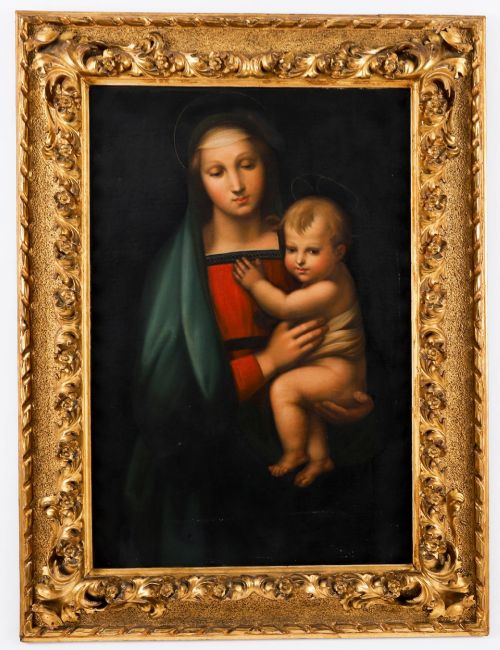
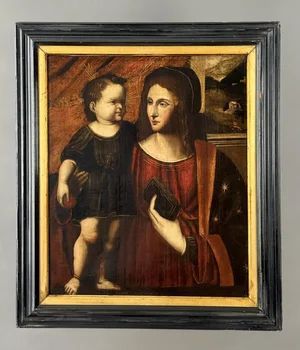
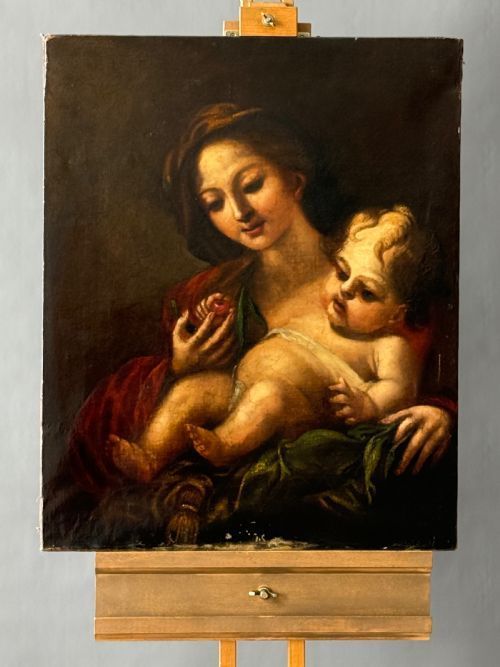
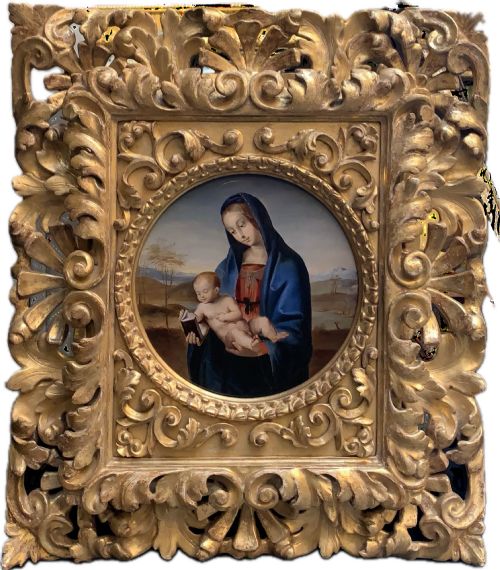
A virgin and child portrait represents the enduring religious subject matter found across European art history, capturing the Madonna and infant Jesus in various devotional postures. When you search for this subject, you encounter works ranging from early Continental schools to later revival interpretations.
The pieces listed on this page span several centuries, including sixteenth-century compositions, eighteenth-century works, and nineteenth-century interpretations. These paintings frequently follow celebrated compositions by masters such as Raphael, Murillo, and Luini.
You will find these works executed in traditional formats, including oil on canvas and oil on panel, often housed within period frames such as giltwood. The subjects vary from intimate domestic panels to large-scale gallery canvases.
Materials and construction
These works are painted using oil pigments applied to prepared canvas or wooden panels, utilising techniques developed during the Renaissance and refined in subsequent centuries. The application of oil paint allows for subtle gradation of tone and rich colour depth, particularly in the drapery and flesh tones.
Many of the older works employ wood panels as a rigid support, while later periods favour woven canvas stretched over wooden frames. Giltwood frames frequently accompany these paintings, providing a decorative border that complements the religious subject.
Virgin and Child Portrait Retail Price Guide 2026
Typical asking prices for virgin and child portrait among the pieces listed under this phrase on Sellingantiques today, from the lower quarter to the upper quarter. They describe what is for sale here now, not the wider market.
Several Madonnas share space with cherries and roses, botanical symbols chosen by artists to hint at future sacrifice.
Understanding quality
The quality of a virgin and child portrait rests in the fidelity of the brushwork and the expressive capability of the figures. Works produced by the immediate circle or workshop of a master often display a superior handling of light and anatomy compared to later decorative copies.
The condition of the painted surface and the original support also dictate the standing of a piece, with undisturbed oil layers and period frames retaining greater artistic integrity. Subtle details in the rendering of fabrics and facial expressions distinguish finer studio output from standard interpretations.
The Virgin and Child Portrait Glossary
- Oil on canvas
- Pigment suspended in a drying oil and applied to a stretched woven fabric support. This method became the dominant medium for European painting from the Renaissance onward.
- Panel painting
- A work executed on a flat piece of wood rather than canvas. Wooden supports are typical of earlier sixteenth-century works before canvas became widely adopted.
- Giltwood
- Wood that has been coated with a thin layer of gold leaf or gold paint. This finish is commonly found on the ornate frames housing religious portraits.
- Circle of
- A designation indicating that an artist worked in the style and during the lifetime of a master, potentially within their studio environment. It denotes a close stylistic relationship without direct attribution.
- Renaissance Revival
- An artistic movement reviving the forms, styles, and aesthetic ideals of fifteenth and sixteenth-century Europe. Works in this style frequently replicate famous Renaissance compositions.
Virgin and Child Portrait: Frequently Asked Questions
How old are these paintings?
The works span from sixteenth-century originals and period follower pieces to nineteenth-century interpretations and Edwardian copies. Each listing specifies the estimated period based on stylistic evidence and material analysis.
Older examples from the sixteenth and seventeenth centuries show distinct ageing in the oil layers and support materials, while nineteenth-century pieces reflect revival aesthetics and later canvas preparation techniques.
What does after Raphael mean?
This attribution indicates that the painting is a later copy or adaptation of a specific composition originally created by the Renaissance master Raphael. These works pay homage to famous compositions like the Madonna del Granduca or Madonna della Sedia.
Artists across subsequent centuries frequently painted these versions as studies or to meet the demand for masterwork imagery in private collections.
Are these original sixteenth century works?
Some pieces date directly to the sixteenth century, while others are later interpretations created in subsequent centuries. The listings distinguish between sixteenth-century creations, workshop pieces, and later nineteenth-century revival works.
Examining the canvas, panel, and pigment characteristics helps determine the actual age of each specific portrait.
How should I display an oil painting?
Oil paintings require stable environmental conditions away from direct sunlight and dramatic humidity fluctuations. Maintaining a consistent indoor climate preserves the integrity of the canvas or wood panel and the oil paint layer.
Displaying the portrait in its period frame helps support the structure and maintains the historical presentation of the artwork.