



Religious Wall Decor
Religious wall decor encompasses devotional art and sacred objects meant for hanging, bringing centuries of spiritual heritage and hand-crafted piety directly into domestic interiors.
Religious Wall Decor
Religious wall decor spans several centuries of devotional expression, offering buyers traditional artworks and sacred artefacts designed specifically for suspension. Pieces matching this phrase range from oil paintings and reverse glass mezzotints to carved wooden angels and framed engravings.
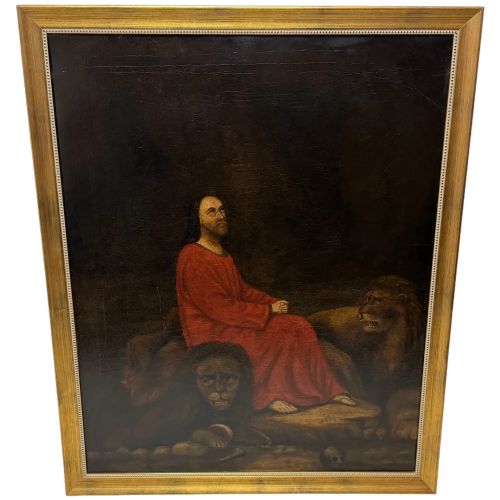
The selection on this page leans toward European and British traditions, featuring Georgian reverse paintings, Victorian biblical narratives, and French carved wood elements. Buyers encounter everything from solemn depictions of saints to elaborate ecclesiastical architectural fragments.
Forms vary significantly in scale and medium, including wall tapestries, shadowboxes, and painted cloths originating from various cultural practices. Each object serves as a tangible link to historical worship and domestic devotion.
Materials and construction methods
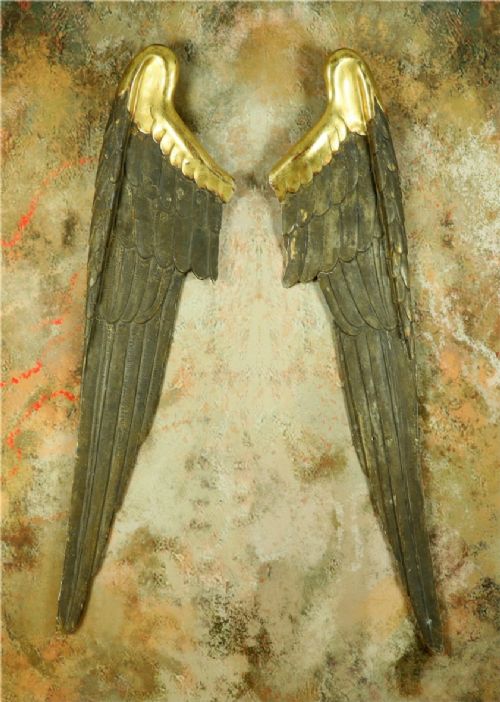
Wood serves as a primary substrate, utilising sturdy timbers like oak for substantial carvings and softer woods for gilded gesso components. Artisans shaped these materials using traditional hand-carving techniques to produce relief panels and sculptural angel wings.
Glass and paper form the basis of delicate visual works, incorporating reverse painting, coloured mezzotints, and fine engravings. Pigments, gold leaf, and oil paints were meticulously applied by hand to achieve rich coloration and luminous surface finishes.
Textiles contribute alternative textures through woven tapestries and painted cotton cloths. These fabric pieces demonstrate specialised weaving and surface decoration methods suited for wall display.
Listings feature items from the eighteenth and nineteenth centuries, utilising oak, glass, gold leaf, and cotton.
Distinctions in quality
Quality in these devotional pieces rests upon the precision of the artisan's hand and the depth of detail preserved in the medium. Finer carvings exhibit crisp definition in facial expressions and drapery, whereas lesser examples show softer, more generalized contours.
The preservation of original surface finishes, such as gold leaf, pigment, and glass integrity, dictates the historical value of the piece. Surviving examples with minimal modern intervention maintain a stronger connection to their original period aesthetic.
Sebastiaan Vrancx·Antonio Capellan·Michelangelo
The Religious Wall Decor Glossary
- Reverse glass painting
- An artistic technique where the image is painted on the back side of a glass panel and viewed from the front. This method protects the pigment and produces a glossy finish.
- Gilt gesso
- A plaster-like material applied to a wooden base, smoothed, and covered with thin layers of gold leaf. It provides a reflective surface often used on decorative frames and carved elements.
- Mezzotint
- A printmaking process of the intaglio family where the plate is roughened to achieve rich tonal gradations. It allows for subtle transitions between light and dark areas.
- Ecclesiastical Gothic
- An architectural and decorative style characterised by pointed arches and ornate religious motifs. It draws inspiration from medieval church design.
Religious Wall Decor: Frequently Asked Questions
How should I clean reverse glass paintings?
Clean the exterior glass surface gently using a soft, dry microfiber cloth to remove dust accumulation. Avoid applying liquid cleaners directly onto the glass, as moisture can seep beneath the painted layers and cause damage.
Keep these delicate works away from direct sunlight and excessive humidity to preserve the pigments.
What periods do these pieces represent?
The available selection spans from the late seventeenth century through the nineteenth century and into the early twentieth century. This includes Georgian, Victorian, and early nineteen-hundreds examples.
Stylistic elements range from Neoclassical and French Baroque to traditional religious folk art.
Where were wall panels originally displayed?
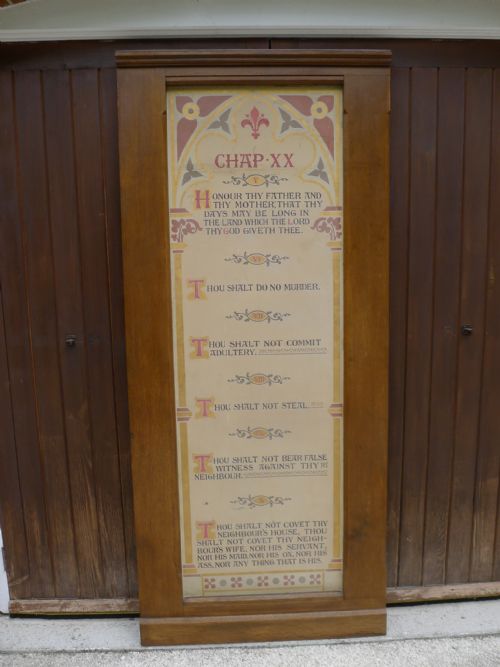
Many of these devotional objects originated in European churches, chapels, and domestic shrines used for private prayer. Items like tin tabernacle texts and altar angels served specific liturgical functions before entering private collections.
Today, they function as focal points in home interiors, maintaining their contemplative atmosphere.