
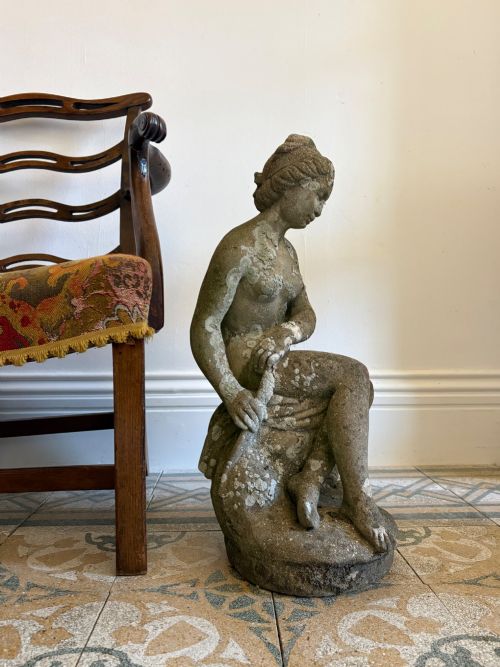
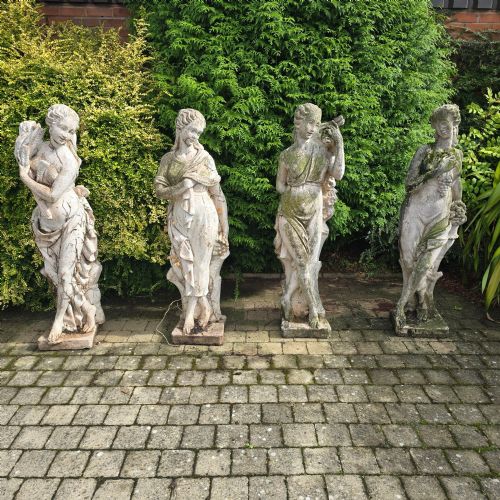
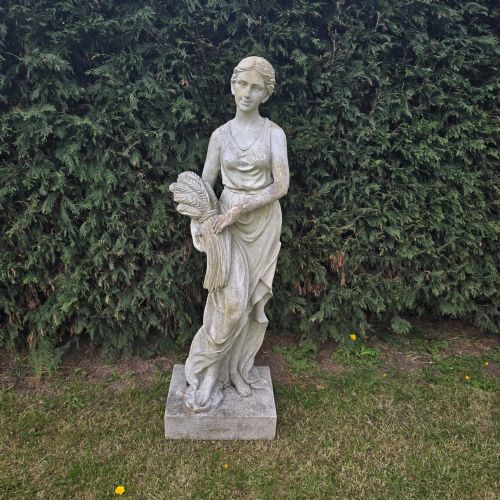
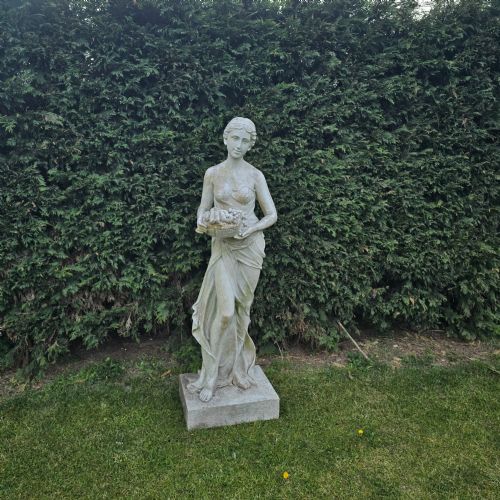
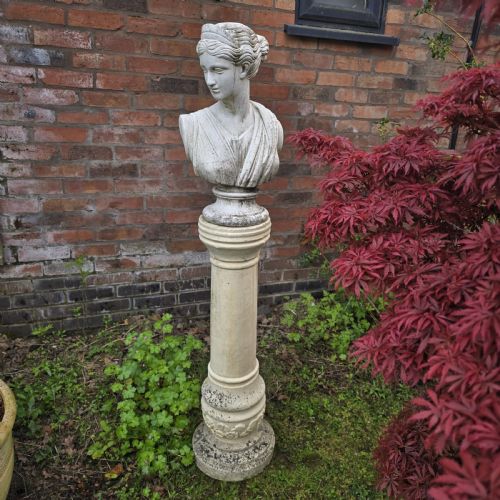


Cast Stone Female Statue
A cast stone female statue brings classical presence to garden and terrace with enduring architectural weight and sculpted grace.
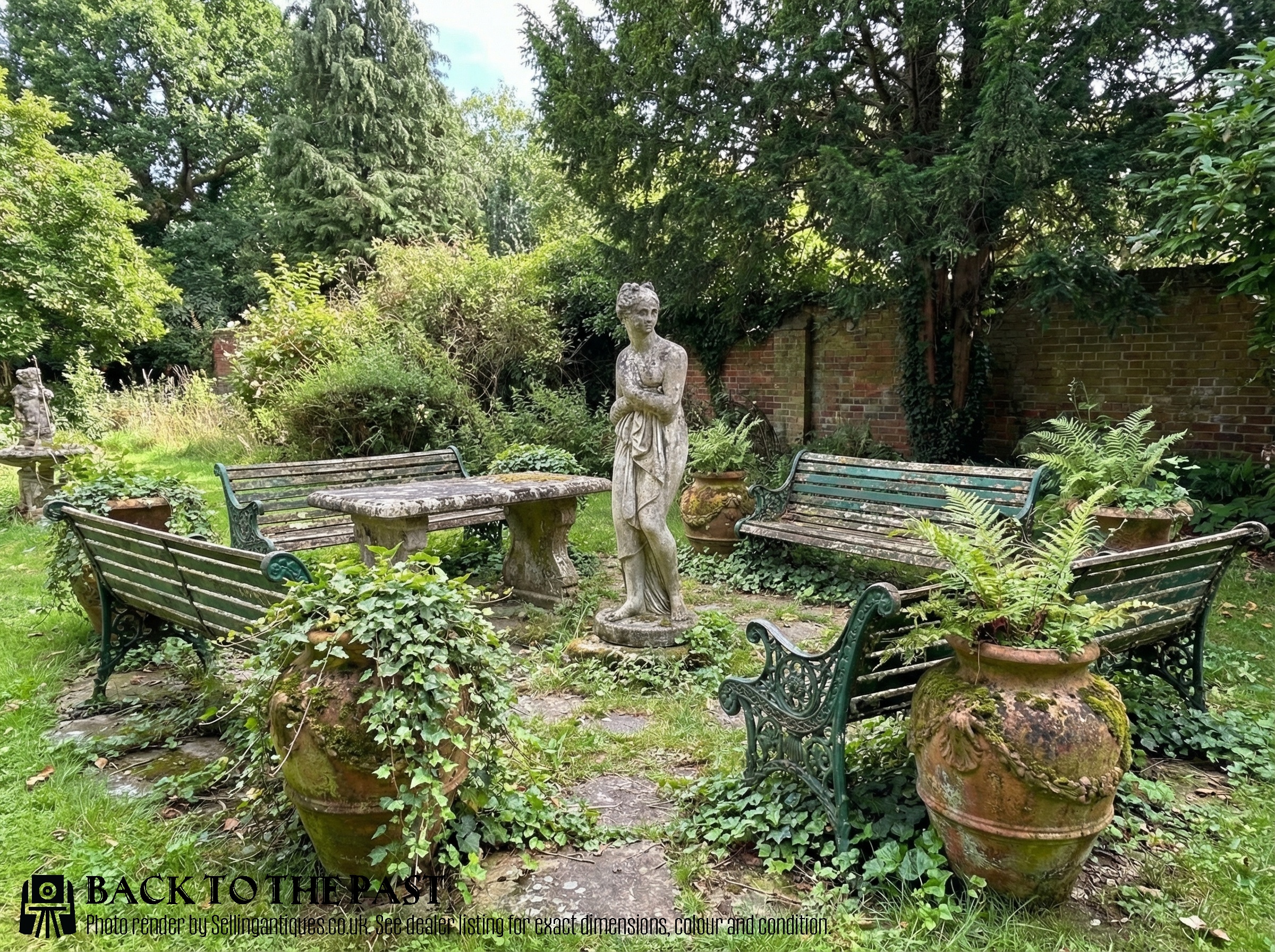
Cast Stone Female Statue
A cast stone female statue represents mythological figures, allegorical seasons, and classical ladies intended for display in outdoor gardens and architectural settings. These pieces draw heavily on neoclassical and classical revival traditions, translating antiquity into durable sculptural forms.
The selection here encompasses garden statues, statuary, and busts mounted on pedestals or iron stands. Examples range from life-sized figures of seasonal allegories to representations of classical deities such as Athena and Venus.
Most items on this page date from the nineteenth and twentieth centuries, spanning the 1880s through the 1950s. Buyers will regularly encounter substantial garden figures and portrait busts executed in reconstituted and cast stone.
How they were made
Makers produced these statues by pouring mixtures of aggregate, cement, and binding agents into moulds to capture fine sculptural detail. This technique, known as cast stone or reconstituted stone, allowed workshops to replicate carved stone and marble models efficiently.
Iron reinforcements and stands often provided structural support for larger garden statues and torsos. Plaster and concrete also appear as primary materials in certain compositions, reflecting the varied industrial techniques of the period.
Listings feature pieces spanning the 1880s to the 1950s, utilising cast stone, concrete, iron, and plaster in neoclassical revival styles.
What varies in quality
The integrity of the material and the character of the weathered surface determine the visual success of the piece. Natural lichen accumulation and mature patination enhance the stone, distinguishing superior examples from flat or uniform surfaces.
The Cast Stone Female Statue Glossary
- Cast stone
- A building product and sculptural medium manufactured from cement, sand, and crushed stone aggregates. It provides a durable alternative to quarried stone for architectural ornaments and garden statues.
- Plinth
- A heavy base or pedestal that supports a statue or bust. It elevates the sculpture and adds architectural presence.
- Neoclassical
- A style originating in the mid-eighteenth century inspired by the art and culture of classical antiquity. It emphasises symmetry, restraint, and mythological themes.
- Reconstituted stone
- Another term for cast stone, describing crushed natural stone bound with a matrix. It weathers outdoors in a manner similar to natural stone.
Cast Stone Female Statue: Frequently Asked Questions
Can I leave my statue outside all winter?
Most cast stone and concrete garden statues withstand outdoor elements year-round, developing a natural weathered patina over decades of exposure.
Severe frost can occasionally affect pieces if moisture trapped within porous material freezes, so some collectors shelter delicate busts during harsh winters.
How do I clean a weathered stone statue?
Gentle washing with water and a soft brush removes accumulated dirt without damaging the surface texture or the mature lichen growth.
Avoid harsh chemical cleaners and pressure washers, which strip away the outer skin of the cast stone and alter the historic appearance.
What is the difference between cast stone and carved stone?
Cast stone is formed by pouring an aggregate mixture into a mould, allowing makers to replicate complex classical sculptures efficiently.
Carved stone is shaped directly from a solid block by a stonemason using chisels and mallets, leaving distinct tool marks across the surface.
How do I secure a heavy garden statue?
Life-sized figures and statues mounted on plinths rely on their substantial weight to remain stable on level ground.
Placing them on firm foundations or anchoring internal iron pins into a concrete base prevents tipping in high winds.