



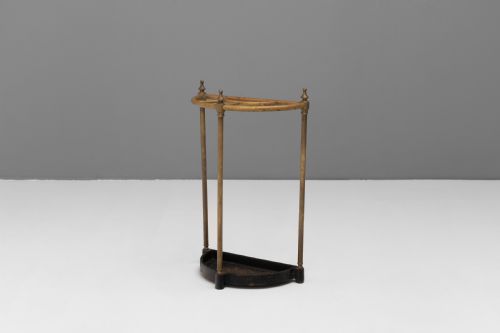
Cast Iron Walking Stick Holder
A cast iron walking stick holder organises hall clutter with sturdy Victorian weight and utilitarian utility.
Cast Iron Walking Stick Holder
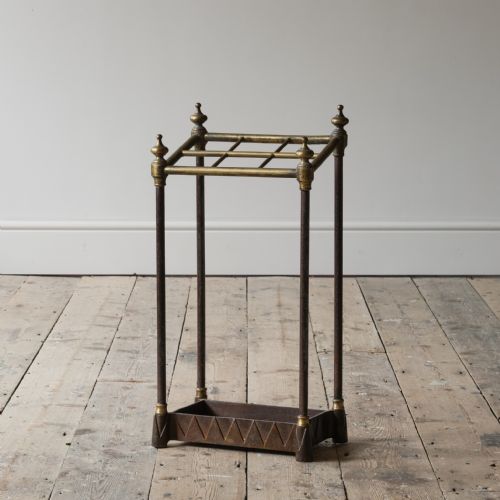
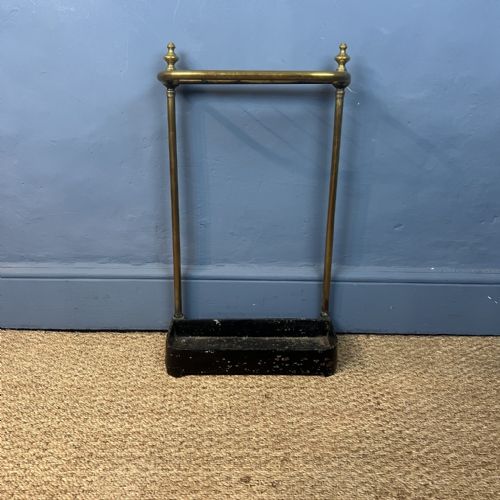
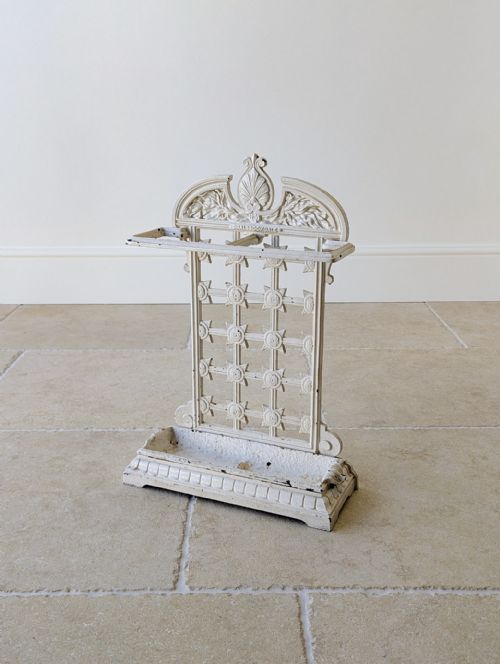
A cast iron walking stick holder provides a dedicated hallway vessel for damp umbrellas and sturdy walking canes. These hallway furnishings appear frequently in Victorian, Edwardian, and late nineteenth-century iterations designed to withstand daily domestic service.
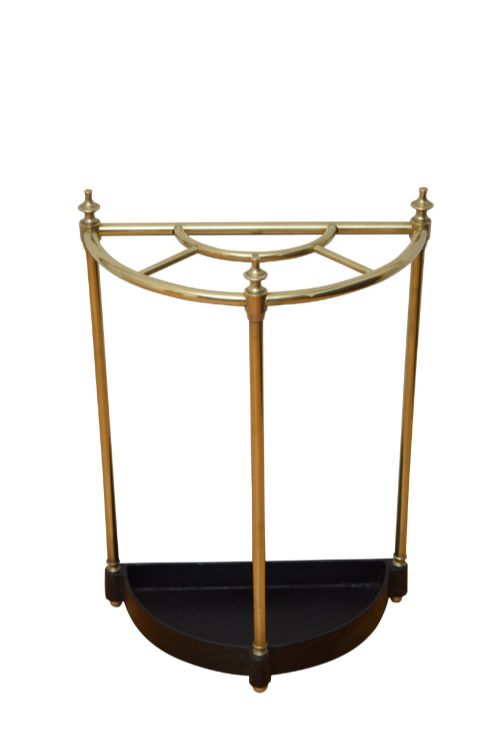
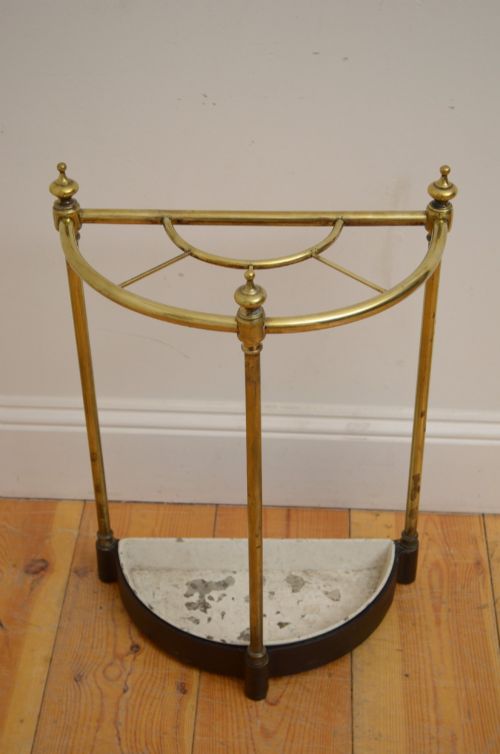
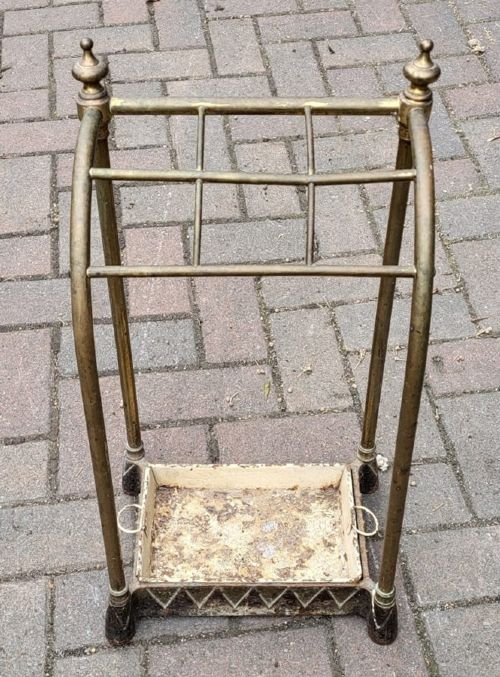
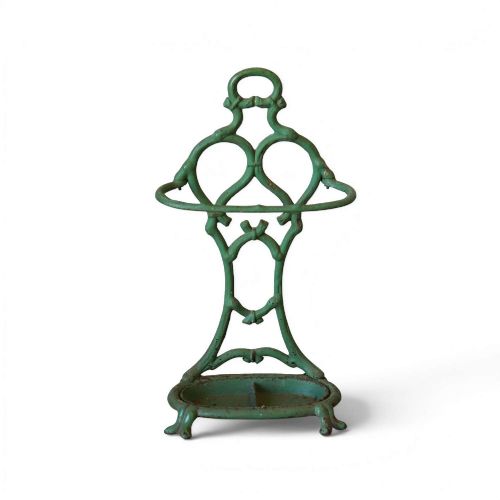
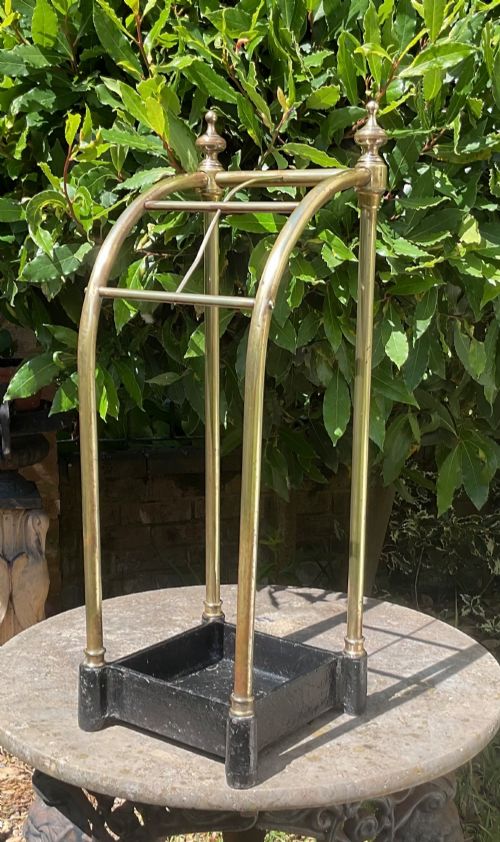
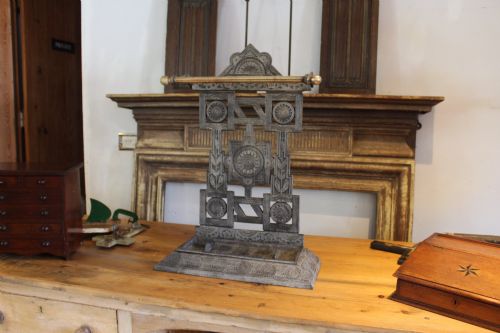
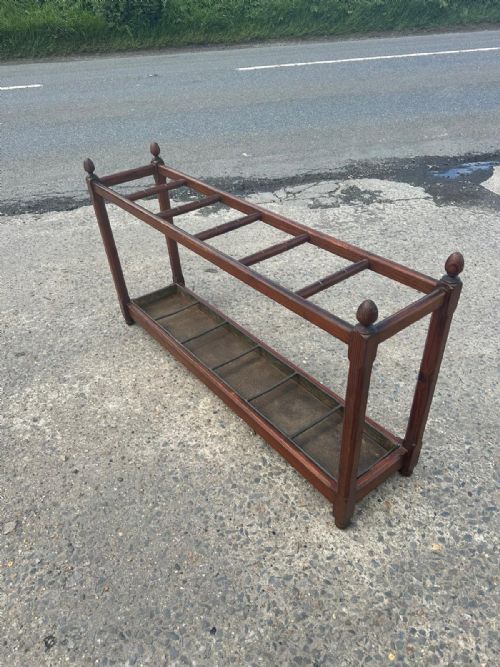
Most examples combine heavy cast iron frames with brass elements, marble bases, or pitch pine components to manage heavy wet timber and steel. Forms range from demi-lune half-moon designs fitting tight against walls to circular and corner configurations.
Buyers encounter variations spanning plain industrial foundry work to decorative styles like Gothic Revival, Art Nouveau, and Aesthetic Movement patterns. Pieces often incorporate drip trays below to protect parquet and tiled entrance flooring.
How they were made
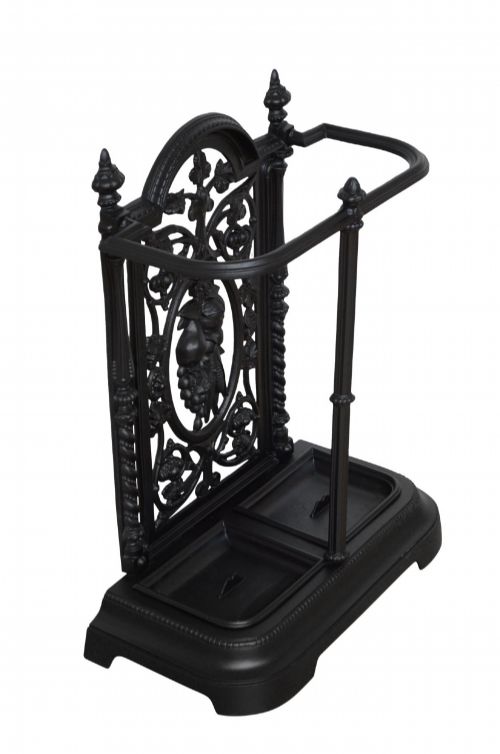
Foundries utilised sand-casting techniques to pour molten iron into intricate moulds, producing crisp architectural details and rigid structural frames. Painted finishes, enamel, and japanning protected the reactive metal from moisture brought in by wet weather.
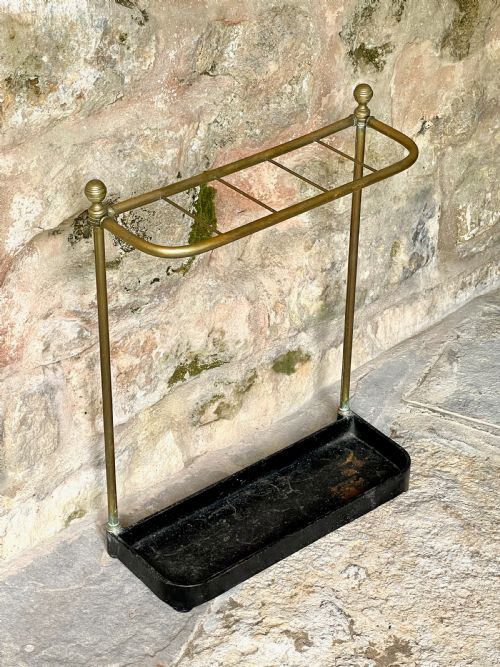
Manufacturers frequently combined the heavy cast iron body with brass rails, loops, and finials to introduce contrasting metallic tones. Secondary materials like pitch pine, oak, and marble occasionally formed backing panels, bases, or integrated drip receptacles.
A gun dog motif on a hallway stand ensures your wet brolly is guarded by a very loyal metal hound.
What varies in quality
The sophistication of the foundry work dictates the refinement of the casting, distinguishing crisp botanical or faux bamboo moulding from soft, blurred edges. Maker attribution and documented foundry designs elevate certain pieces above standard utility items.
Structural integrity depends on the survival of original drip trays, stable joints between brass and iron components, and the preservation of early painted or enamelled surfaces.
Coalbrookdale·Thomas Jeckyll·Falkirk Ironworks·Shoolbred
The Cast Iron Walking Stick Holder Glossary
- Demi-lune
- A half-moon shape designed to stand flat against a hallway wall. This configuration saves valuable floor space in narrow entrance passages.
- Faux bois
- A decorative finish or moulding imitating natural wood grain. In these pieces, iron is shaped to resemble knotted bamboo or timber branches.
- Japanning
- A type of durable black varnish finish applied to metalwork. It provided rust resistance and a glossy decorative surface on nineteenth-century utility wares.
- Drip tray
- A removable metal or ceramic base pan positioned beneath the stick loops. It catches rainwater running off wet umbrellas to protect interior floors.
Cast Iron Walking Stick Holder: Frequently Asked Questions
Where should I place a stick stand?
These holders belong in an entrance hall or porch where outdoor wear accumulates. Their narrow profiles suit tight spaces beside doorways.
Position them near a door so wet walking aids and umbrellas find an immediate home upon entry.
How do I care for cast iron?
Keep the metal dry and dust it regularly with a soft cloth to protect the painted or enamelled finish. Avoid abrasive cleaners that might strip historic surfaces.
Empty and dry the internal drip tray frequently to prevent moisture damage to both the floor and the base of the stand.
Were these made for umbrellas too?
Nineteenth-century hallways served multiple functions, requiring furniture that accommodated both slender walking canes and bulky wet umbrellas. The looped upper separators prevent tall items from toppling sideways.
Many period examples explicitly combine stick and umbrella storage within the same framework.
How do I identify Victorian pieces?
Victorian examples often display heavy cast iron construction combined with brass loops, alongside distinct design movements like Gothic Revival or Aesthetic Movement. Maker marks or foundry numbers stamped into the iron provide definitive confirmation.
Look for honest patination, period fastener types, and traditional surface finishes such as early black paint or japanning.