

Cast Iron Cane Holder
A cast iron cane holder is a heavy hall furnishing designed to tidy walking sticks and umbrellas, combining robust utility with period ornament.

Cast Iron Cane Holder
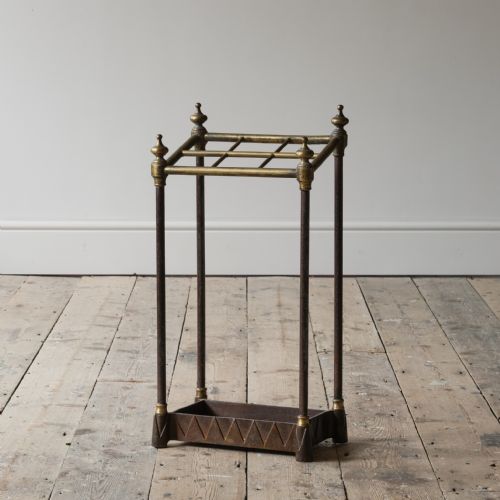
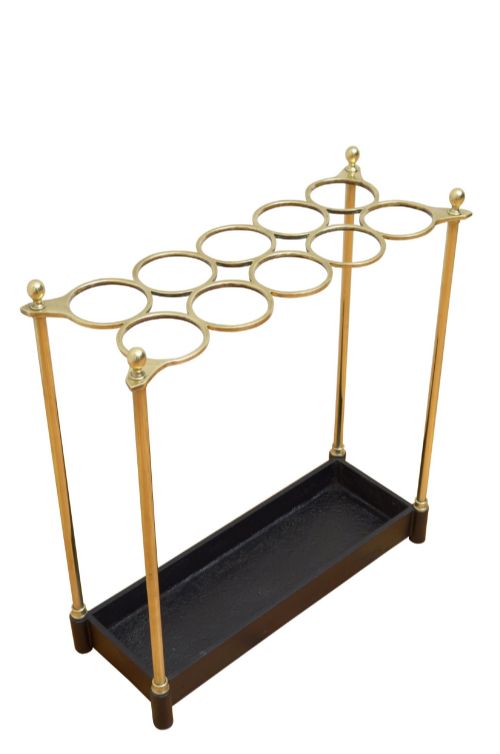
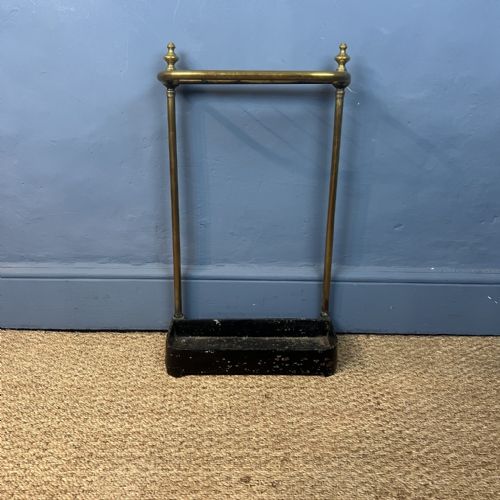
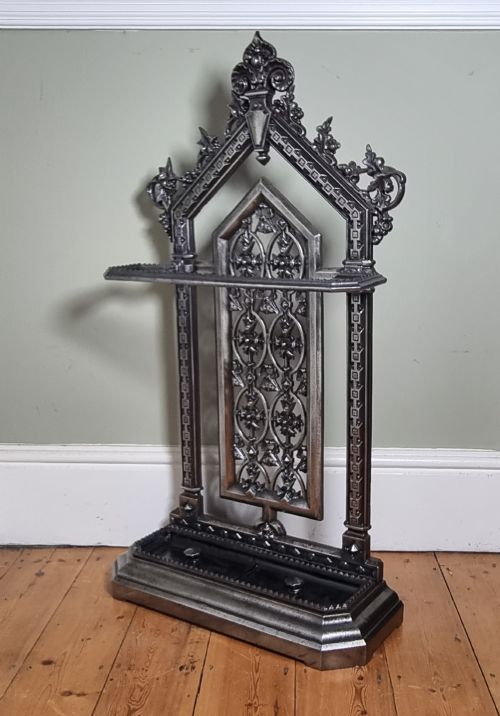
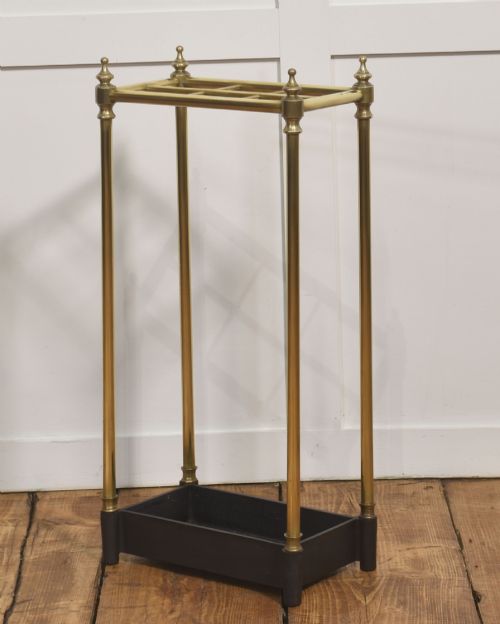
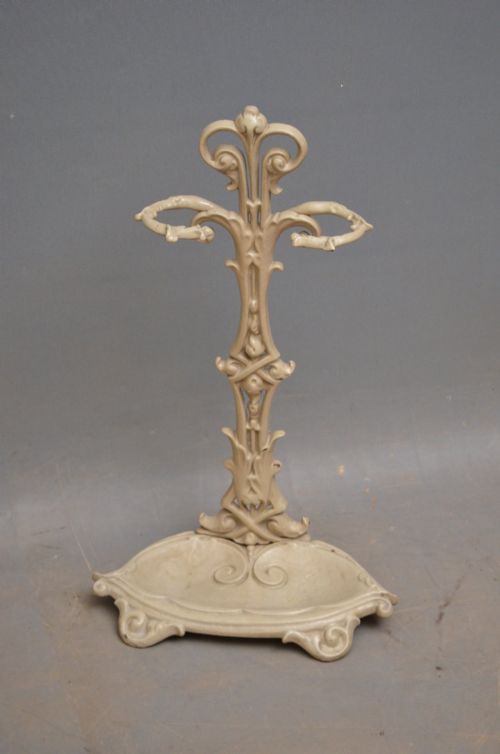
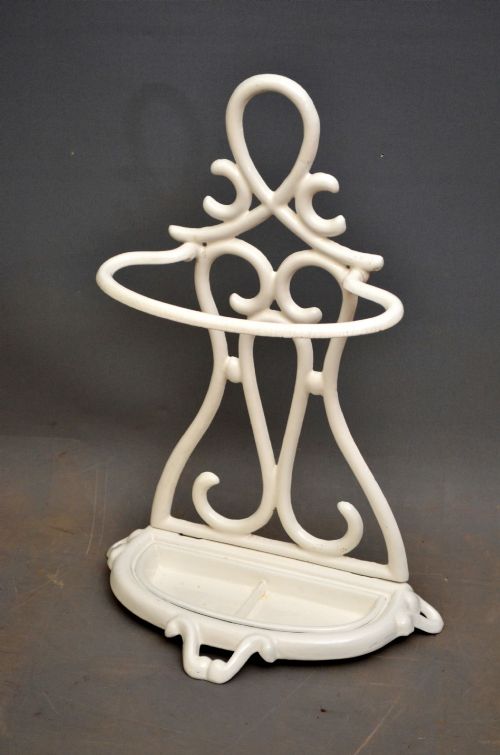
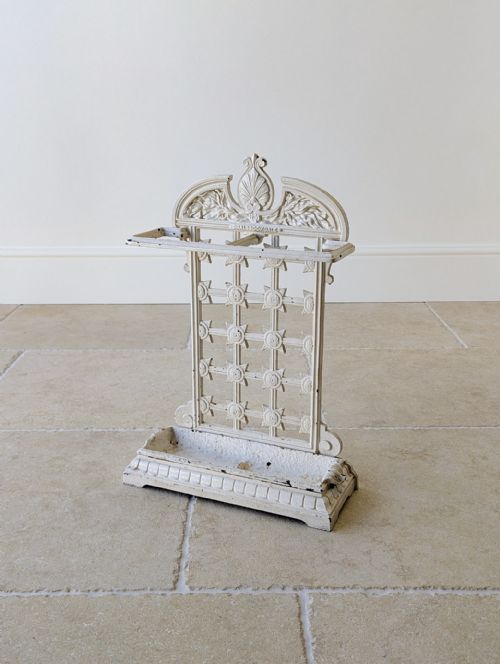
A cast iron cane holder functions as a sturdy hall stand intended to receive walking sticks, canes and umbrellas. These objects appear in various configurations, often sharing floor space with umbrella stands and stick stands in nineteenth and early twentieth century hallways.
The versions most commonly met on this page date from the Victorian and Edwardian eras, alongside pieces from the Art Nouveau and Art Deco periods. Makers utilised heavy metal casting to create durable hall furniture that remained stable under the weight of wet umbrellas and heavy wooden walking sticks.
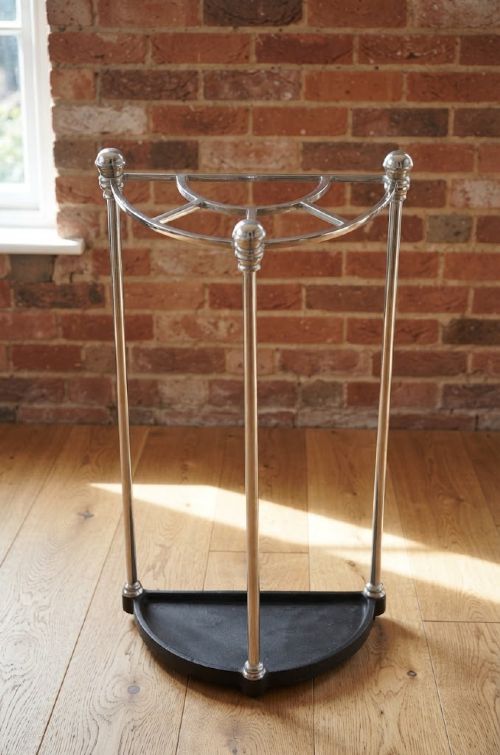
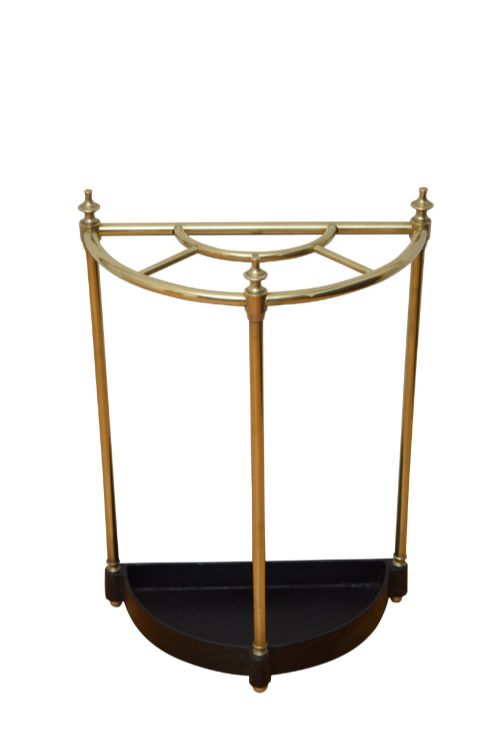
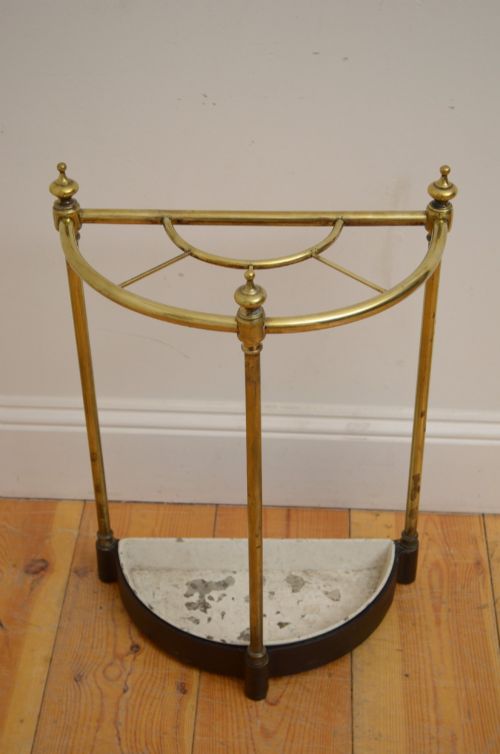
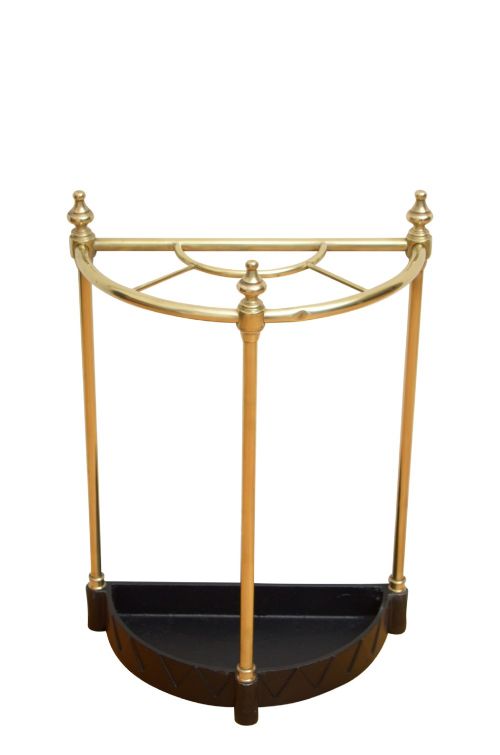
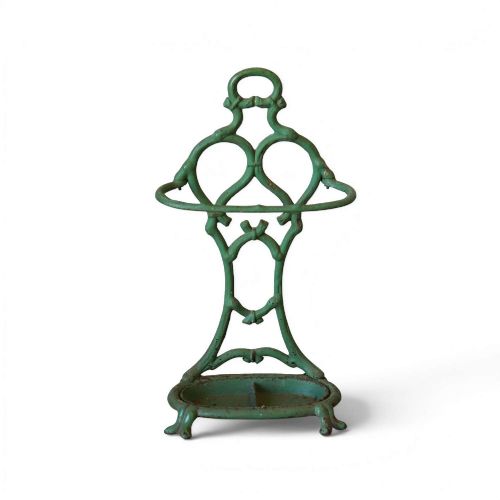
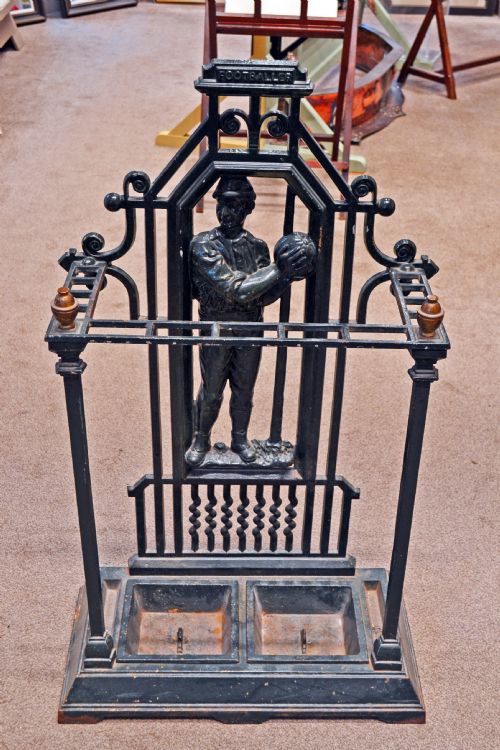
Moulded designs range from plain utilitarian frames to elaborate aesthetic movement patterns and faux bois bamboo or dog and footballer figural motifs. Demi-lune shapes designed to sit flat against a hallway wall appear frequently alongside freestanding vertical frames.
Materials and Casting Techniques
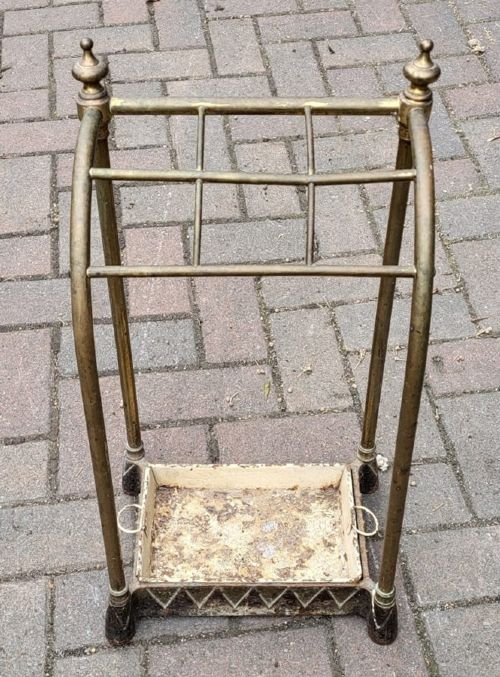
Foundries produced these objects primarily through iron casting, pouring molten metal into sand moulds to create intricate openwork patterns and rigid structural frames. Many examples combine cast iron bodies with brass rails, decorative ball finials, nickel plating, steel components or tubular metal elements.
Surface finishes applied to the metal included black paint and white enamel linings designed to protect the interior base from moisture pooling. Removable drip trays in brass or dog tooth patterns often accompanied the iron frame to catch water runoff from wet umbrellas.
Cast Iron Cane Holder Retail Price Guide 2026
Typical asking prices for cast iron cane holder among the pieces listed under this phrase on Sellingantiques today, from the lower quarter to the upper quarter. They describe what is for sale here now, not the wider market.
Cast iron occasionally disguised itself as plant life, holding umbrellas inside hollow metal bamboo stalks.
Distinctions in Execution and Design
Quality in a cast iron cane holder depends on the crispness of the casting and the refinement of the decorative detail. Finer examples display sharp relief work in botanical, figural or geometric motifs without the blurring found in secondary copies.
The sophistication of the design distinguishes standard utility items from works influenced by notable designers or major foundries. Material combinations, such as integrated brass elements and nickel plating upon a solid cast iron base, elevate the execution.
Coalbrookdale·Thomas Jeckyll·Falkirk Ironworks·A. Kenrick & Sons
The Cast Iron Cane Holder Glossary
- Demi-Lune
- Half-moon shape designed to stand flat against a hallway wall. This configuration allows the stand to occupy minimal floor space.
- Faux Bois
- Imitation of wood grain rendered in metal or another medium. In these pieces, the iron mimics natural bamboo stalks.
- Drip Tray
- Shallow metal pan positioned at the base of the stand to catch water. It protects hallway floors from dampness running down umbrellas.
- Ball Finial
- Spherical decorative terminal topping a post or rail. These brass or metal spheres accent the upper structure of the stand.
- Aesthetic Movement
- Late nineteenth century design style emphasising visual beauty over narrative content. Pieces from this movement often feature stylized natural forms.
Cast Iron Cane Holder: Frequently Asked Questions
Where were these stands placed?
These holders stood in entrance halls, porches and vestibules of homes to organise wet weather gear upon arrival.
Their substantial weight prevented tipping when heavy walking sticks or soaked umbrellas were dropped into the divisions.
How do I clean the iron?
Maintenance involves dusting with a dry cloth and occasionally applying a protective wax to preserve painted or bare metal surfaces.
Moisture should be wiped away promptly from the base to prevent rust formation inside the drip area.
How do I date an iron stand?
Dating relies on stylistic clues such as Aesthetic Movement geometry, Art Nouveau plant tendrils or Edwardian brass trays, alongside registry marks.
Foundry stamps and design patents cast into the iron base provide definitive chronological markers for specific pieces.