




Cast Brass Desk Accessory
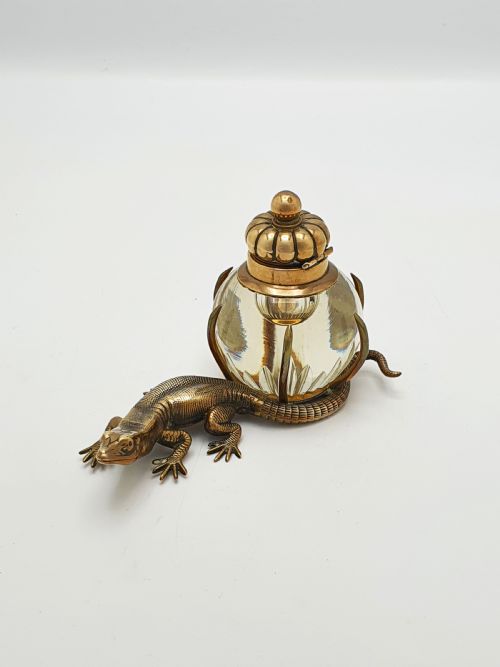
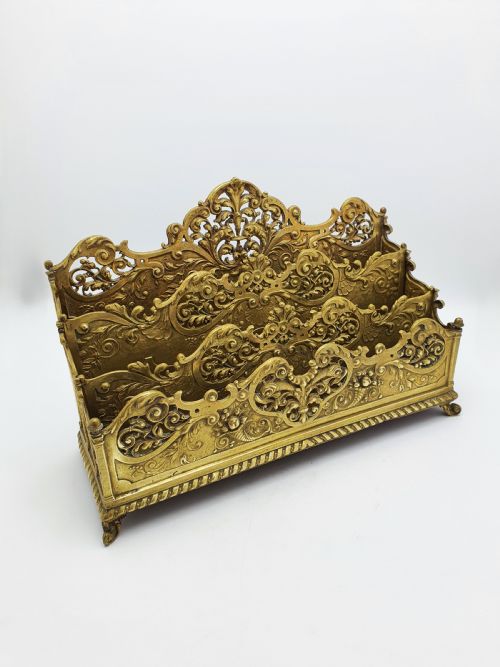
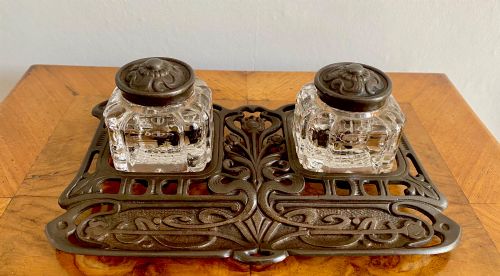
A cast brass desk accessory brings weight, character and utility to a workspace, offering solid metal construction shaped into inkwells, letter racks and bookends.
Cast Brass Desk Accessory
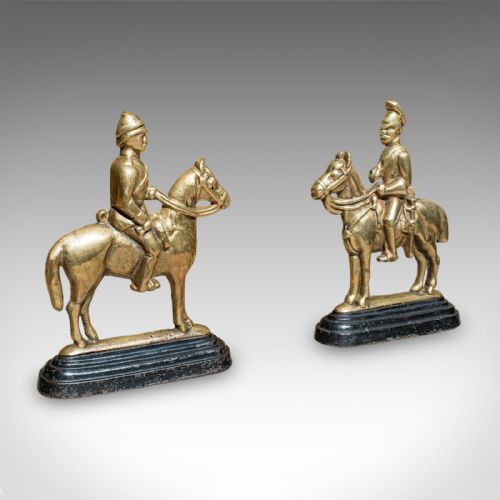
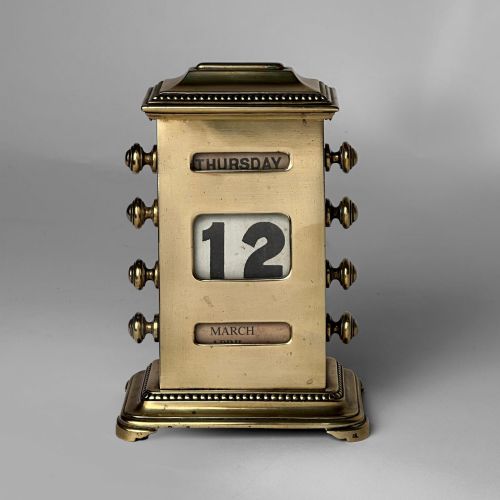
A cast brass desk accessory encompasses a range of functional workspace items produced in metal, most commonly encountered as inkstands, letter clips, bookends and novelty pieces. These objects date across the nineteenth and early twentieth centuries, spanning periods from the Victorian era through Edwardian and Art Deco designs.
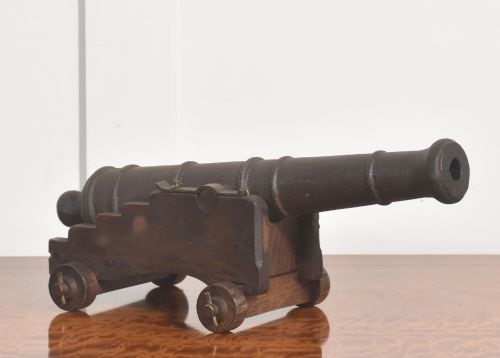
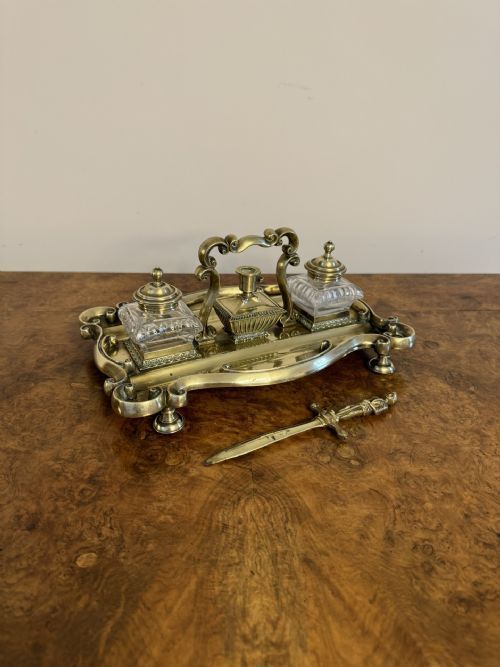
The selection here includes French Rococo revival letter racks, English animal novelty inkwells featuring owls and ostriches, and heavy bronze or brass model cannons. Buyers searching for a cast brass desk accessory will find items designed to organise correspondence, hold writing fluid or support books upon a writing table.
Judging quality in metalwork
Quality rests upon the crispness of the casting and the depth of detail in figural or ornamental relief work. Superior examples exhibit finely rendered textures on animal subjects and robust construction in functional components like sprung letter clips and hinged inkstand lids.
The presence of original fitted components, such as matching cut glass ink bottles within a brass stand, elevates an object's integrity. Heavier weight and clean articulation in moving parts distinguish finer workshop production from simpler commercial pieces.
Several desk pieces take the form of Scottish terriers, owls and French bulldogs equipped with staring glass eyes to watch over your daily correspondence.
William Tonks of Birmingham·Whitehouse and Son·C Omin
The Cast Brass Desk Accessory Glossary
- Inkstand
- A fitted tray or stand holding one or more inkwells, often incorporating pen rests and sanders. These stationary desk pieces organise writing implements on a desktop.
- Ormolu
- Gilded bronze, where a gold-mercury amalgam is applied to a bronze base. This technique creates a rich golden surface finish found on decorative French desk items.
- Novelty inkwell
- An ink container fashioned into a humorous, figurative or pictorial shape such as an animal or a cannon. These items combine everyday utility with decorative amusement.
- Letter clip
- A spring-loaded metal clip designed to hold correspondence securely on a desk or wall. Examples often feature ornate cast brass or iron backplates.
- Grand Tour
- A cultural journey undertaken by nineteenth-century travellers who collected decorative bronzes and architectural souvenirs abroad. Items from this tradition often reflect classical or Renaissance revival styles.
Cast Brass Desk Accessory: Frequently Asked Questions
What is a novelty inkwell?
A novelty inkwell is a functional desk container shaped to resemble an animal, bird or object like a cannon. These pieces disguised everyday utility behind whimsical figural designs popular in the Victorian era.
Craftsmen cast them in brass or bronze, frequently incorporating glass eyes and hinged lids to conceal the glass ink insert within.
How do I date a brass desk set?
Dating relies on stylistic clues, manufacturing techniques and prevailing design movements such as Rococo Revival, Aesthetic Movement or Art Deco. Victorian pieces often feature heavy ornamentation and naturalistic animal motifs.
Later Edwardian and 1920s examples introduce simpler geometric lines or streamlined forms, while maker marks and registration numbers stamped into the metal provide precise chronological reference points.
Were model cannons used on desks?
Model cannons produced in brass, bronze and cast iron served primarily as decorative paperweights or desk ornaments rather than functional artillery. Makers mounted them on wooden carriages made of oak or mahogany.
These pieces reflect nineteenth and early twentieth-century military interests, often finished with polished metal barrels and functional carriage wheels.
How should I clean antique brass?
Antique brass benefits from gentle dusting and minimal intervention to preserve its accumulated age and patina. Aggressive metal polishes remove the historical surface darkening that collectors value.
If cleaning is necessary, a soft cloth with mild soapy water removes grime without stripping the soft metallic sheen built up over decades of handling.