


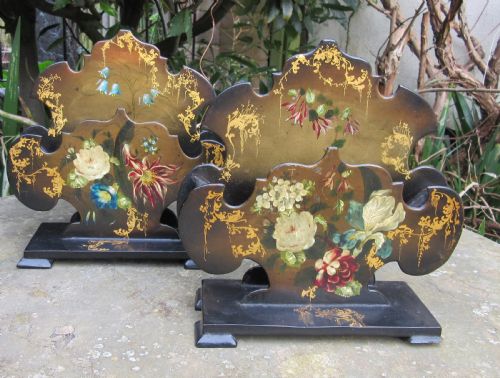
Antique Mail Organiser
An antique mail organiser keeps correspondence tidy on a desk, bringing period craft and daily utility together.
Antique Mail Organiser
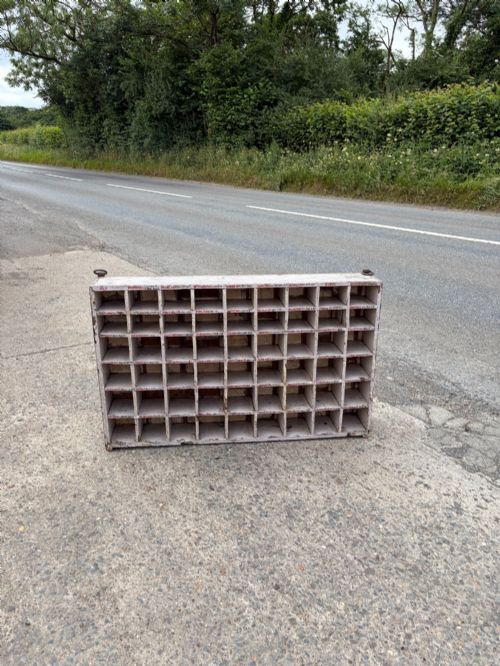
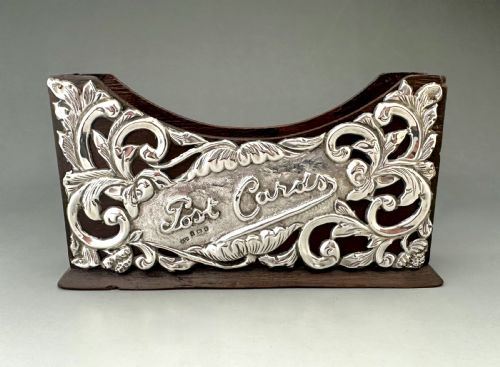
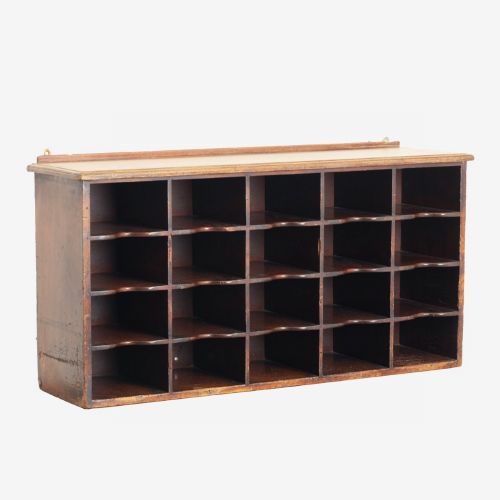
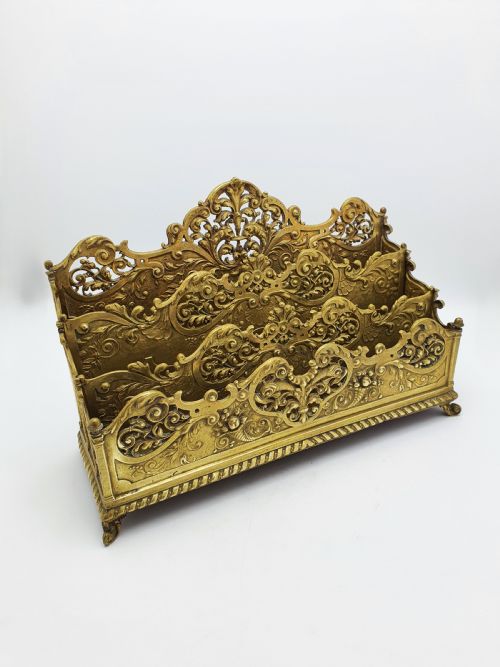
An antique mail organiser serves as a desk accessory for sorting letters, envelopes, and paper correspondence. These objects appear in various forms on this page, including letter racks, pigeon holes, stationery boxes, and letter boxes.
The selection ranges across several periods, most notably the Victorian and Edwardian eras, alongside pieces from the Georgian, Regency, and early twentieth century. Makers fashioned these items for country houses, offices, and domestic desks.
Forms vary from simple wooden pigeon hole cabinets to decorative desk accessories involving brass, silver, and papier-mâché. Buyers frequently encounter oak, mahogany, pine, and brass versions in this category.
How they were made
Craftsmen utilised traditional timber construction for wooden items, employing mahogany, oak, and pine to build pigeon holes, letter boxes, and desktop storage units.
Metalwork played a significant role in decorative racks, utilising brass, copper, and silver mounted elements to form intricate frames and novelty designs.
Specialist techniques included papier-mâché moulding, lacquer work, and guilloche enamel, adding colour and texture to surface finishes.
Periods represented across the selection range from the Georgian and Regency eras through the Victorian, Edwardian, and into the 1930s.
What varies in quality
The standard of materials largely dictates the grade of an organiser, moving from utilitarian pine storage to refined mahogany cabinets and sterling silver mounted pieces.
Detailing and surface ornamentation separate standard desk accessories from superior examples, such as Grand Tour brass castings, Rococo Revival styling, and hand-painted enamel work.
The Antique Mail Organiser Glossary
- Pigeon holes
- Compartments arranged in rows for sorting incoming and outgoing letters or documents. These units sit upon desks or mount to walls.
- Letter rack
- A tabletop stand designed to hold envelopes upright for easy viewing and sorting. They often feature metal frames or wooden dividers.
- Guilloche enamel
- A decorative technique where an enamel layer is applied over engine-turned metalwork. This process creates geometric patterns visible beneath a translucent coloured surface.
- Papier-mâché
- A composite material made from paper pulp or reinforced sheets mixed with glue, then moulded and dried. Artisans painted and lacquered these pieces for decorative desk wares.
- Cricketiana
- Collectable items associated with the sport of cricket. Novelty pieces in this category sometimes incorporate bats, balls, and wickets into letter rack designs.
Antique Mail Organiser: Frequently Asked Questions
What is an antique mail organiser?
An antique mail organiser is a desk accessory designed to hold, sort, and display letters and correspondence. These pieces include letter racks, pigeon holes, and stationery boxes.
They originated in eras when daily post arrived on paper, requiring dedicated desktop storage to keep letters ordered.
How were letter racks used?
Letter racks sat on writing desks, hall tables, or bureau surfaces to receive daily mail. Users placed incoming envelopes upright in the slots for quick viewing.
Some designs included answered and unanswered compartments to help individuals manage their replies.
What materials are common?
Common materials include hardwoods such as mahogany and oak, alongside utilitarian pine for pigeon holes. Metal versions frequently use brass, copper, or silver.
Decorative examples also incorporate papier-mâché, lacquer, and guilloche enamel for surface visual interest.
How do I date a piece?
Dating relies on stylistic clues, construction methods, and materials associated with specific periods like the Victorian, Edwardian, or Art Deco eras. Cabinetry styles and metal casting techniques shift across these decades.
Proportions and decorative motifs, such as Rococo Revival scrolls or Arts and Crafts simplicity, help establish the time period.