


Cased Silver Serving Cutlery
Cased silver serving cutlery brings together formal dining implements housed in fitted protective boxes, offering elegance and utility for special occasions.
Cased Silver Serving Cutlery
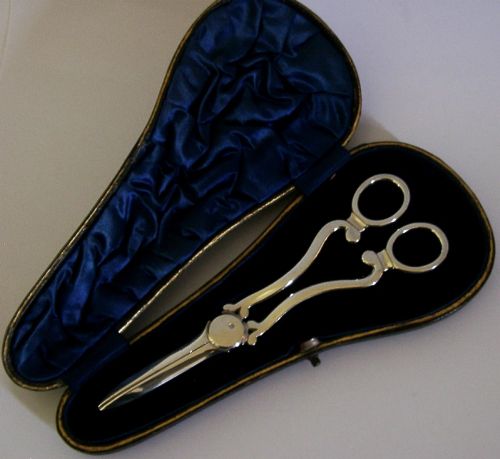
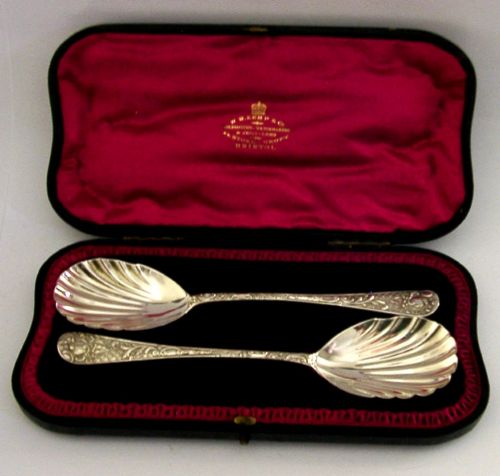
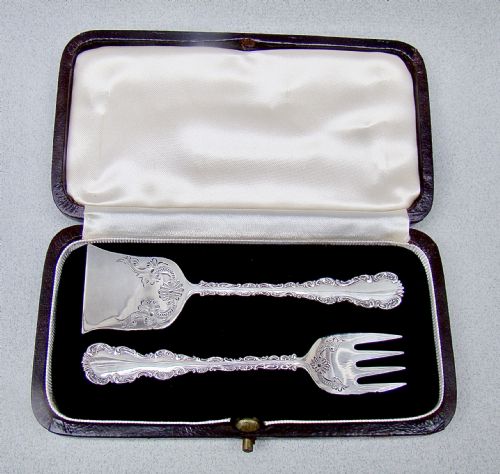
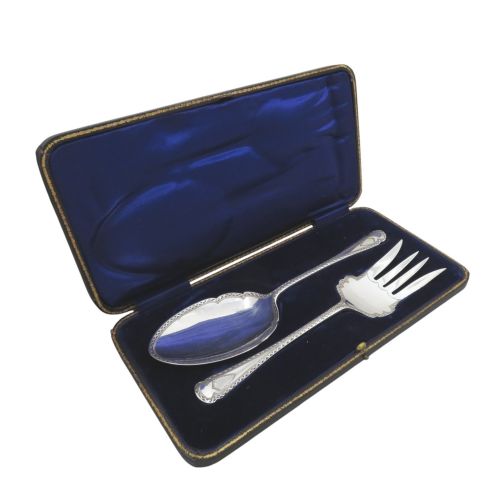
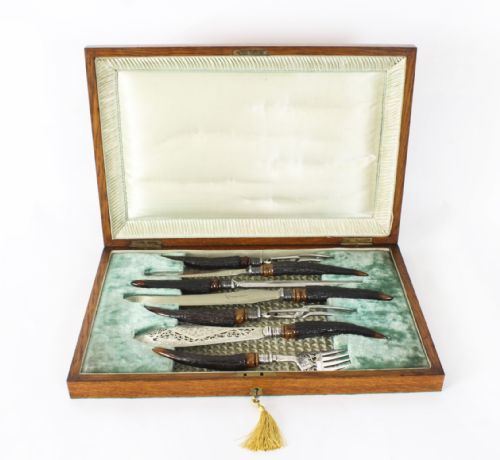
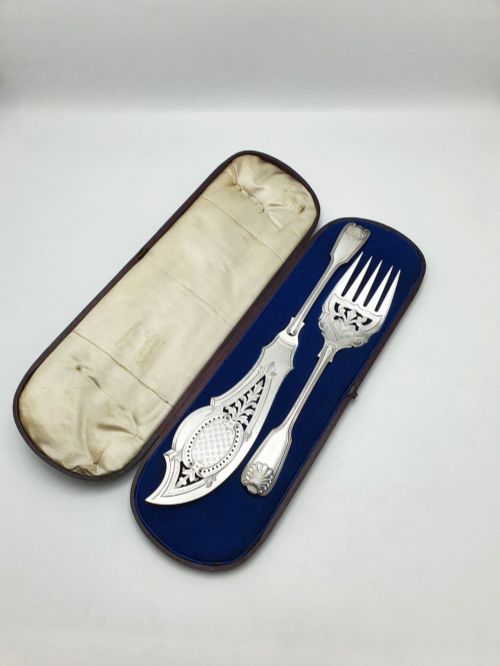
When you search for cased silver serving cutlery, you encounter specialised implements designed for specific foods, such as grape shears, fish servers, berry spoons, and carving sets, presented in fitted protective boxes.
The pieces on this page span the Georgian, Victorian, and Edwardian periods, including late nineteenth-century designs and Art Nouveau examples, originating primarily from English workshops.
Most items you meet here consist of matched sets or specialised pairs, such as sardine servers, bread forks, and fruit sets, preserved within original velvet, silk, or satin-lined cases.
Materials and construction methods
The metal components utilise sterling silver or silver plate, often paired with natural elements like mother of pearl, antler horn, and animal horn for handles.
Silversmiths employed techniques such as casting, piercing, and ornate engraving to decorate blades, handles, and prongs with floral or geometric motifs.
Outer presentation cases were constructed from materials like leatherette and leather, then lined internally with plush fabrics to cushion each utensil securely.
Golf enthusiasts can serve cake with a specialised knife shaped precisely like a golf club from the Edwardian era.
Distinctions in craftsmanship and preservation
Quality separates through the crispness of the engraved detail on the metal surfaces and the structural integrity of the fitted case hinges and clasps.
The choice of materials dictates the tier of the piece, with solid sterling silver and tactile handle elements like mother of pearl commanding greater regard than silver plate.
The survival of the original interior fabric linings and the snugness of the fit within the box heavily influence the overall desirability of a set.
Henry Wilkinson·John Locker·William Devenport·Hukin & Heath
The Cased Silver Serving Cutlery Glossary
- Berry spoon
- A large serving spoon, often gilded or heavily embossed with fruit motifs during the Victorian era, used historically for serving soft fruits.
- Grape shears
- Specialised scissors designed for snipping individual sections of fruit from a larger bunch without bruising the surrounding grapes.
- Fish servers
- A matched knife and fork combination featuring a broad blade shaped to lift delicate portions of fish cleanly at the dining table.
- Hallmark
- A stamped official mark on precious metals indicating the standard of purity, the assay office, and the date letter for the year of manufacture.
- Gilt
- A thin layer of gold applied to the surface of sterling silver objects, often seen on the bowls of spoons to prevent tarnishing from acidic foods.
Cased Silver Serving Cutlery: Frequently Asked Questions
What are cased silver serving cutlery sets used for?
These sets were historically produced for hosting formal meals, designed specifically to serve foods like fish, fruit, berries, and carved meats.
The fitted cases allowed families to store these delicate implements safely between dinner parties or present them as significant wedding gifts.
How do I identify a Victorian set?
Victorian pieces often display heavy, ornate engraving, intricate floral repoussé work, and sometimes gilded bowls paired with natural horn or mother of pearl handles.
Examining the stamped hallmarks on the metal will confirm the exact assay office and the active regnal year of manufacture.
Are silver plate and sterling silver marked differently?
Sterling silver bears official assay office marks including a lion passant to indicate standard silver purity alongside date letters and maker initials.
Silver plate items typically feature manufacturer trademarks or secondary marks indicating the plating process rather than official precious metal hallmarks.
How should I store and care for cased cutlery?
Keep the items inside their original fitted cases in a stable environment away from direct sunlight and excessive humidity to protect the delicate interior fabrics.
Avoid abrasive cleaning methods on the metal surfaces, using specialised silver cloths gently to maintain the natural shine without damaging engraved details.