
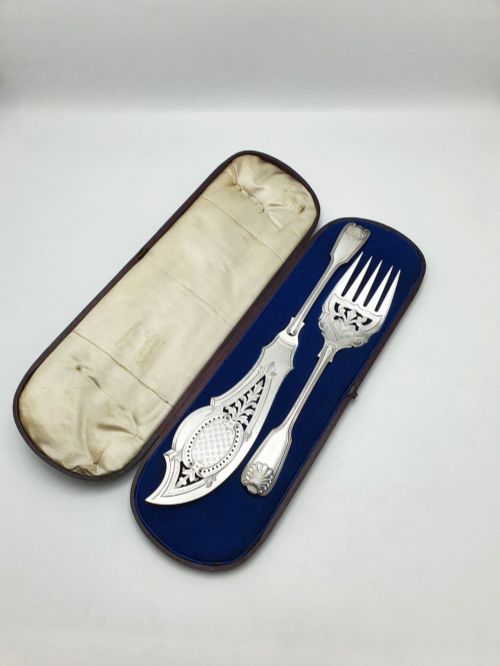


Cased Servers
Cased antique servers bring together fine nineteenth- and twentieth-century dining utensils housed in fitted velvet- or silk-lined presentation boxes.
Cased Servers
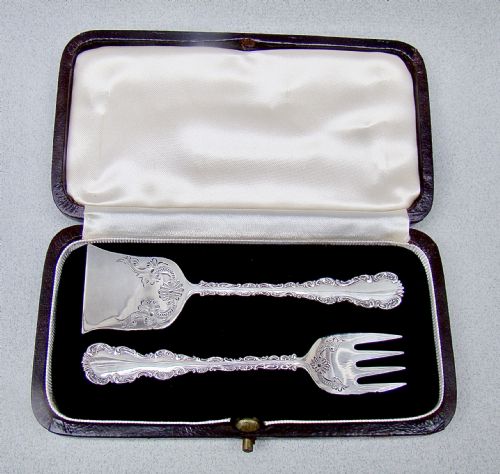
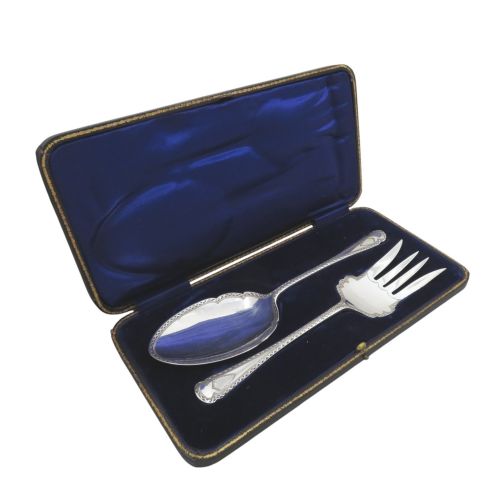
When searching for cased antique servers, you encounter fitted presentation boxes containing specialised cutlery for fish, fruit, sardines, butter, and larger serving spoons and forks. These sets span periods from the Victorian era through the Edwardian years and into the mid-twentieth century.
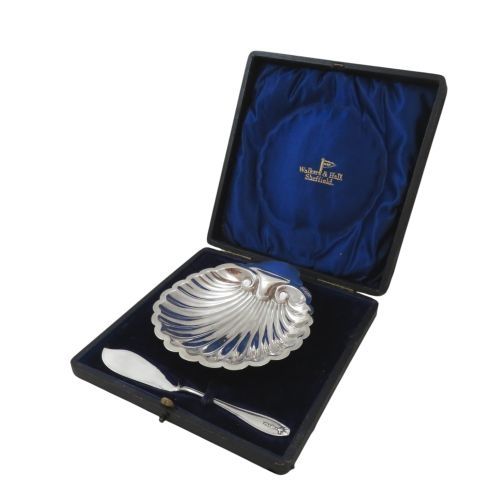
The most common examples on this page are Victorian and Edwardian sterling silver or silver-plated fish serving sets and butter dishes. Many pieces retain their original leather-covered or hinged wooden cases lined with silk and velvet.
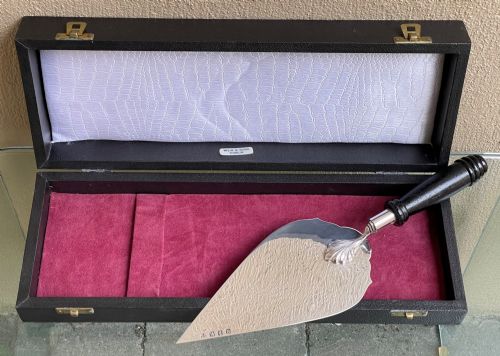
Beyond standard flatware, the category includes specific dining implements such as presentation trowels, pickle forks, jam spoons, and engraved fruit knives. French examples incorporate natural materials like horn alongside silver.
Materials and Construction
The cutlery blades and utensils are fashioned from sterling silver or silver plate, often paired with handles carved from mother of pearl or natural horn. Metalwork techniques include intricate hand engraving, piercing, and cast silver blades.
Fitted presentation cases are constructed from wood covered in leather, then lined internally with plush velvet and silk to cushion the individual pieces securely in custom slots.
Listings feature items spanning from the Victorian and Edwardian eras through to mid-century 1960 pieces, incorporating sterling silver, silver plate, velvet, silk, leather, mother of pearl, and horn.
Assessing Quality
Quality rests on the depth and crispness of the hand engraving upon the silver blades and the selection of handle materials such as unblemished mother of pearl or figured horn. Substantial metal weight and solid sterling construction rather than thin plating distinguish finer sets.
The integrity of the original fitted case matters greatly, including working clasps, sound hinges, and well-preserved silk and velvet interiors that fit the utensils precisely.
Henry Wilkinson·The Goldsmiths & Silversmiths·Waring & Gillows
The Cased Servers Glossary
- Sterling silver
- A silver alloy containing 92.5 percent pure silver and 7.5 percent other metals, typically copper, used widely for British dining cutlery. This standard is frequently denoted by the lion passant hallmark on antique pieces.
- Silver plate
- A base metal such as nickel silver coated with a thin layer of pure silver through electroplating or older fusion methods. It offers the appearance of solid silver at a different cost tier.
- Mother of pearl
- The iridescent internal layer of pearl oyster and freshwater mussel shells, carved into slender handle scales for serving knives and forks. Its natural shimmer varies across each individual piece.
- Fish servers
- A matched pair comprising a large broad knife and a matching fork designed specifically for serving fish courses cleanly at the dining table.
Cased Servers: Frequently Asked Questions
How do I clean tarnished silver servers?
Use a specialist silver polish and a soft cloth, applying gentle pressure to avoid wearing away hand engraving or original plate. Take care around mother of pearl or horn handles, keeping moisture away from natural materials.
Store the cleaned pieces back inside their fitted velvet-lined boxes to slow future tarnishing from atmospheric sulfur.
Were these sets used daily or saved for guests?
Cased servers were primarily purchased for formal dining, wedding gifts, or special household occasions rather than everyday family meals. The inclusion of a fitted presentation case protected the delicate silver and lined interior when not in use.
Consequently, many surviving sets retain a high degree of preservation because they spent decades stored away safely.
How can I date my cased servers?
British silver items carry hallmarks that include date letters, assay office symbols, and standard marks indicating the year of manufacture and city of testing. Checking these small stamped marks against reference guides provides an accurate production year.
Unmarked silver plate or pieces with horn handles rely stylistic cues such as the box shape, velvet colour, and engraving style.
Can I use antique servers for modern dining?
Many people enjoy using solid sterling silver or silver-plated servers for dinner parties, holiday meals, and serving fish or cakes. Sterling silver is durable enough for food use, provided it is washed by hand rather than placed in an automatic dishwasher.
Delicate mother of pearl or antique horn handles require gentle hand washing in warm soapy water without prolonged soaking.