




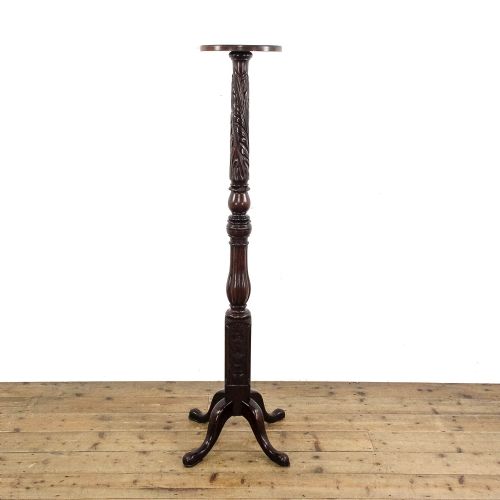


Carved Wooden Torchiere
A carved wooden torchiere is a tall, slender stand or standard lamp built to elevate light, and you want one for the vertical presence it brings to a corner.
Carved Wooden Torchiere
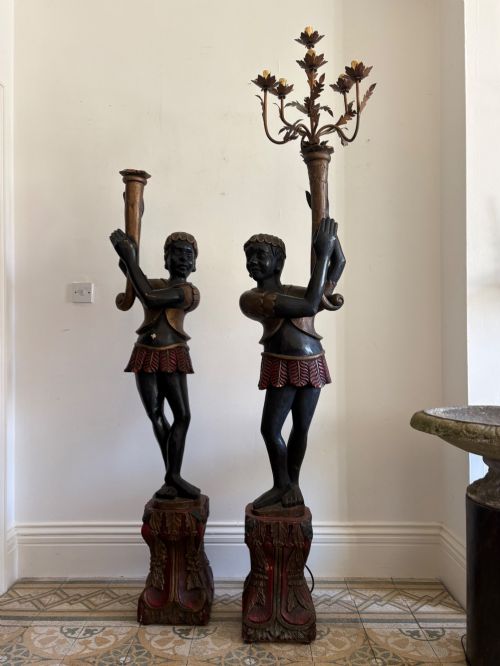
A carved wooden torchiere takes many forms across the centuries, appearing on this page as standard lamps, floor lamps, pedestals, and sculptural stands. These pieces function primarily to support lighting or display decorative objects at height.
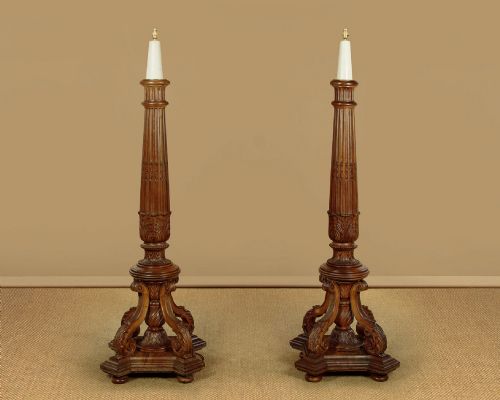
You are most likely to meet mahogany examples dating from the Victorian and Georgian periods, alongside bolder Continental works. The selection ranges from English country house stands to ornate Italian Renaissance Revival and Venetian baroque pieces.
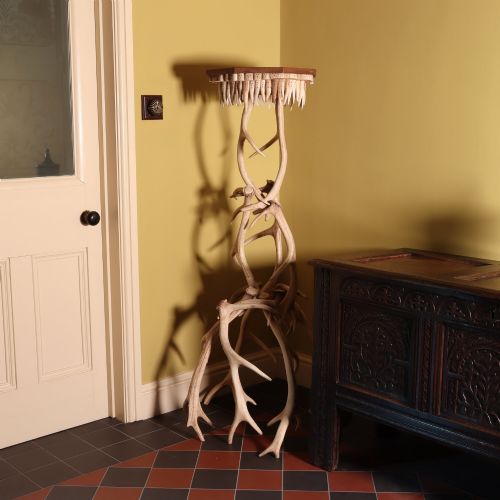
Makers drew on diverse historical styles, producing pieces that vary from simple column stands to complex figural supports. Alongside traditional timbers, the listings include unusual materials such as antler and lime wood.
How they were made
Makers relied heavily on solid timbers, shaping mahogany, walnut, and lime wood through traditional carving techniques. These woods provided the density required to support tall, slender shafts without tipping.
Interiors show expert joinery and turning, often pairing dense walnut with exotic veneers like macassar ebony on later Art Deco pieces. Structural stability was paramount given the height and narrow footprint of each stand.
Carved Wooden Torchiere Retail Price Guide 2026
Typical asking prices for carved wooden torchiere among the pieces listed under this phrase on Sellingantiques today, from the lower quarter to the upper quarter. They describe what is for sale here now, not the wider market.
Among the towering mahogany columns and formal pedestals stands a taxidermy antler torchiere ready to surprise.
What varies in quality
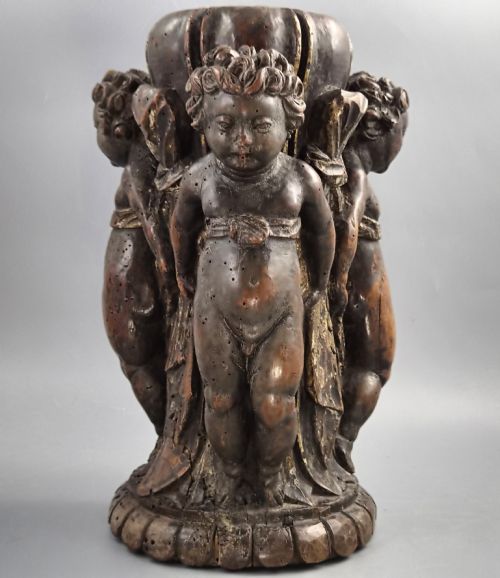
The distinction between ordinary and exceptional stands rests on the ambition and depth of the carving. Hand-chiseled putti, figures, and botanical motifs demand a high level of sculptural skill that separates workshop pieces from mass production.
Proportion and timber selection dictate the visual weight of the stand. Dense, well-figured mahogany and burr walnut with crisp detail retain their architectural integrity far better than softer woods with shallow ornament.
The Carved Wooden Torchiere Glossary
- Torchiere
- A tall stand originally designed to carry a torch or candle, later adapted for oil lamps and electricity. These pieces stand on slender shafts and provide vertical emphasis in a room.
- Putti
- Plump, winged figures of male infants often carved in high relief on Continental baroque stands. They frequently cluster around the central shaft of Italian examples.
- Macassar Ebony
- A heavily figured tropical hardwood featuring striking dark brown and warm golden stripes. Makers utilised it during the Art Deco period for high-end decorative surfaces.
- Lime Wood
- A pale, fine-grained timber favoured by carvers because it cuts cleanly in any direction without splintering. It allows for intricate, deep-relief botanical and figural work.
- Hepplewhite
- A late eighteenth-century furniture style known for elegant proportions, slender tapering columns, and delicate classical ornament. Stands in this manner reflect refined neoclassical restraint.
Carved Wooden Torchiere: Frequently Asked Questions
What is a carved wooden torchiere used for today?
These tall stands primarily serve as floor-standing lamp bases or elevated display surfaces for vases and sculptures. Their narrow footprint makes them useful for adding height and lighting to dark corners without occupying much floor space.
In modern rooms, they act as sculptural focal points that draw the eye upward. They work best where a standard table lamp would look lost or cluttered.
How do I tell a Georgian torchiere from a Victorian one?
Georgian pieces, particularly those from around eighteen hundred, tend to feature restrained mahogany columns and crisp neoclassical detailing. They rely on proportion and subtle turning rather than heavy ornamentation.
Victorian and later nineteenth-century examples often display bolder carving, darker finishes, or regional country house quirks. Continental pieces from the same era lean towards baroque figural elements like putti and dragons.
Can these stands safely hold modern electric lamps?
Most standard lamp conversions are wired through the central shaft to conceal the flex, though older stands may require professional rewiring to meet safety standards. A qualified electrician can usually adapt the top fitting without damaging the historic timber.
Ensure the base remains stable and weighted appropriately if you mount a heavy fabric shade. The slender design means balance is crucial when adding modern lighting components.
Where should I place a torchiere in a room?
Place a torchiere in an empty corner or beside a heavy armchair where it can introduce height and ambient light. Because they are designed to be viewed in the round, positioning them where the carving is visible works best.
Keep them away from direct heat sources and strong sunlight to protect the polish and prevent the dry wood from cracking. Stable flooring is essential to prevent tipping due to their height.