




Carved Wooden Timepiece
These carved wooden timepiece examples are functional sculptures from past centuries, offering mechanical precision housed in rich timber cases for any room.
Carved Wooden Timepiece
A carved wooden timepiece brings together horological engineering and cabinetmaking, spanning periods from the Georgian era through to the early twentieth century. When searching for a carved wooden timepiece, buyers encounter a variety of forms designed for different settings within a home.
The selection ranges from wall-hung Vienna and dial clocks to bracket clocks, mantel clocks, and taller longcase versions. Mahogany and oak predominate, alongside walnut, burr walnut, and rosewood.
Stylistic influences vary widely across the inventory, encompassing Victorian designs, Regency proportions, Art Nouveau curves, Arts and Crafts hand-carved details, and Black Forest animal or foliage carvings.
What varies in quality
Quality rests in the crispness of the timber carving and the architectural harmony of the case proportions. Fine examples display deep, deliberate hand-chiselling rather than shallow mechanical routing.
The sophistication of the internal movement and the reputation of the dial maker also elevate a piece. Solid timber selection, such as figured burr walnut or rich mahogany, separates standard production from superior craftsmanship.
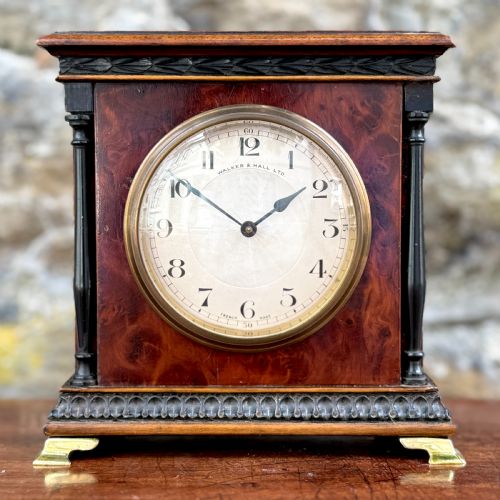
Walker and Hall·Bush of London·Webster Cornhill London·Balbiani BROOKLEY
The Carved Wooden Timepiece Glossary
- Fusee
- A conical pulley used in mechanical clocks to maintain an even pull as the mainspring unwinds. This mechanism ensures steady timekeeping right up until the point the clock needs winding again.
- Bracket clock
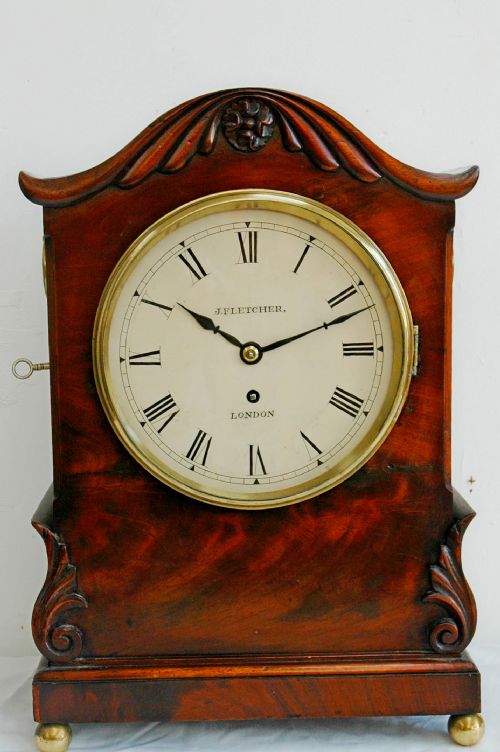
- A portable clock originally designed to sit on a bracket on the wall to allow better sound projection for its bell. Over time, the term came to describe substantial table or mantel clocks with handles.
- Dial
- The visible face of the clock where the hours and minutes are displayed. These are often painted white with Roman numerals and protected behind a brass-rimmed glass door.
- Longcase clock
- A tall freestanding pendulum clock housed in a wooden trunk with a hood above. They are commonly known as grandfather clocks and measure time across eight-day or longer durations.
Carved Wooden Timepiece: Frequently Asked Questions
How do I wind a fusee clock?
Fusee movements require a specialised key inserted into the dial winding hole to tension the spring gradually. Care must be taken not to over-wind the mechanism.
Consulting the specific winding requirements of the movement ensures the internal brass gear train remains undamaged over decades of daily use.
Where should I place a bracket clock?
Bracket clocks suit heavy mantelpieces, sturdy sideboards, or dedicated wall brackets where their substantial timber weight finds stable support. Placing them away from direct sunlight protects the polished wood finish.
Level surfaces ensure the pendulum or balance wheel beats evenly, keeping the timepiece accurate throughout the day.
How do I identify a Black Forest clock?
Black Forest pieces feature distinctive hand-carved wooden foliage, vines, or animal motifs originating from the German mountain region. The timber cases often display deeply textured relief work surrounding the dial.
These designs emerged strongly during the Victorian era and remain visually distinct from standard English mahogany or walnut cases.
What is the difference between a wall clock and a mantel clock?
Wall clocks are built with flat backs and hanging loops or wall mountings to display time at eye level. Mantel clocks feature finished timber backs and bases designed to stand independently on flat surfaces.
Both types utilise similar mechanical movements but serve different spatial requirements within domestic interiors.