



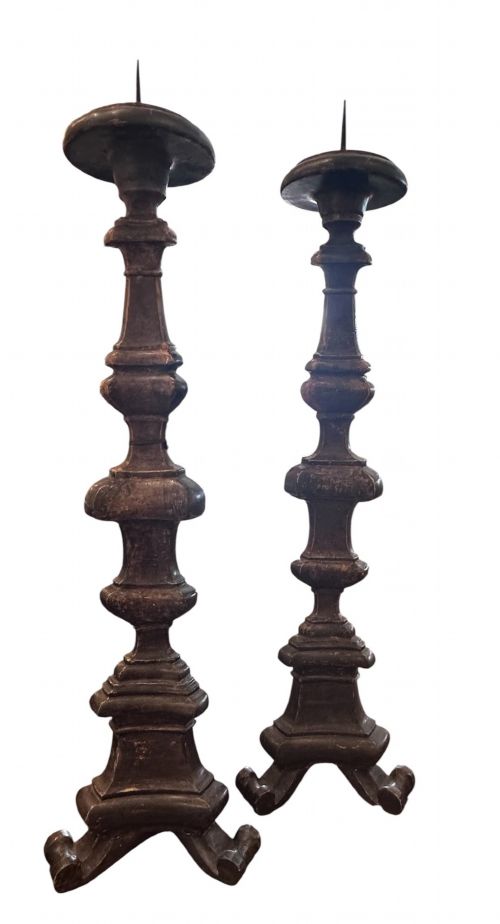


Carved Wooden Tall Candlestick
A carved wooden tall candlestick brings vertical presence and handcrafted texture to a room, drawing the eye upward with sculpted form.
Carved Wooden Tall Candlestick
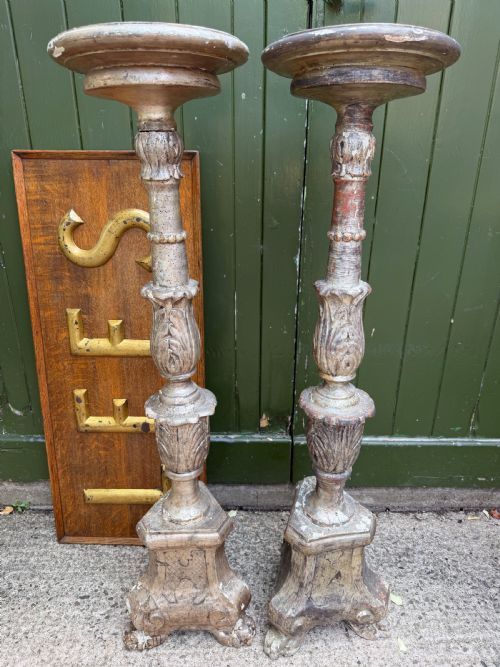
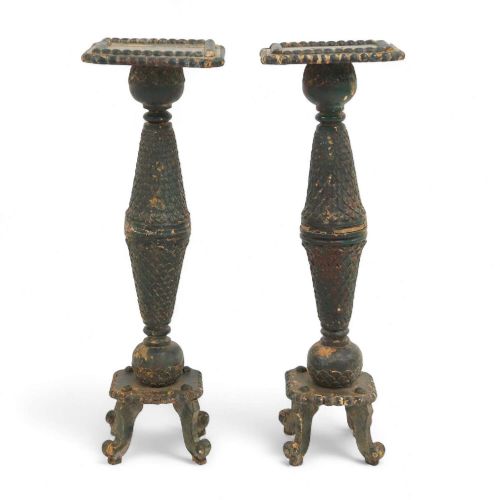
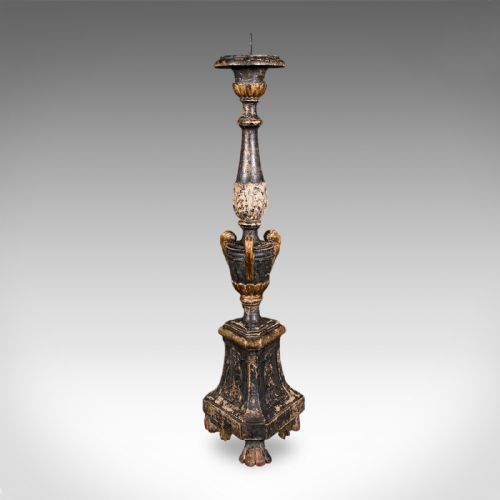
A carved wooden tall candlestick stands as a substantial source of elevated lighting or decorative height, originating mostly from European workshops. The pieces span centuries from the eighteenth through to the early twentieth, encompassing forms such as torcheres, prickets, and altar-style candle holders.
Italian and French pieces dominate the selection, often taking the form of monumental giltwood or silvered altar sticks alongside English mahogany and oak interpretations. Buyers frequently encounter pairs designed for mantelpieces, side tables, or floor placement as standard lamps and torcheres.
The aesthetic leans heavily towards baroque, neoclassical, and regional revival styles, reflecting centuries of ecclesiastical and domestic lighting traditions. Each piece demonstrates the translation of architectural and furniture motifs into portable vertical shafts.
How they were made
Artisans carved solid timber foundations from pine, oak, mahogany, and timber composites before applying decorative surface treatments. Structural stability required careful joining of turned or hand-carved sections to achieve considerable elevation without warping.
Surface ornamentation relied on applied gesso followed by layers of gold leaf, silver leaf, or specialised mecca finishes to imitate precious metals. Alternatively, pieces received coats of original paint or ebonisation to accentuate the carved profiles under ambient light.
Carved Wooden Tall Candlestick Retail Price Guide 2026
Typical asking prices for carved wooden tall candlestick among the pieces listed under this phrase on Sellingantiques today, from the lower quarter to the upper quarter. They describe what is for sale here now, not the wider market.
Listings span the eighteenth to the early twentieth century, featuring Italian, French, and English workshops working in giltwood, brass, and carved oak.
What varies in quality
Depth and crispness of the hand carving separate monumental architectural pieces from simpler turned examples, with intricate acanthus leaves and fluting showing distinct chisel work. The skill of the gilder or painter dictates how successfully the surface catches and reflects light across the contours.
Proportion and scale determine the visual impact of a tall candlestick, particularly when dealing with pairs that must match in height and turning. Originality of the surface finish, whether aged gilding or historic green paint, heavily influences the integrity of the piece.
The Carved Wooden Tall Candlestick Glossary
- Torchere
- A tall ornamental stand or candlestick designed to support a light source at an elevated position. These pieces often feature elaborate carved wooden shafts and tripod or circular bases.
- Pricket
- A candlestick featuring a central metal spike that pushes directly into the base of the candle rather than sitting inside a socket. This form is common on altar-style and ecclesiastical pieces.
- Giltwood
- Timber coated with a thin layer of gold leaf over a prepared gesso ground. This technique creates a luminous metallic finish that ages with a warm patina.
- Mecca
- A transparent golden varnish applied over silver leaf to simulate the richer tone of gold at a lower cost. It creates a distinct warm, aged metallic lustre.
- Gesso
- A plaster-like mixture applied to wood surfaces to provide a smooth base for gilding and fine carving detail. It allows artisans to crisp up edges before applying leaf.
Carved Wooden Tall Candlestick: Frequently Asked Questions
How do I use a tall candlestick today?
These pieces function effectively as dramatic floor-standing torcheres or elevated table accents, bringing height and architectural interest to corners or sideboards.
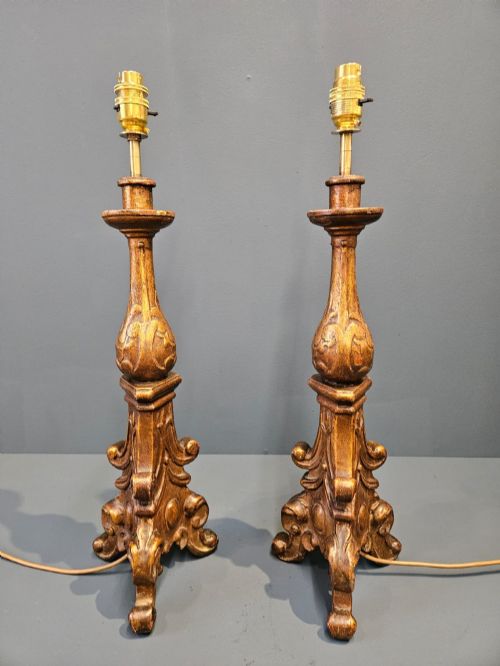
Many examples have been thoughtfully adapted to house electrical lamp fittings while retaining their original hand-carved wooden shafts and patinated surfaces.
Are these candlesticks usually found in pairs?
A significant portion of the selection survives as matched pairs or near pairs, originally intended for symmetrical placement on altars, side tables, or mantlepieces.
Single pieces do appear, often originating as larger floor-standing torcheres or individual altar sticks that have been separated over centuries of use.
What materials make up the surface finishes?
Traditional surfaces include hand-applied gold and silver leaf laid over a gesso ground, which yields a reflective and luxurious metallic sheen as the underlying wood ages.
Other examples display original polychrome paint, dark ebonisation, or marbleised effects that reflect the aesthetic preferences of their respective periods.
How do I distinguish eighteenth-century pieces from later revivals?
Eighteenth-century examples typically display deeper hand-carving in pine or oak with genuine signs of age beneath worn gilding or silvering.
Later nineteenth-century and early twentieth-century revival pieces often incorporate baroque or neoclassical motifs with crisper gesso work and heavier structural timber.