

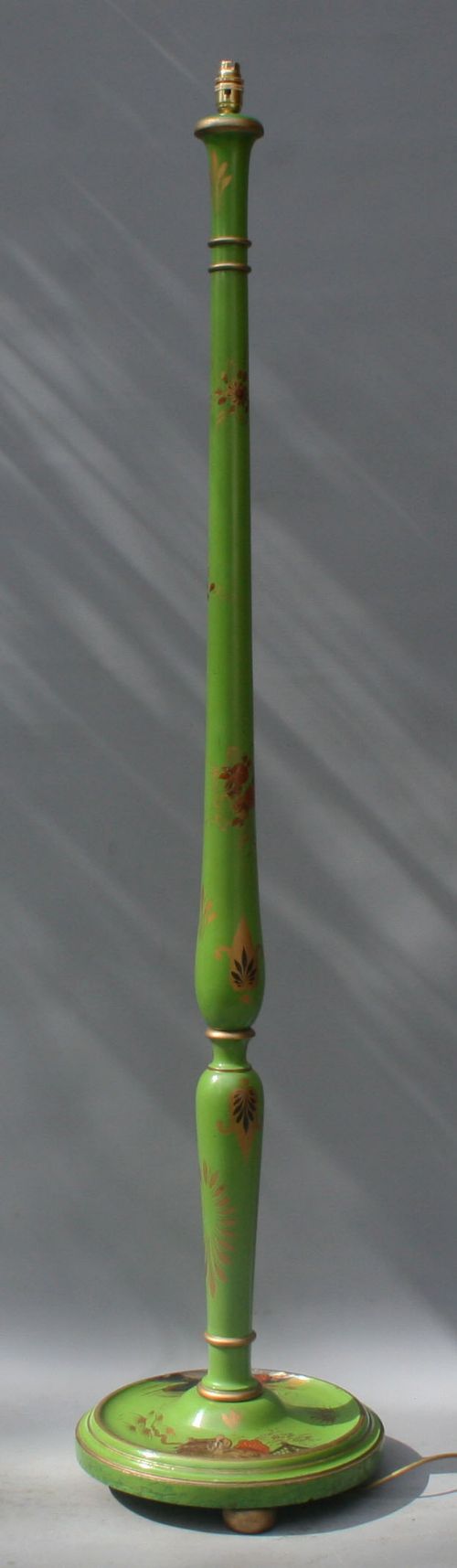


Gilded Wooden Standard Lamp
A gilded wooden standard lamp brings height and warmth to a room, casting downward illumination while displaying the carver and gilder's art.
Gilded Wooden Standard Lamp
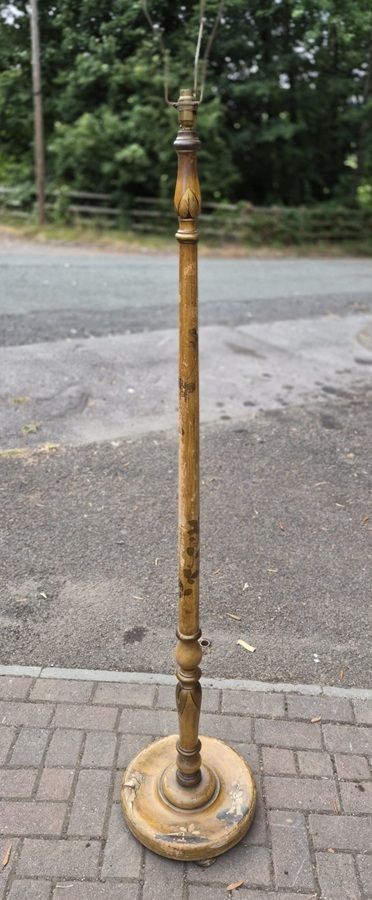
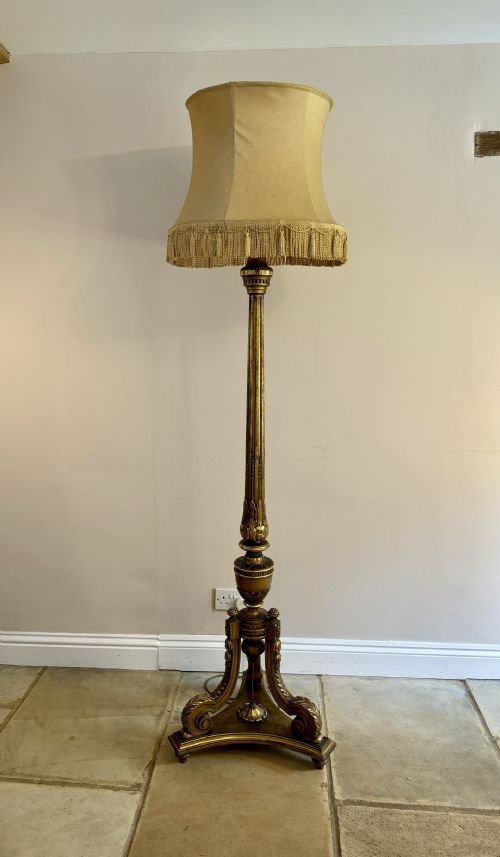
A gilded wooden standard lamp is a tall floor-standing lighting fixture combining carved timber with gold leaf, gesso, or paint, designed to illuminate a corner or sit beside a seating group. These pieces span from the mid-nineteenth century through the Edwardian era and into the 1930s, reflecting changing domestic habits and interior tastes.
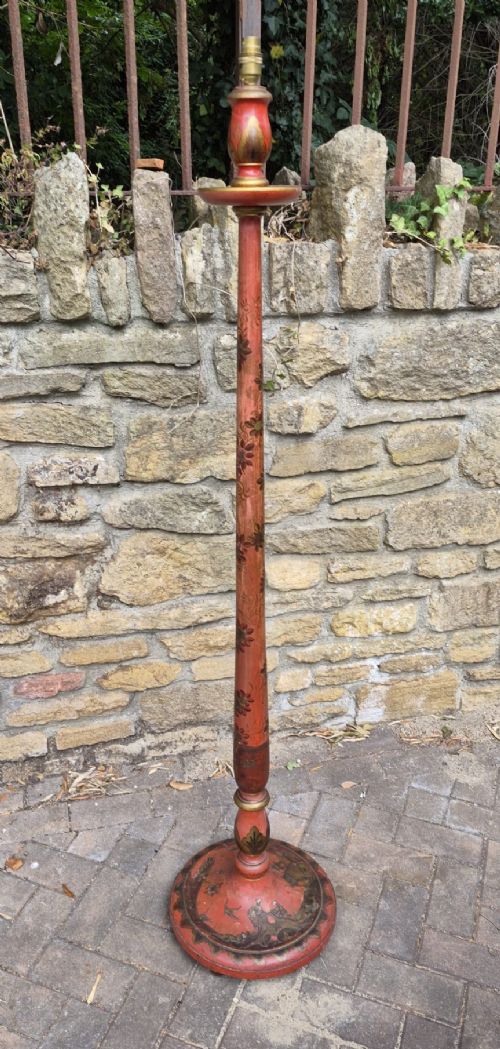
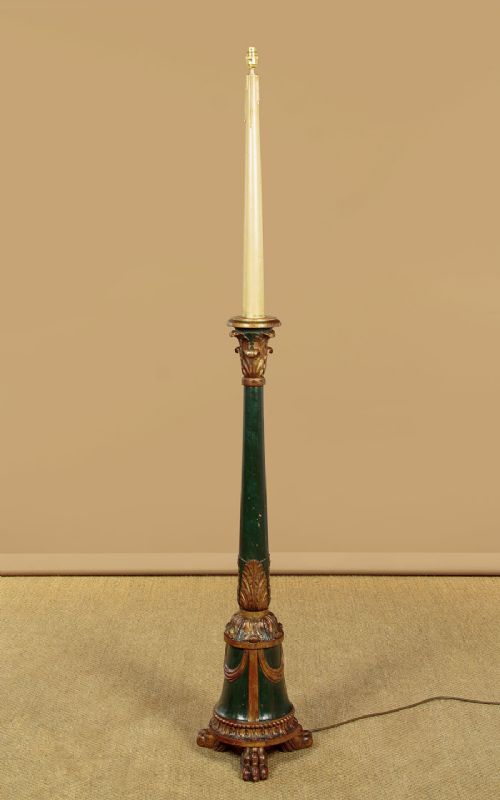
The versions most commonly met on this page range from Victorian and Edwardian examples to later twentieth-century interpretations. They appear in distinct stylistic revivals, including Neoclassical, Florentine and Venetian Baroque, and Chinoiserie.
Makers and workshops across Britain and continental Europe produced these floor lamps to anchor large reception rooms and intimate boudoirs alike. Their survival depends on the durability of their turned timber shafts and the stability of their applied surface finishes.
How they were made
Wood serves as the structural core of every standard lamp, shaped on a lathe or carved by hand into fluted columns, barley twists, or figurative supports. Timber species such as pine, beech, or hardwood provide the necessary weight and rigidity for a tall vertical shaft.
Surface ornamentation relies on gesso applied over wood to receive layers of gold leaf, parcel gilt, or polychrome paint. Craftsmen then burnished the metallic leaf to create contrasting matte and reflective areas across the carved details.
Gilded Wooden Standard Lamp Retail Price Guide 2026
Typical asking prices for gilded wooden standard lamp among the pieces listed under this phrase on Sellingantiques today, from the lower quarter to the upper quarter. They describe what is for sale here now, not the wider market.
Some Venetian figures hold aloft their original polychrome lamps like permanent torchbearers frozen in time.
What varies in quality
The depth and crispness of the carved detail separate standard production from superior workshop output, particularly where acanthus leaves, fluting, or figures meet the timber. Sharp undercutting and refined hand-finishing indicate a higher standard of craftsmanship than soft, rounded mouldings.
The integrity of the original gesso and gilt surface determines the visual success of the piece, with genuine age showing subtle craquelure and wear rather than flat modern paint. Heavier turned bases provide better physical stability and indicate a more substantial construction.
The Gilded Wooden Standard Lamp Glossary
- Giltwood
- Wood that has been coated with gold leaf or gold dust over a prepared ground. This technique creates a metallic surface that catches candlelight or electric illumination.
- Gesso
- A plaster mixture applied to wood surfaces to create a smooth base for gilding or painting. It allows carvers to achieve fine relief details before applying gold leaf.
- Chinoiserie
- European decorative style inspired by Chinese artistic traditions, featuring hand-painted motifs and lacquered finishes. It appears frequently on early twentieth-century standard lamps.
- Standard Lamp
- A traditional British term for a floor-standing lamp designed to support a fabric shade. These tall fixtures gained popularity with the arrival of domestic electric lighting.
Gilded Wooden Standard Lamp: Frequently Asked Questions
How do I wire an old standard lamp?
Rewiring requires running modern flex through the central wooden shaft, often utilising the original channel if the timber permits. A qualified electrician should install modern fittings to ensure safety while preserving the vintage structure.
Historic lamps often require brass cord grips and heat-resistant lamp holders that match the scale of the original turned wooden column. Care must be taken not to damage internal timber wiring channels during the update.
How do I clean a gilded wooden surface?
Dusting requires a soft, dry ostrich feather brush or a clean microfibre cloth used very gently across the carved details. Moisture and commercial polishes damage fragile gesso and gold leaf over time.
Avoid rubbing raised motifs where the thin layer of gold leaf may adhere weakly to the underlying gesso. Professional conservation is necessary if flaking or active loss of the metallic surface occurs.
What period do these lamps come from?
The pieces span the mid-nineteenth century through the Edwardian period and into the 1930s. Victorian and Edwardian examples often display heavier classical revival carving, while later 1930s pieces lean towards simpler painted or parcel gilt finishes.
Stylistic cues such as barley twist turnings or Chinoiserie decoration help align individual lamps with specific decades. Examining the construction of the base and the type of surface preparation offers further chronological clues.