
Carved Wooden Plant Pedestal
A carved wooden plant pedestal elevates greenery or sculpture, bringing height and structural focus to a room.
Carved Wooden Plant Pedestal
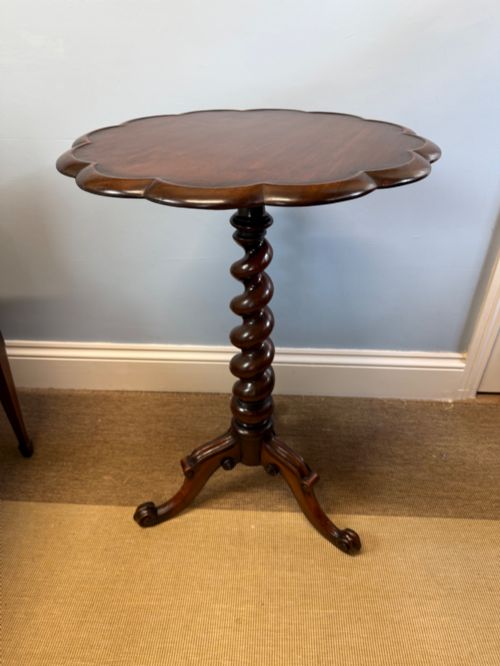
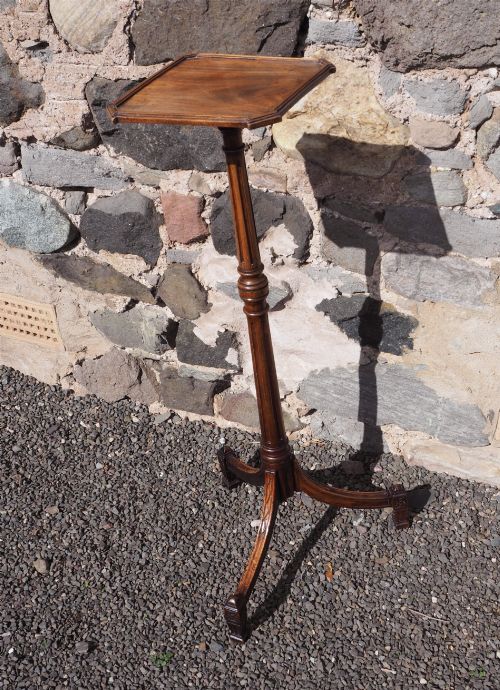
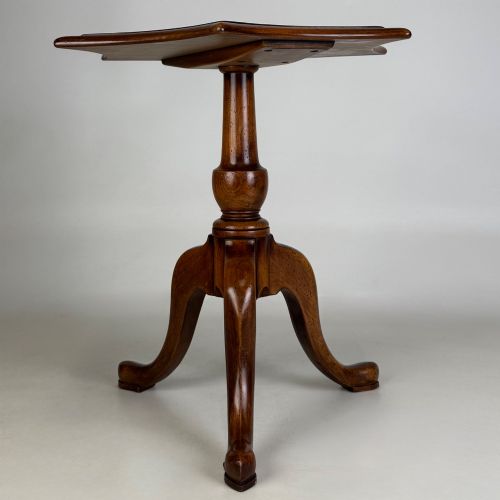
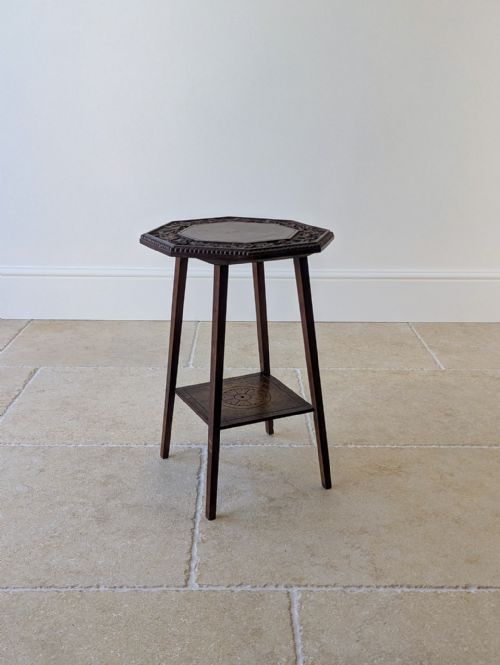
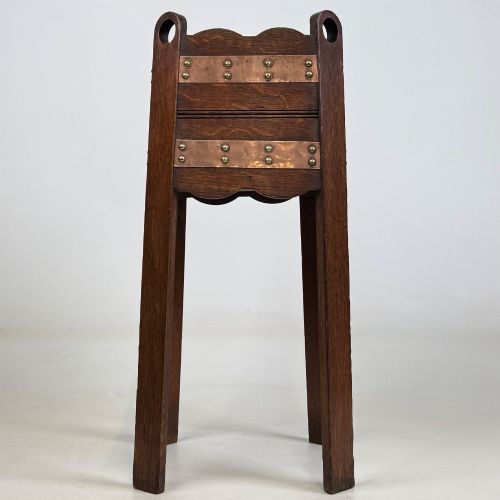
When searching for a carved wooden plant pedestal, you encounter tall stands designed to display planters, vases, and sculptures across various historical periods. The selection includes torcheres, occasional tables, and classical columns originating from British, European, and Asian workshops.
Victorian and Edwardian examples dominate the offerings, frequently rendered in mahogany, walnut, and oak. Alongside these domestic pieces, international designs such as Chinese export stands, Anglo-Indian carvings, and Italian Renaissance revivals appear regularly.
Materials and Construction
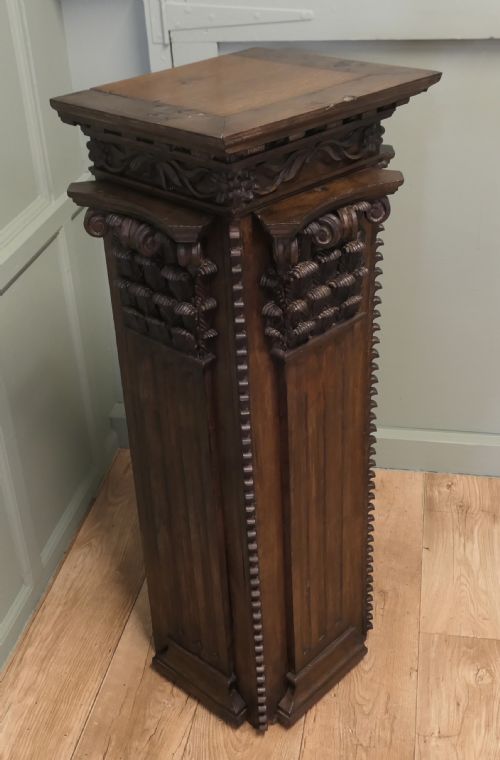
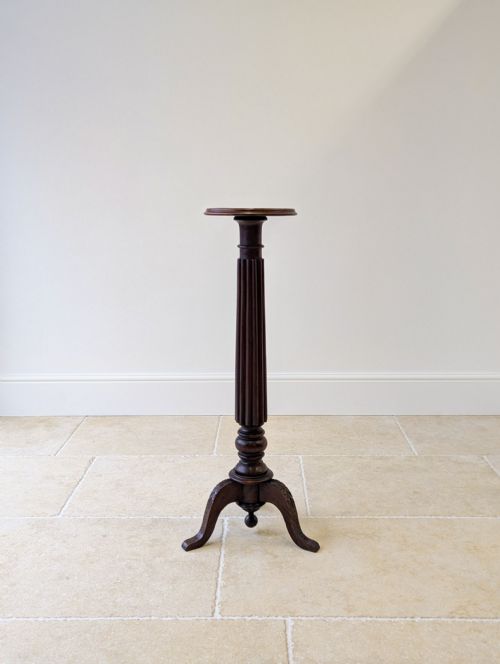
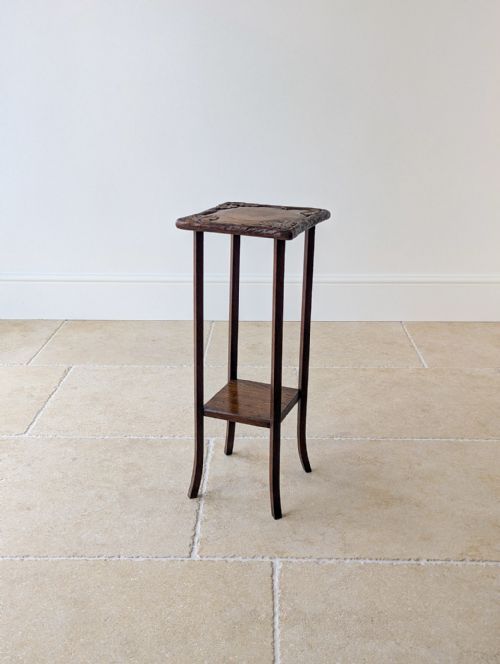
Cabinetmakers utilised dense hardwoods like mahogany, walnut, and oak to support the considerable weight of marble tops and heavy planters. These timbers permitted deep relief carving, fluting, and twisted barley columns without compromising structural integrity.
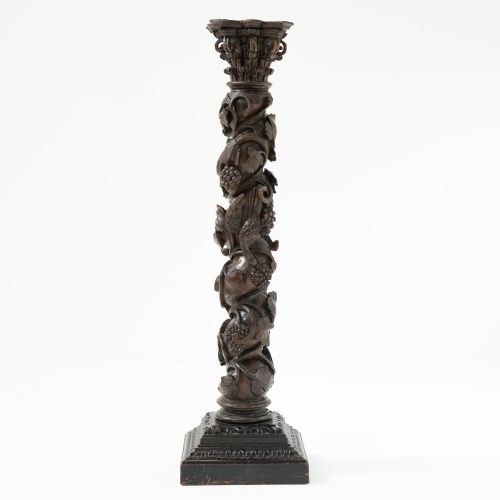
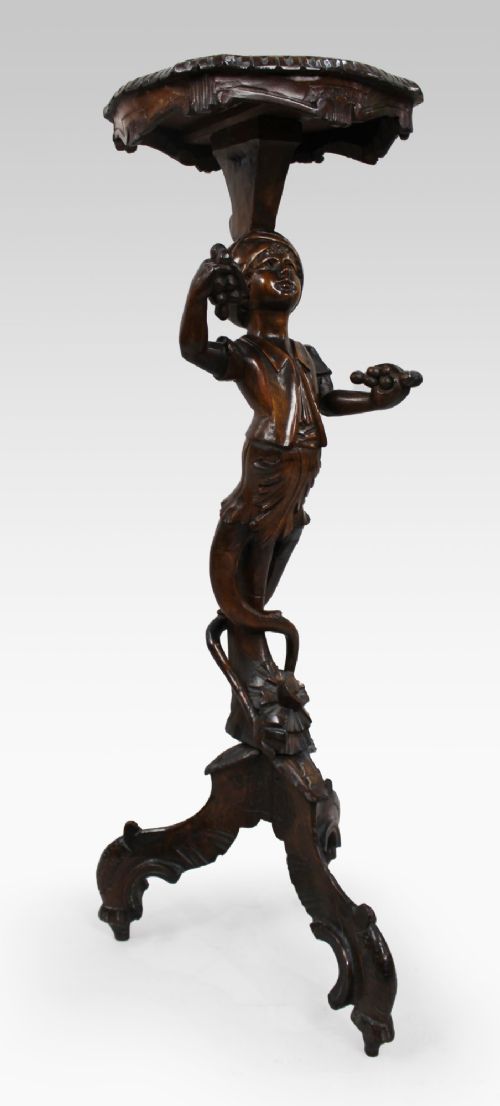
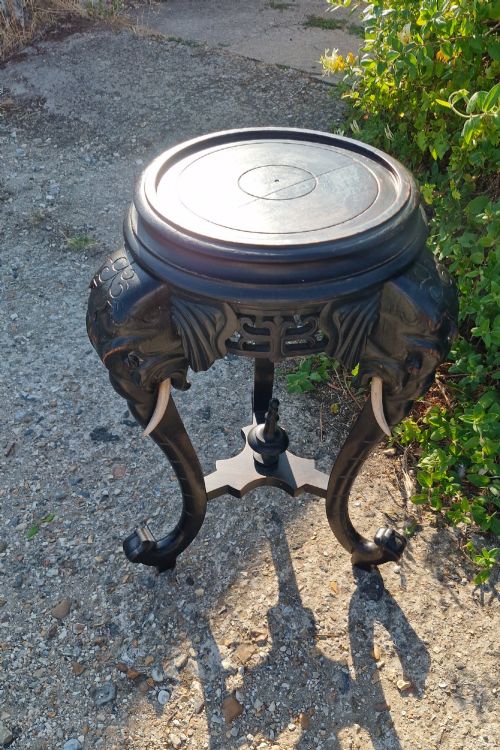
Construction techniques combined robust joinery with surface decoration, ranging from hand-carved figural elements and Solomonic twists to painted finishes and original green paint. Certain regional pieces incorporate applied lacquer or contrasting elements like painted wooden tusks.
Certain nineteenth-century elephant tables come complete with painted wooden tusks.
Craftsmanship and Proportion
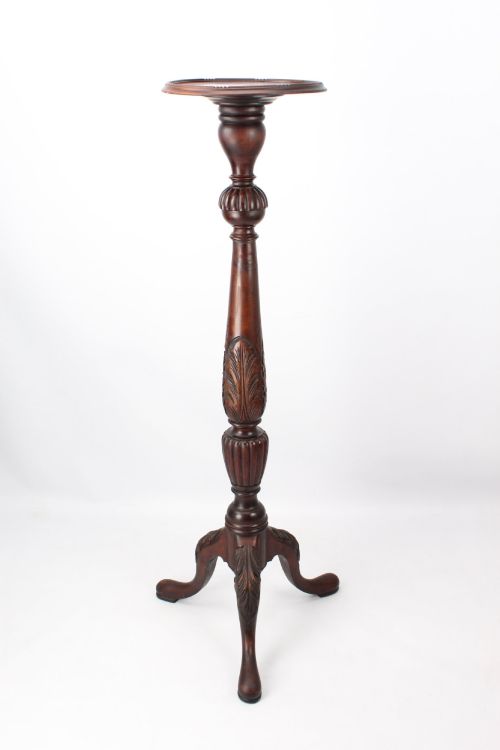
Quality rests in the crispness of the hand-carving and the harmonious proportion of the shaft to the base and capital. Superior examples display fluent depth in floral or figural motifs rather than shallow, mechanical stamping.
The choice of timber and stability of construction also dictate distinction, with well-balanced bases preventing top-heavy wobble. Original surfaces, whether polished mahogany or early polychrome paint, elevate the integrity of the piece.
Liberty of London
The Carved Wooden Plant Pedestal Glossary
- Torchere
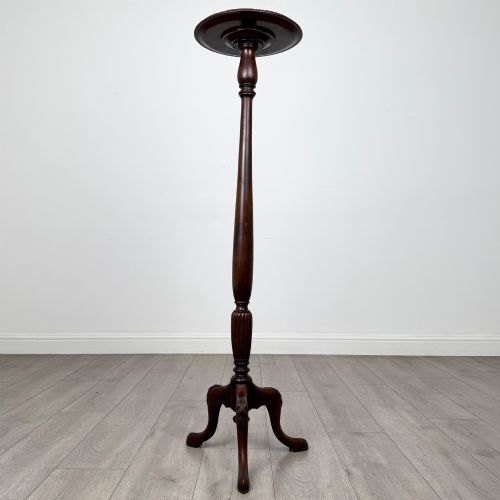
- A tall, slender stand originally designed to hold a candle or torch, now commonly utilised for plants and urns. These pieces feature elevated platforms supported by single columns or tripod bases.
- Solomonic
- A column characterised by a helical twist running down the shaft, creating dynamic movement. This classical form appears frequently on seventeenth and eighteenth-century revival pedestals.
- Jardiniere
- A decorative container or stand meant to hold a plant or flower arrangement. In furniture terms, it often refers to the integrated top platform designed to contain moisture or pots.
- Blackamoor
- A historical term used in antique furniture descriptions for decorative carved figures supporting tabletops or stands. These figures typically reflect Venetian or nineteenth-century stylistic interpretations.
- Pedestal
- A free-standing vertical support used to elevate a statue, vase, or plant. They range from simple fluted wooden columns to elaborate figural and architectural structures.
Carved Wooden Plant Pedestal: Frequently Asked Questions
What is a torchere stand?
A torchere is a tall, slender piece of furniture designed to hold a light source or decorative object. In modern interiors, they function primarily as plant stands or display pedestals.
Their elevated profile draws the eye upward, making them useful for filling empty corners or highlighting specific botanical specimens.
How do I style a pedestal?
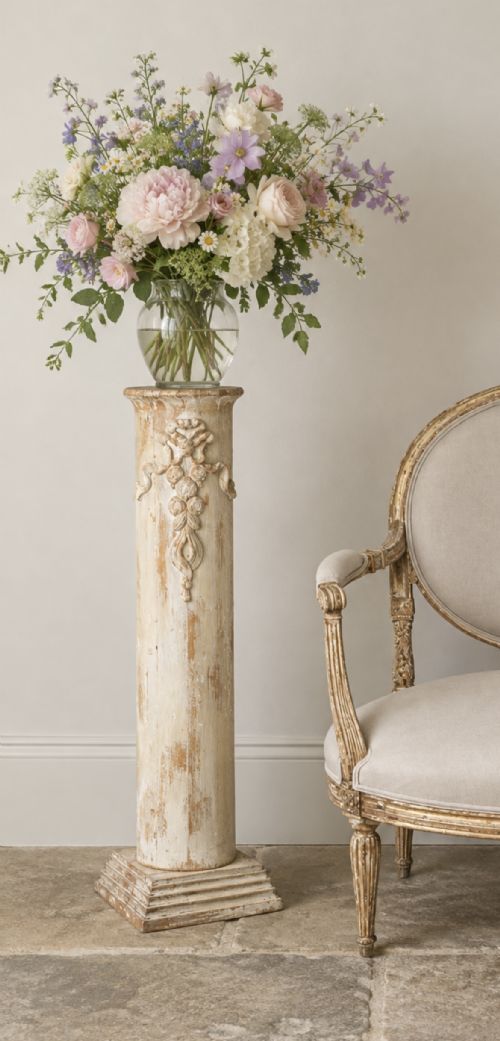
Place a heavy ceramic pot, trailing plant, or sculptural bronze on the top platform to anchor the piece visually. Ensure the height of the stand complements surrounding furniture without blocking pathways.
Pairing torcheres in matching pairs works effectively on either side of a fireplace or doorway for formal symmetry.
Are these stands stable?
Most solid hardwood pedestals possess heavy weighted bases or wide tripod feet designed to support considerable weight safely. Solid construction in dense timber like mahogany or oak prevents tipping under normal conditions.
For tall or marble-topped variants, placement on level flooring ensures secure daily use.
How do I date a pedestal?
Dating relies on timber selection, joining techniques, and stylistic revival markers corresponding to Victorian, Edwardian, or earlier periods. Turned elements and hand-carving styles provide clear chronological indicators.
Comparing the wear patterns and finish to documented examples helps confirm the era of manufacture.