
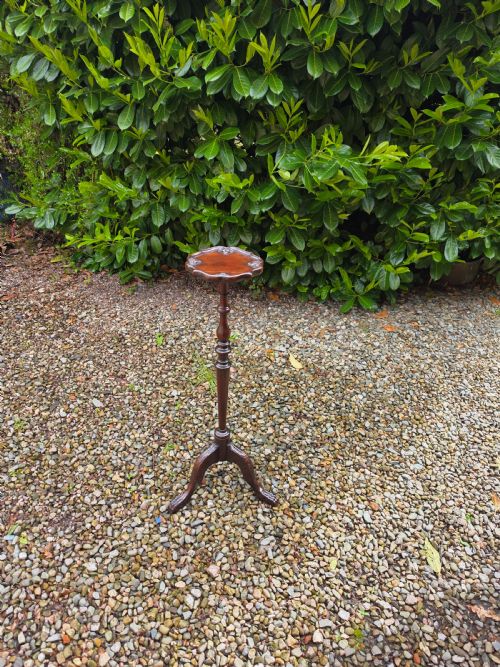


Carved Mahogany Urn Stand
A carved mahogany urn stand is a slender raised support for a vessel, designed to display decorative pieces gracefully within a room.
Carved Mahogany Urn Stand
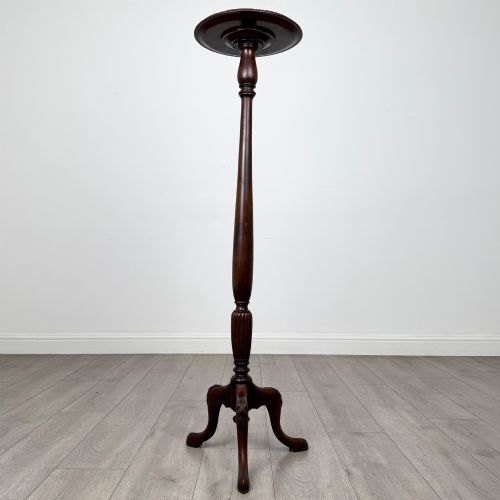
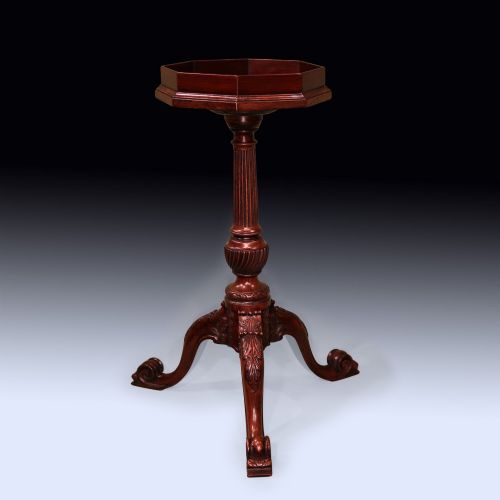
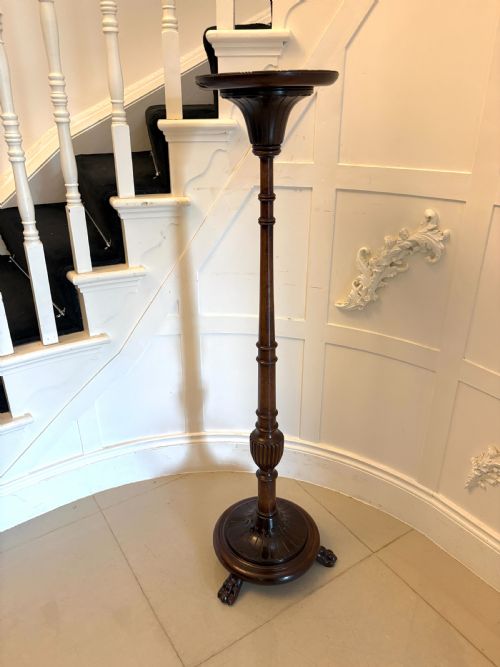
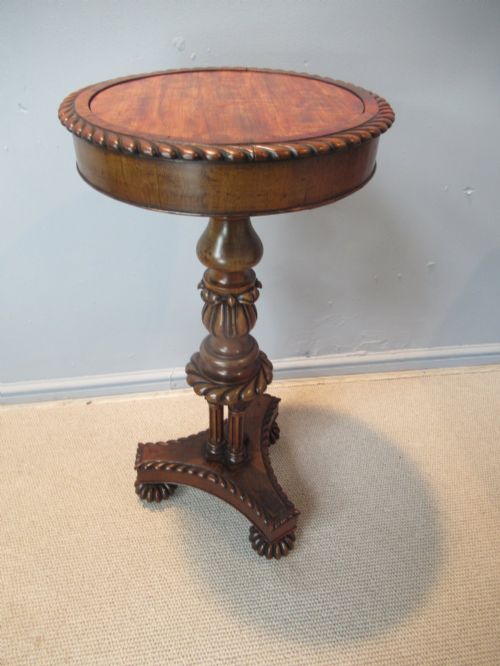
A carved mahogany urn stand takes several related forms across the listings, frequently appearing as a torchere, kettle stand, or plant pedestal. Buyers seeking this phrase encounter slender vertical furniture designed to elevate an object, whether a ceramic vessel, a bronze urn, or a floral arrangement. The selections range from compact eighteenth-century George III pieces to later Victorian revivals and Edwardian examples.
Makers adapted these stands for various domestic settings, producing square, rectangular, and round tops supported on columns or cabriole legs. Alongside British Georgian and Victorian designs, the listings include Chinese export and hardwood pieces featuring marble inserts or intricate carving. These variations reflect how the basic concept of an elevated display surface crossed stylistic boundaries.
The practical function remains consistent throughout the periods, serving as a focal point in a hallway, corner, or drawing room. While some function purely as plant or jardiniere stands, others retain the smaller top associated with tea urns and kettles. This dual heritage means a buyer might find a tall column or a lower table-height support.
Materials and Construction
Mahogany forms the primary structural timber across the majority of these pieces, selected for its dense grain and stability. Cabinetmakers utilised solid cuts for carved elements such as cabriole legs, fluted columns, and shaped aprons, ensuring the stand could bear weight safely on a narrow footprint. In addition to standard mahogany, listings incorporate related dense timbers like rosewood, satinwood, and Asian hardwoods.
Surface embellishment relies heavily on hand carving, ranging from crisp Chippendale-style foliage to simpler reeded mouldings on Victorian pedestals. Certain Asian and Chinese export pieces integrate inset marble panels into the top surface to support damp pots or heavy vases without staining the wood. Brass fittings and lacquered finishes appear occasionally to accent the primary timber.
Materials documented across the inventory include solid mahogany, rosewood, satinwood, Asian hardwoods, marble, and brass.
Judging Quality and Execution
The distinction between standard examples and finer items lies in the crispness and depth of the carved detail. Superior stands display sharply defined foliage, undercut ornamentation, and balanced proportions that maintain stability despite a slender height. Lesser pieces rely on shallow surface stamping or simpler turned members without hand-finished nuance.
Material selection also dictates the standing of a piece within the range, particularly regarding the figure of the mahogany grain and the quality of secondary timbers. Pieces incorporating luxury additions such as inset marble tops or intricate pierced galleries demonstrate a higher tier of workshop production from their respective periods.
The Carved Mahogany Urn Stand Glossary
- Torchere
- A tall, slender stand designed to hold a light, lamp, or decorative object. These pieces usually feature a small circular top supported by a central column or tripod base.
- Kettle stand
- A small occasional table or stand historically used to hold a tea kettle above a spirit lamp. They typically date from the eighteenth century and feature compact tops.
- Jardiniere stand
- A specialised piece of furniture built to hold a plant container or flower pot. They often incorporate water-resistant surfaces such as marble or glazed tiles.
- Hongmu
- A category of dense, dark Asian hardwoods used in traditional Chinese furniture making. Pieces in this material often display rich natural grain and substantial weight.
- Gallery
- A raised decorative border surrounding the edge of a tabletop. This feature prevents items from sliding off the elevated surface.
Carved Mahogany Urn Stand: Frequently Asked Questions
What is a carved mahogany urn stand used for?
These pieces function primarily as elevated platforms for displaying decorative vessels, urns, plants, or lamps. Their narrow footprint allows them to occupy unused corners or narrow wall spaces.
Historically, smaller versions held heated tea urns or kettles near a seating area, while taller torcheres illuminated dim rooms with candles or oil lamps.
How do I tell an 18th-century stand from a Victorian one?
Eighteenth-century examples often display restrained Georgian proportions, finer hand carving, and authentic patination associated with early Chippendale or George III designs. These pieces frequently take the form of specific kettle stands.
Victorian and later revival pieces tend to feature heavier turned columns, machine-assisted detailing, or broader interpretations of earlier styles like the Adam or Chippendale revivals.
Are Chinese export stands considered urn stands?
Chinese export and hardwood pieces share the same functional role of elevating vases, pots, and decorative objects within a Western interior. While craftsmen built them using Asian timbers like hongmu rather than British mahogany, dealers often group them under the same search terms due to their matching height and purpose.
Many of these Asian stands incorporate marble inserts specifically to accommodate heavy ceramic jardiniere pots safely.
How do I safely place plants on a wooden stand?
Stands equipped with inset marble or lacquered tops handle moisture naturally without risking water damage to the surrounding timber. If placing a plant on a plain mahogany top, use an impermeable saucer or liner beneath the pot to protect the polish.
Ensure the weight of the plant remains balanced over the centre of the pedestal base to prevent tipping.