




Carved Wooden Lion Statue
A carved wooden lion statue brings centuries of sculptural presence into a room, spanning grand European architectural forms and traditional Asian guardian figures.
Carved Wooden Lion Statue
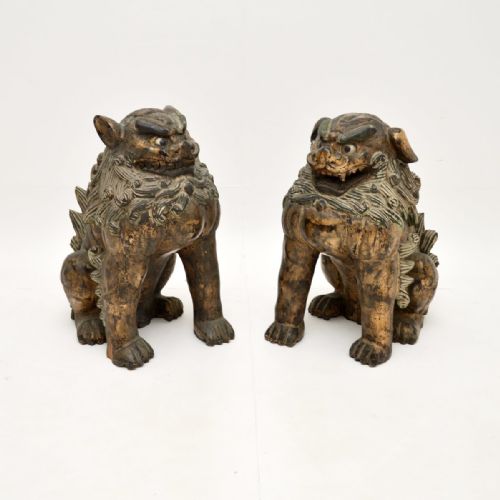
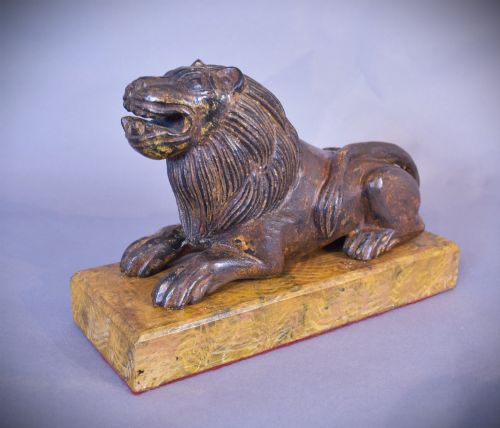
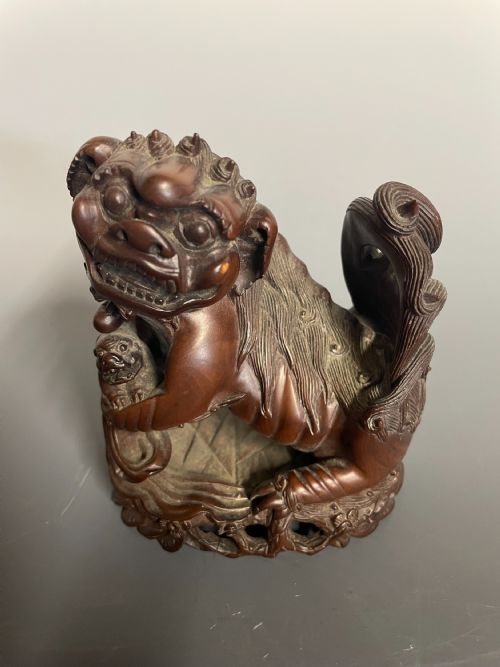
A carved wooden lion statue encompasses both Western interpretations, such as seventeenth-century architectural finials and nineteenth-century Grand Tour Medici lions, and Eastern traditions including Chinese Foo Dogs and Buddhist lions. These sculptures appear in various scales, from life-size twentieth-century figures to compact boxwood carvings and root wood ornaments.
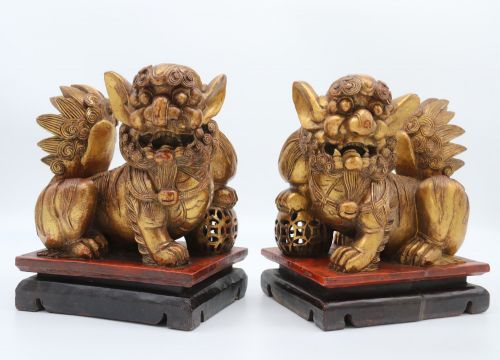
The selection on this page leans heavily into traditional Asian carving traditions alongside European revival styles like Gothic and Grand Regency. Buyers encounter single figures on plinths as well as matched pairs designed to frame an entrance or mantelpiece.
How they were made
Surface treatments play an integral role in the construction of many pieces, featuring applications of gilt, polychrome paint, and lacquer. These finishes served to protect the wood while highlighting the intricate details of the sculptural work.
Listings span multiple centuries, ranging from seventeenth-century architectural fragments to mid-twentieth-century sculptures.
What varies in quality
The distinction between standard and superior examples lies in the depth of the carving and the anatomical accuracy of the animal's form. Master carvers achieved fluid movement and convincing musculature, whereas lesser pieces remain stiff and formulaic in execution.
The integrity of the original surface finish, whether aged gilding, polychrome paint, or polished wood, heavily influences the character and standing of the piece. Intact secondary elements like original plinths or marble bases also elevate the status of the statue.
Eugene Emile Borga
The Carved Wooden Lion Statue Glossary
- Foo Dog
- A traditional Chinese guardian lion statue, often depicted in pairs to protect sacred spaces. These figures combine stylised mane curls with an assertive posture.
- Newel Post Finial
- An architectural sculpture mounted at the top of a staircase post. Seventeenth-century examples often took the form of carved wooden lions.
- Giltwood
- Timber treated with gold leaf or gold paint applied to the surface. This technique adds a reflective layer that enhances decorative impact.
- Medici Lion
- A classical sculptural form modelled after the marble lions in Florence. Nineteenth-century versions translated this monumental motif into carved wood.
- Root Wood
- Timber formed from the root mass of a tree, utilised by carvers to follow natural, organic contours. Chinese artisans shaped these sections into dynamic animal figures.
Carved Wooden Lion Statue: Frequently Asked Questions
Where should I place a wooden lion statue?
These statues work well as focal points on side tables, mantels, or dedicated plinths where their sculptural form is fully visible.
Pairs of lions can also flank doorways or sit balanced on either side of a large piece of furniture to create symmetry.
How do I identify a Foo Dog?
Foo dogs typically feature curly manes, prominent snouts, and an open mouth or a paw resting on a brocade ball. They derive from traditional Chinese guardian iconography.
They appear frequently in wood and root wood across various Asian art periods.
What is a Medici lion?
The Medici lion is a classical Italian Renaissance sculpture type showing a male lion with one paw resting on a sphere. Nineteenth-century European carvers often replicated this design in wood.
These versions range from modest decorative ornaments to monumental figures.
How do I care for a carved wooden lion?
Keep the sculpture away from direct sunlight and sudden temperature shifts to prevent the wood from drying out or splitting. Dust gently with a dry, soft cloth.
Avoid liquid polishes, particularly on pieces with historic painted, lacquered, or gilt surfaces.