
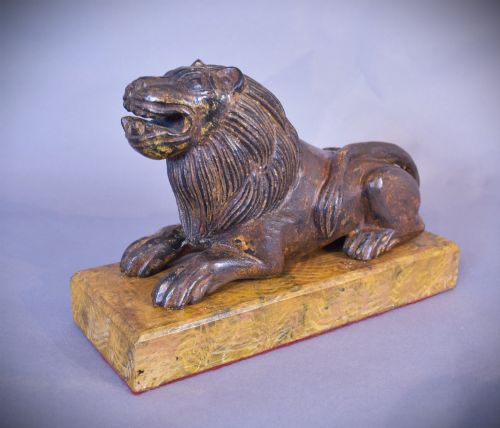


Dark Wood Lion Sculpture
These dark wood lion sculpture pieces bring a commanding presence to a room, spanning centuries of skilled carving in walnut, oak, and hardwood.
Dark Wood Lion Sculpture
A dark wood lion sculpture represents a powerful decorative form carved from timber, often appearing as freestanding figures, furniture elements, or architectural salvage. These works emerge across the seventeenth, eighteenth, and nineteenth centuries, taking shapes from traditional European animalier traditions to Asian foo dogs and temple guardians.
The nineteenth century provides many of the pieces seen here, particularly through Black Forest carving traditions and classical Medici lion depictions. Earlier seventeenth-century examples frequently function as structural elements such as newel post finials, while walnut lion and tiger heads capture realistic musculature and fierce expressions.
How they were made
Carvers shaped these objects using dense timbers like walnut, oak, and general hardwood, sometimes enhancing the surfaces with paint, polychrome colour, or gilt highlights. Root wood also appears in Asian carvings, exploiting the natural twists of the material to form dynamic postures for lion dogs and foo dogs.
Makers utilised traditional hand chisels and gouges to achieve deep relief and textured manes, whether working on a monumental pair of Medici lions or a compact architectural finial.
Several fierce wooden cats on this page doubling as architectural guardians spent centuries silently watching over stairs.
What varies in quality
The choice and grain of the timber also dictate the visual depth of the object, with well-selected walnut and figured hardwoods holding a richer polish and more enduring sculptural presence.
The Dark Wood Lion Sculpture Glossary
- Newel post finial
- An ornamental cap terminating the primary vertical post of a stair Balustrade. Seventeenth-century examples often took the form of carved lions.
- Medici lions
- A pair of marble statues of lions guarding the Villa Medici in Rome, widely copied in European sculpture. Nineteenth-century woodcarvers frequently replicated these iconic beasts.
- Foo dog
- A traditional Chinese guardian lion symbolising protection and prosperity. These mythical figures appear in various timbers and root wood across multiple periods.
- Black Forest carving
- A style of ornate wooden sculpture originating in the Swiss-German border region during the nineteenth century. These works frequently depict large cats and woodland fauna in realistic detail.
Dark Wood Lion Sculpture: Frequently Asked Questions
Where were these sculptures placed?
Many of these pieces served architectural and domestic roles, ranging from staircase finials to decorative ornaments on mantelpieces and tables.
Larger items functioned as focal points within grand interiors, while pairs of guardian figures traditionally flanked entrances or important rooms.
Are these sculptures solid wood?
The pieces listed utilise solid timbers such as walnut, oak, and various hardwoods, carved directly from block timber or root wood.
This solid construction gives the sculptures considerable weight and allows for deep, three-dimensional relief work.
How do I identify a Black Forest carving?
Black Forest carvings from the nineteenth century are typically characterised by highly realistic animal anatomy, deep walnut tones, and textured fur rendering.
Subjects like lions and tigers often display intense expressions and dynamic postures typical of this specific European workshop tradition.