


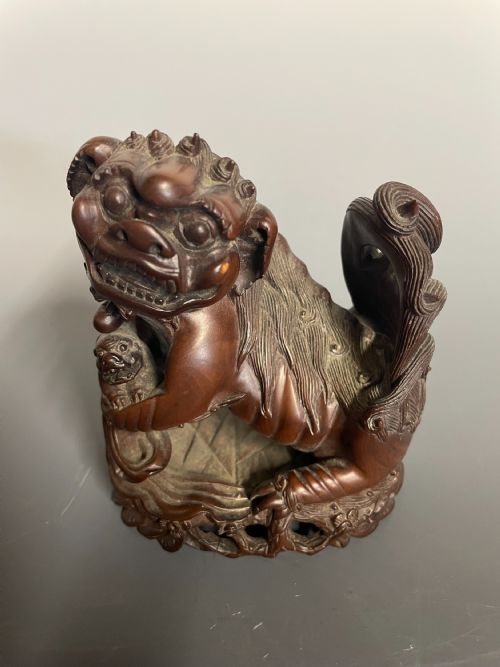


Wooden Lion Sculpture
These wooden lion sculpture pieces bring centuries of carving craft into a room, spanning British heraldic figures and substantial Asian temple guards.
Wooden Lion Sculpture
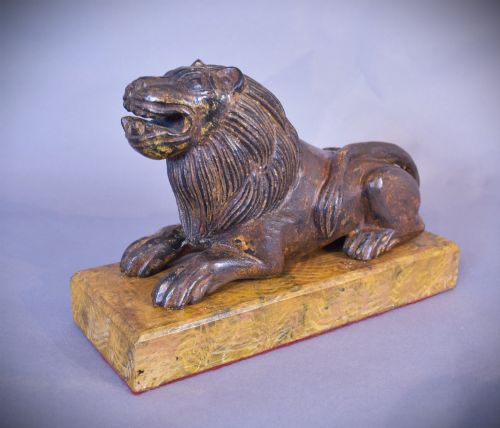
When you search for a wooden lion sculpture, you encounter a diverse range of forms spanning several centuries, from European architectural ornaments and heraldic shields to traditional Asian temple figures and Foo dogs. The listings here include nineteenth-century life-size carvings, seventeenth-century newel post finials, and detailed walnut wall masks.
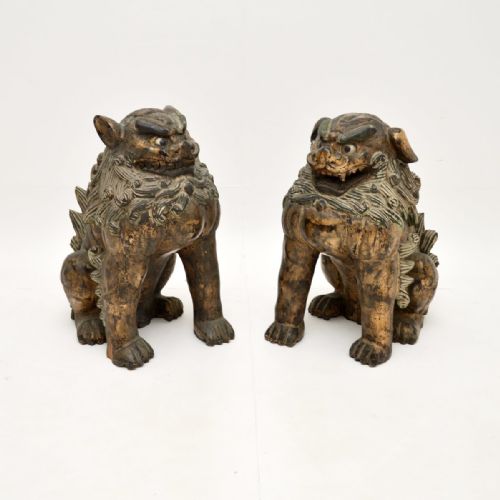
The most common examples on this page are carved wooden Foo dogs and temple guardians originating from Chinese traditions, alongside European heraldic lions and Black Forest animal heads. These objects function variously as decorative ornaments, bookends, architectural salvage, and monumental statues.
Originating across the seventeenth, eighteenth, and nineteenth centuries, these sculptures reflect distinct regional aesthetics, from Grand Regency interpretations to Gothic Revival and Qing Dynasty craftsmanship.
How they were made
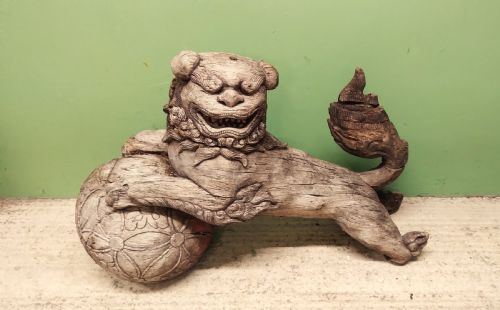
The makers of these sculptures utilised a variety of woods, predominantly walnut, oak, boxwood, root wood, and pine, shaping them with traditional hand-carving chisels and gouges. Many pieces reveal the natural grain of the timber beneath clear finishes, while others show traces of polychrome paint, lacquer, or surface gilding.
Several listings feature fierce temple guardians that double as bookends, keeping your paperback novels safe with imperial authority.
What varies in quality
The distinction between standard decorative items and finer works lies in the depth of the carving and the anatomical accuracy achieved by the carver. Superior pieces display crisp undercutting in the mane and expressive facial tension rather than soft, rounded details.
Material selection also dictates quality, with dense hardwoods like walnut and boxwood allowing for sharper, more enduring sculptural definition than softer pines or layered root wood.
Eugene Emile Borga·Luigi Frullini
The Wooden Lion Sculpture Glossary
- Foo Dog
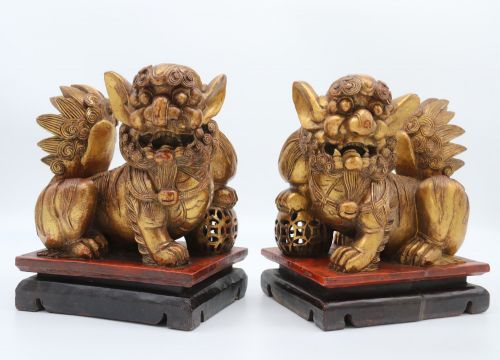
- A traditional Chinese architectural guardian figure resembling a lion, often carved in pairs to guard entrances. These figures combine stylised curly manes with seated or crouching postures.
- Newel Post Finial
- An ornamental carving mounted on top of the principal vertical post at the turn of a staircase. Seventeenth-century examples often take the form of heraldic beasts holding shields.
- Giltwood
- Timber that has been coated with a thin layer of gold leaf or powder. This finish appears frequently on decorative Chinese Buddhist lions and European furnishings.
- Polychrome Paint
- Decoration applied using multiple colours of paint. This technique brings realism or symbolic vibrancy to carved wooden crests and animal figures.
- Architectural Salvage
- Building elements rescued from older structures for reuse or display. This category includes wall masks, newel posts, and armorial crests removed from historic interiors.
Wooden Lion Sculpture: Frequently Asked Questions
What is a Foo dog sculpture?
A Foo dog is a stylised guardian lion originating from Asian traditions, typically depicted seated with one paw resting on a ball or a cub.
These figures served as protective temple guardians and domestic ornaments, translating into carved wooden statues found in various periods.
How were wooden lion sculptures used?
These sculptures served multiple architectural and decorative functions in historic buildings, ranging from staircase finials to wall masks and armorial crests.
Grand examples stood as monumental statues or plinth-mounted ornaments in stately libraries and reception rooms.
Which woods were used for carving?
Carvers utilised dense timbers such as walnut, oak, and boxwood to achieve fine anatomical detail and durable structural forms.
Softer woods like pine and specialised materials like root wood also appear, particularly in regional furniture and folk art traditions.
How do I identify seventeenth-century carvings?
Seventeenth-century pieces often display robust tool marks, heavier proportions, and functional integration as architectural elements like newel posts.
The specific joinery and weathering patterns on the timber help differentiate these earlier works from later nineteenth-century revival pieces.