
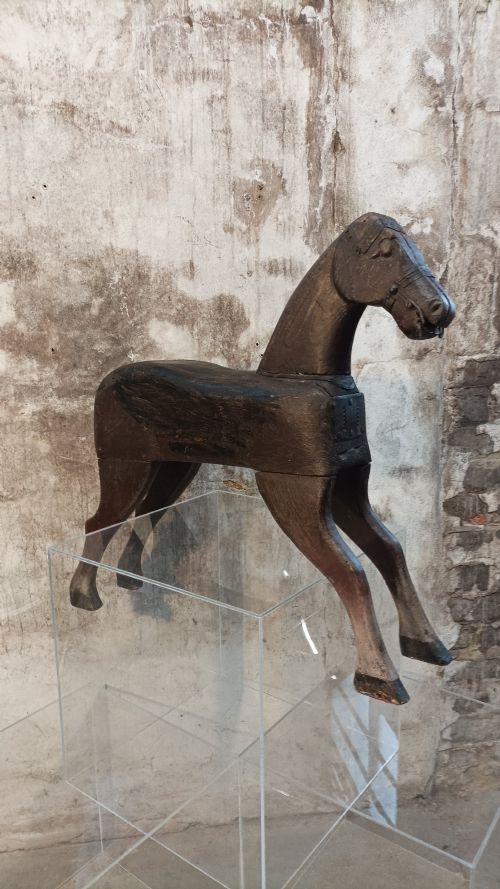
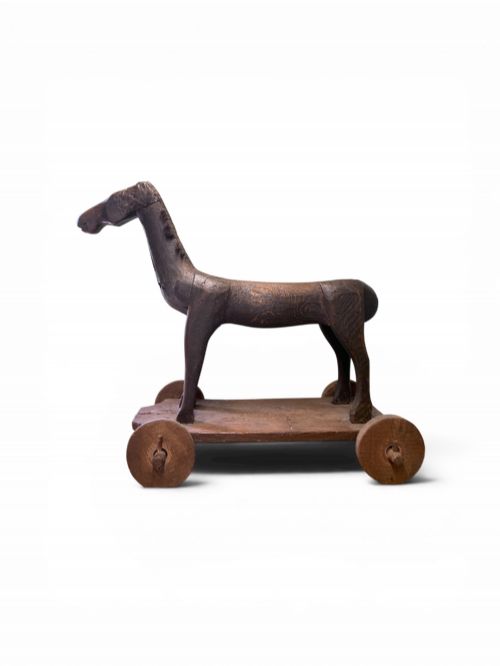
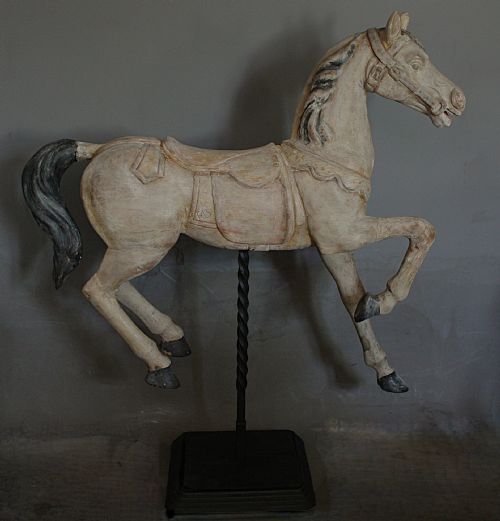


Carved Wooden Horse Sculpture
A carved wooden horse sculpture brings the raw, tactile energy of folk art and historical craftsmanship straight into a modern room.
Carved Wooden Horse Sculpture
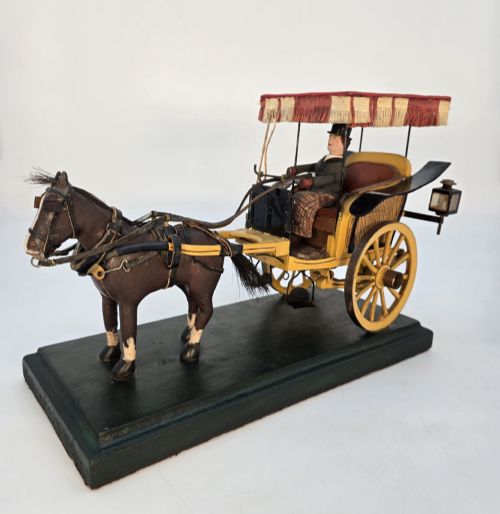
A carved wooden horse sculpture encompasses a wide range of antique decorative objects, from utilitarian toys and artist models to spirited carousel figures and folk art carvings. When exploring this selection, buyers frequently encounter pieces originating from nineteenth century European and Asian traditions, often reflecting regional workshop styles.
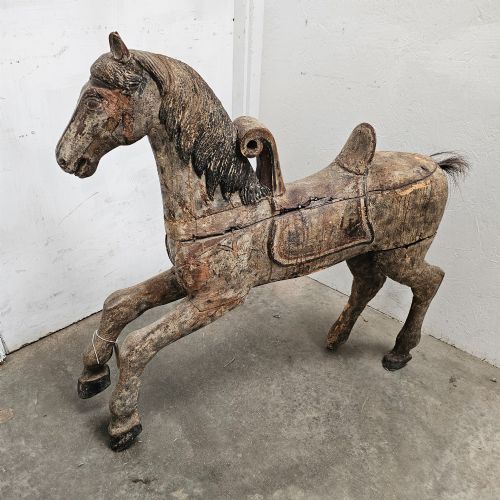
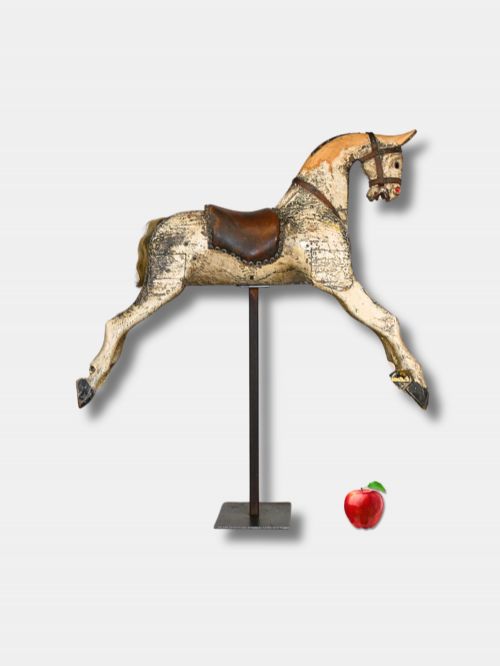
The assortment on this page spans distinct forms including rocking horses, fairground carousel animals, naive pull toys, and detailed draught or processional horse studies. These items range chronologically from the eighteenth century through the early decades of the twentieth century, capturing diverse cultural approaches to sculpting the equine form in timber.
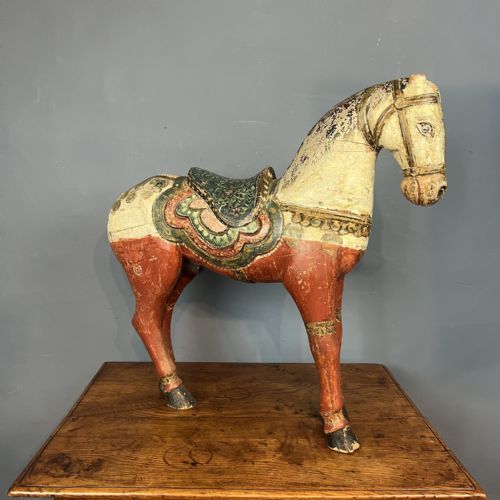
Folk art traditions dominate the grouping, showcasing a charmingly unpretentious approach to proportion and detail alongside more naturalistic animalier studies. Whether searching for a monumental French fairground piece or a small-scale devotional and decorative carving, the variety highlights both vernacular creativity and historical utility.
Materials and construction
Makers fashioned these sculptures primarily from solid wood and timber, frequently employing carved wood, boxwood, or hardwood depending on the regional tradition and scale of the piece. Artisans shaped the forms using traditional hand tools, sometimes adding secondary elements such as iron hardware, leather tack, and genuine horsehair manes or tails.
Some wooden horses wear genuine horsehair manes and leather tack, retaining the tactile evidence of past riders and fairground adventures.
Assessing quality and character
Quality in a carved wooden horse sculpture rests upon the vigour of the carving and the integrity of the surviving surface. Superior examples display a confident command of anatomy and movement, whether rendered in a sophisticated animalier style or through the honest, unvarnished directness of naive folk art.
The survival of original paint and decorative finish heavily influences the character of a piece. Sculptures retaining undisturbed early surfaces, genuine leather elements, and authentic harness details command attention for their visual depth and the unblemished record of their working history.
G J Lines·Masayuki
The Carved Wooden Horse Sculpture Glossary
- Folk art
- Artistic work produced from an indigenous culture or peasant tradition, characterised by a naive style where conventional rules of proportion are subordinated to expressive directness.
- Carousel horse
- A carved wooden figure created for fairground roundabouts, typically displaying dynamic poses and decorative harness work.
- Animalier
- A nineteenth century artistic genre focusing on the realistic portrayal of animals, capturing natural movement and musculature.
- Netsuke
- A small Japanese carved toggle, often depicting figures or animals in boxwood, designed to secure a pouch or small container to a traditional garment sash.
- Troika
- A traditional Russian vehicle pulled by three horses abreast, often depicted in small-scale wood carvings from regional centres such as Bogorodskoe.
Carved Wooden Horse Sculpture: Frequently Asked Questions
How were antique wooden horses used originally?
Many of these pieces served practical functions as children's toys, rocking horses, or fairground amusement rides designed for active daily use. Others functioned as artists' anatomical models, processional figures, or decorative ornaments commissioned for domestic display.
Over time, surviving items transitioned from utilitarian objects or playthings into cherished decorative sculptures collected for their historical charm and artistic merit.
What is folk art sculpture?
Folk art sculpture refers to objects carved by self-taught or traditional artisans working outside formal academic fine art circles. These pieces often feature simplified forms and unpretentious detailing that prioritise expressive character over strict anatomical accuracy.
Creators utilised readily available timber and basic hand tools, resulting in distinctively individual works that reflect regional tastes and vernacular traditions.
How do I care for antique wood?
Preserving antique wood requires maintaining a stable indoor environment away from direct sunlight and sudden humidity fluctuations. Excessive dryness can cause timber to split, while moisture damages fragile historic paint layers.
Dust the surface gently with a dry, soft cloth and avoid applying modern polishes or cleaning agents that might strip original patination or historical finishes.
How can I tell the age of a carved horse?
Dating relies on examining the tool marks, construction methods, wood species, and wear patterns appropriate to different historical periods. Stylistic cues, such as Victorian fairground aesthetics or eighteenth-century carving techniques, offer reliable clues to chronology.
Additionally, the composition of surface coatings like old paint, gesso, and iron hardware helps experts distinguish nineteenth-century production from later interpretations.