


Equestrian Carved Sculpture
An equestrian carved sculpture captures horse and rider or horse alone in three dimensions, bringing tangible motion and enduring character into a room.
Equestrian Carved Sculpture
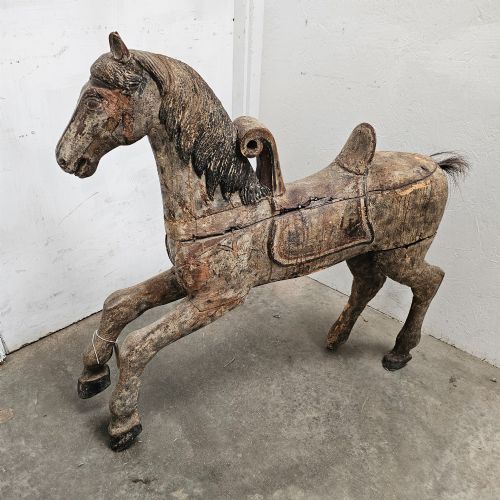
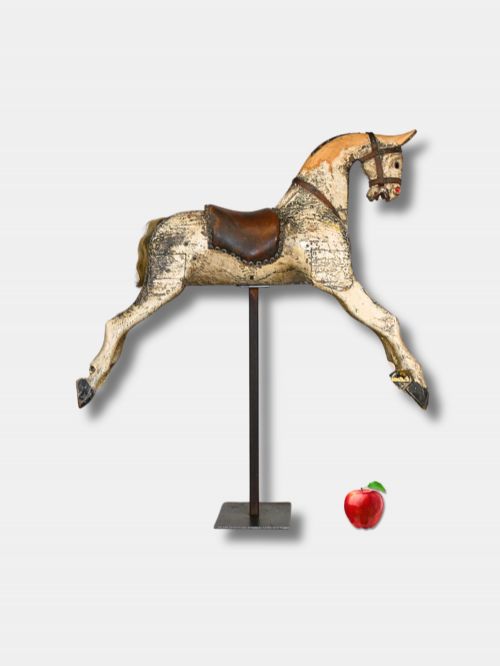
An equestrian carved sculpture encompasses figures of horses and riders alongside studies of horses alone across several centuries. You encounter carousel figures, rocking horses, and detailed animalier studies created by various hands.
The selections range from naive folk art pieces originating in Spain and France to precise nineteenth century English rocking horses. Smaller netsuke carvings and large decorative models appear alongside architectural fragments and devotional groups.
Many examples date from the nineteenth century, though earlier sixteenth century Flemish carvings and later twentieth century pieces also emerge. Wood serves as the primary medium, complemented by paint, leather, and occasional marble.
How they were made
Makers shaped these sculptures primarily from hardwoods and softwoods using traditional hand carving techniques. Artisans often applied surface layers of paint, horsehair, and leather to complete the realistic or decorative appearance of the animals.
Some pieces incorporate iron and brass fittings for structural support, particularly within larger rocking horses and mounted figures. Boxwood appears in smaller intricate carvings, allowing for fine facial and harness details.
Listings feature wood, paint, iron, leather, horsehair, hardwood, and brass across periods spanning the sixteenth to the twentieth centuries.
What varies in quality
The vitality of the carving defines the success of the sculpture, separating stiffly rendered forms from works with genuine anatomical movement. Surface preservation also matters greatly, especially on pieces retaining original paint, leather tack, and horsehair manes.
Scale and ambition separate simpler folk art carvings from complex workshop productions like English rocking horses or Italian marble studies. The harmony between the original material and subsequent surface wear determines the overall integrity of the piece.
G .J. Lines·Masayuki
The Equestrian Carved Sculpture Glossary
- Animalier
- A nineteenth century artistic movement focused on the realistic portrayal of animals. Sculptors in this tradition captured horses and other creatures with close anatomical attention.
- Netsuke
- A small Japanese carved toggle used to secure a pouch or small container to a traditional kimono sash. These intricate objects frequently depict figures and animals in boxwood.
- Folk art
- Utilitarian or decorative objects created by self-taught or provincial makers outside academic traditions. These carved horses often display charmingly naive proportions and original painted surfaces.
- Carousel horse
- A large wooden figure carved for amusement rides, typically featuring dynamic postures and decorative harness details. These pieces often show multiple layers of historic paint.
- Rocking horse
- A child's toy mounted on safety bows or a swinging stand, built with a sturdy internal wooden frame. Maker attributions sometimes survive on iron plates or beneath the leather tack.
Equestrian Carved Sculpture: Frequently Asked Questions
How do I date a wooden horse?
Dating relies on tool marks, structural joinery, and the composition of underlying wood species. Paint layers and wear patterns provide further clues to the period of origin.
Later nineteenth century examples often feature machine-sawn timber and stamped metal components, whereas earlier sixteenth and eighteenth century pieces display entirely hand-adzed surfaces.
Are these sculptures solid wood?
Many smaller carvings and folk art pieces are hewn from a single block of hardwood or softwood. Larger models and rocking horses typically employ joined timber frames to prevent splitting.
Internal iron braces and leather elements frequently reinforce the main wooden structures on larger presentation pieces and working toys.
How should I clean painted wood?
Painted surfaces require minimal intervention to preserve fragile historic layers and original pigment. Dusting with a dry, soft brush is generally sufficient for routine maintenance.
Avoid liquid cleaners, waxes, and modern solvents unless advised by a professional conservator, as these substances can soften old paint and raise the wood grain.
Where were these carvings made?
The listings reflect diverse European and Asian origins, including English rocking horse workshops and French carousel yards. Spanish folk art traditions and Japanese boxwood carvers also produced distinct regional styles.
Materials often point to the place of creation, such as Mediterranean hardwoods used in naive sculptures or boxwood utilised in Eastern carvings.