
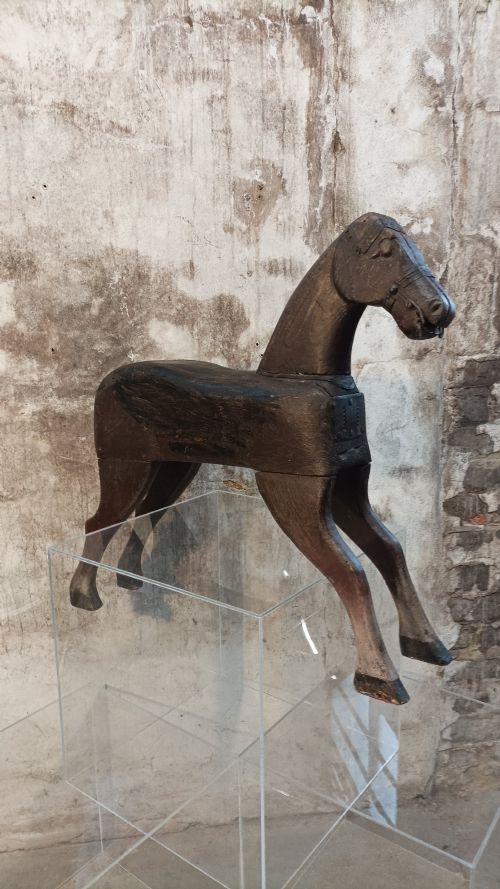
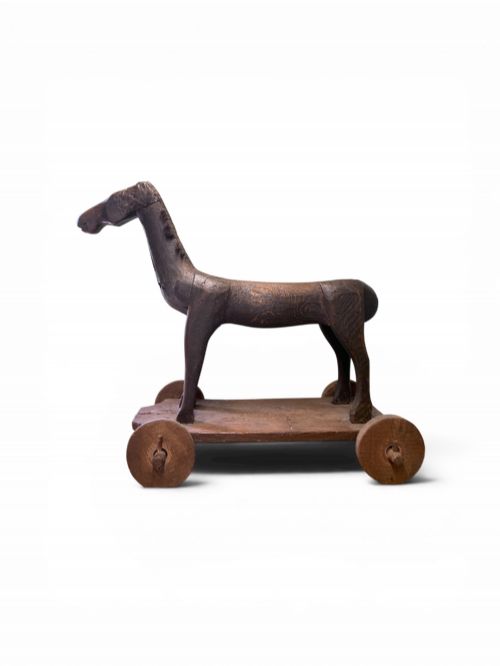
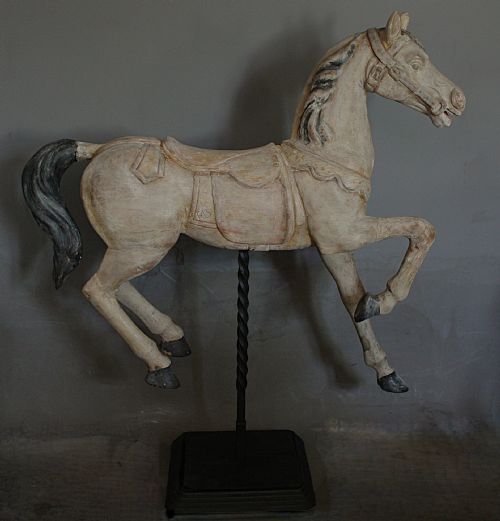


Carved Timber Horse Figure
A carved timber horse figure brings raw character into a room, shaped from wood and paint across centuries of folk tradition.
Carved Timber Horse Figure
When you search for a carved timber horse figure, you encounter sculptural objects rooted in folk traditions, naive craftsmanship, and utilitarian design. These pieces range from carousel figures and rocking horses to architectural salvage and naive animal studies.
The versions most likely to meet you on this page date from the eighteenth, nineteenth, and early twentieth centuries. They emerge from varied cultural contexts, including British folk art, Anglo-Indian and East Asian workshops, and Russian traditions.
Forms span from freestanding decorative sculptures and naive toy horses to large draught horse studies and architectural corbels. Each piece reflects the functional or decorative role it played in its original setting.
How they were made
Makers shaped these figures from solid timber and hardwoods such as oak, employing hand carving techniques to define the musculature and posture of the animals. Tool marks left by gouges and chisels remain visible across the surfaces of naive and traditional pieces alike.
Many examples retain layers of polychrome paint, adding colour and detail to the carved wood substrate. Some surfaces incorporate iron elements or structural components integral to their original form as toys, architectural supports, or carousel figures.
Styles represented across the inventory include British, Anglo-Indian, East Asian, and Russian folk art traditions.
What varies in quality
The distinction between ordinary and exceptional pieces lies in the directness of the carving and the expressive force of the animal's form. Naive works derive their strength from unpretentious proportions and confident handling of the wood.
The survival of original painted surfaces and natural patination heavily influences the character of a piece. Wear earned through active use and age distinguishes genuine vernacular objects from later decorative interpretations.
The Carved Timber Horse Figure Glossary
- Folk art
- Artefacts created within a community tradition, often by self-taught makers rather than formally trained sculptors. These objects prioritise utility, narrative, or simple visual impact over academic convention.
- Animalier
- A nineteenth-century artistic genre focusing on the realistic portrayal of animals. Pieces in this style capture the specific anatomy and movement of creatures such as draught horses.
- Polychrome
- Decorated in multiple colours. In wooden sculpture, this refers to historical painted finishes applied directly to the carved timber substrate.
- Corbel
- A structural piece of stone or wood projecting from a wall to carry a weight. Wooden examples often take carved figurative forms like horses or mythical beasts.
- Naive
- A stylistic approach characterised by childlike perspective, simplified forms, and a lack of academic proportion. Naive wooden sculptures rely on honesty of material and direct carving.
Carved Timber Horse Figure: Frequently Asked Questions
How were these wooden horses used?
Many served as children's toys, such as rocking horses and pull-along figures designed for daily play. Others functioned as carousel attractions, architectural supports, or static decorative displays.
Their varied origins mean some were made for domestic environments while others came from commercial fairgrounds or workshops.
How do I style a timber horse in my home?
These sculptures sit comfortably on sideboards, mantels, or tables where their carved surfaces and patination can be appreciated up close. Larger pieces function well as standalone floor sculptures.
Pair them with neutral backgrounds to let the natural grain of the wood and remnants of old paint stand out.
How can I tell the age of a carved horse?
Age is determined by observing tool marks, the type of timber used, and the nature of any surviving paint layers. Hand tools from earlier centuries leave distinct patterns that differ from modern machining.
Wear patterns, shrinkage cracks in the wood, and historical patination provide further clues to a piece's chronological origin.